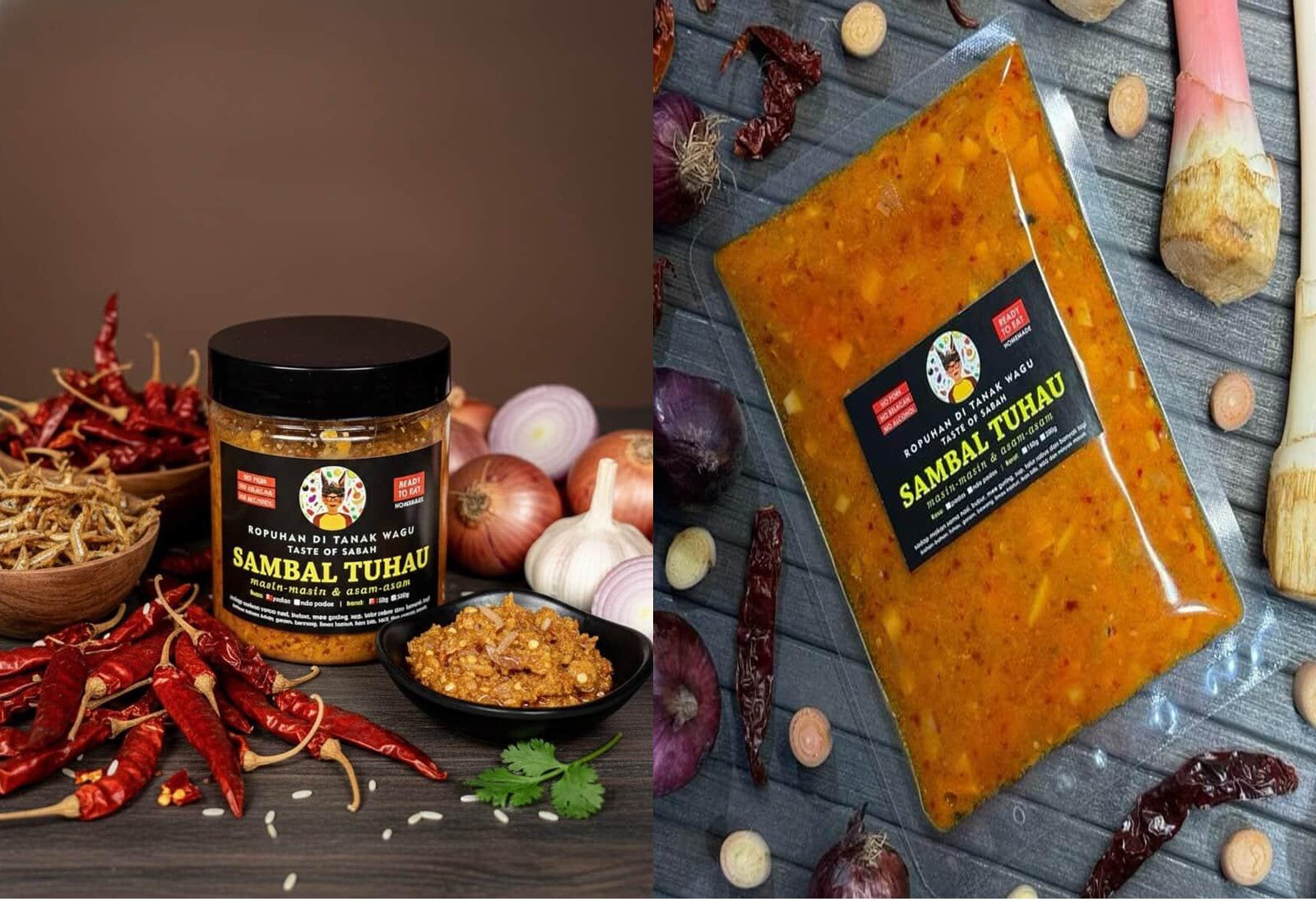

Ropuha di Tanak Wagu products available on their TikTok and Shopee e-commerce stores.

PISON Jaujip of Ropuhan di Tanak Wagu (Young Man’s Kitchen) is a traditional food culture enthusiast who has been instrumental in documenting the soul of Kadazandusun Murut (KDM) heritage through the lens of the younger generation. Some of his food products are even available on his TikTok and Shopee shops for those curious about sampling the essence of KDM flavours. Today, I speak to Pison to know more about his brand, Ropuhan di Tanak Wagu, and why he thinks that men, too, should reclaim their place in the traditional kitchen:
1. You often speak about the ‘soul’ of KDM food. When you are documenting a traditional dish—like linopot or pinarasakan—what is the specific story or memory you are trying to capture beyond just the ingredients?
When I document dishes like linopot or pinarasakan, I’m not just recording a list of ingredients; I’m archiving a way of life. For me, linopot is the scent of woodsmoke and the sight of my great-grandfather preparing massive batches of rice, yams, and cassava over an open fire. I can still see him wrapping 80 pieces at a time in daun doringin (doringin leaves). It was the ultimate practical meal—you’d grab one for the farm or eat it right there in the kitchen.
When my grandparents returned with a fresh catch, we’d pair that rice with pinarasakan and eat together. That sense of makan sama-sama—the togetherness—is the ‘soul’ of KDM food. It’s a connection to the land and a communal spirit that a recipe card alone could never fully capture. I’m trying to document how we live, not just what we eat.

Pison Jaujip of Ropuhan di Tanak Wagu (Young Man’s Kitchen).
2. As someone bridging the gap between traditional roots and modern platforms, how do you navigate the balance between keeping a recipe ‘authentic’ and making it accessible or appealing to a contemporary audience who might not have access to a traditional hearth?
I believe authenticity isn’t about a rigid 100% adherence to the past; it’s about honouring the heart, the flavour, and the intention of a dish. We have to face the reality that not everyone has access to a kayu api (wood-fired hearth) or traditional tools in a modern apartment.
My approach is to bridge that gap. I’ll show the traditional roots, but I also provide a roadmap for the modern kitchen. If we make the entry point too intimidating, we risk losing the younger generation. I’d rather make the food approachable so they start cooking today; once they fall in love with the flavours, their natural curiosity will eventually lead them back to the traditional methods.
3. KDM cuisine is deeply tied to the land, from the jungles to the paddy fields. In your journey, how have you seen the changing environment or the availability of indigenous ingredients like bambangan or tuhau affect how we preserve our food culture?
The reality is that our culinary heritage is only as resilient as our environment. I’m not worried about the mainstream staples, but the rare, wild ingredients that are being pushed out by deforestation. Documenting these isn’t just about saving a recipe; it’s a form of preservation for the ingredients themselves.
Look at tuhau and bambangan—because people valued them, farmers began cultivating them on a larger scale. I hope that by increasing appreciation for our lesser-known wild ingredients, we can create a similar protective demand. If we can show people the worth of these flavours, we are, secara tidak langsung—indirectly—advocating for the protection of the forests they call home.
Pison Jaujip of Ropuhan di Tanak Wagu (Young Man’s Kitchen).
4. You’ve become a culinary bridge for the tanak wagu (the young men/youth). What have you discovered about the importance of men reclaiming their place in the traditional kitchen, and how does that change the dynamic of how heritage is passed down?
In our culture, men in the kitchen isn’t actually a new phenomenon—our fathers and grandfathers were often the ones mastering traditional dishes. Somewhere along the way, that became less visible, but we are now seeing a beautiful resurgence.
When the tanak wagu (young men) start cooking, the energy changes; it becomes more open and collaborative. They aren’t shy about asking questions or experimenting. They are learning through new channels—videos, social media, and peer sharing—which allows the knowledge to spread faster than ever.
When men engage with our food heritage, it moves the conversation from ‘inside the kitchen’ to a broader space of storytelling and daily life. Heritage shouldn’t rest on the shoulders of only one group; when both men and women participate, our cultural foundation becomes much stronger.
5. If someone were to look back at your work fifty years from now, what is the one fundamental truth about Kadazandusun Murut food culture you hope they understand through your documentation?
If someone looks back at my documentation in five decades, I want them to recognise the sophistication of our ancestors. We often dismiss traditional food as ‘simple,’ but it’s actually incredibly intelligent. We used what we had, we wasted nothing, and we understood our environment so well that we could turn the forest into a pantry.
Every dish has a reason; every ingredient tells a story. I hope my work helps move the narrative away from ‘rural survival’ and toward ‘cultural brilliance’. I want people to see that KDM food is built on connection—connection to the soil, to our history, and to the people we sit across from at the table.
6. Last question, what is your favourite KDM food? And if someone new to Sabah were to ask your recommendation for a traditional food they could try, what food would you recommend to them?
It’s always a challenge to pick a favourite when our cuisine is so diverse, but for me, it has to be bosou (traditional fermented dish of rice, vegetables and meat or fish).
There is something incredibly special about our traditional fermented food. I’ll be the first to admit it’s an acquired taste—the aroma is intense, but once you understand it, it’s completely addictive (memang bikin ketagih). Personally, I love to fry it with plenty of ginger, chilli, and aromatics like shallots, tuhau, and bunga kantan. It’s a simple preparation, but the depth of flavour is unmatched.
If someone is visiting Sabah for the first time, I always recommend they start with a linopot set. It’s the perfect introduction because it’s a complete sensory experience on a single plate. You get the fragrant linopot rice, the tang of pinarasakan fish, and a variety of our signature ‘soul foods’ like tuhau, bambangan, and bosou.
Paired with local greens like sayur pakis or losun, it’s more than just a meal—it’s a great example of how we balance flavours. From that one platter, a visitor can truly begin to understand the heart of KDM food and the way we live.