At the same time that questions arise from the business sector about the changes to the electoral reforms in the first debate, the Panameñista Party will present a minority report on what was approved in the first debate in the Government Commission.
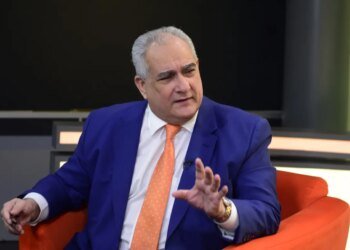
The deputy president of the Panameñista Party bench, José Luis Varela, reported that he will present a minority report and propose to lower it to the first debate.
The Panamanian Association of Business Executives (Apede) and the Chamber of Commerce, Industries and Agriculture of Panama (Cciap) agreed to demand greater transparency, participation and deliberation around the rules that will govern the 2029 elections.
Apede maintained that the proposals of the Electoral Court and the modifications introduced by the deputies must be the product of dialogue and consensus-building. Among the points that it questions are the restrictions on the constitutional power of the Electoral Court to regulate and interpret electoral legislation, the increase in private financing limits, the changes that affect candidacies by free nomination and the modifications to the internal democracy of the parties.
The union also rejected the possibility that a person could be elected to two positions and retain both positions during the constitutional period, even if they only hold one of them at a time. In addition, he questioned the reduction of the deadline to prosecute electoral crimes and the maintenance of electoral criminal jurisdiction.
The Cciap, for its part, warned that the Electoral Code establishes the rules by which citizens elect those who govern them and, therefore, its reform cannot be considered an exclusive matter of political parties or the National Assembly.
The union recalled that the National Electoral Reform Commission, convened by the Electoral Court in 2025, brought together different sectors for months to analyze the electoral rules and build consensus. From that process, Bill 699 emerged.
The House especially questioned the way the first debate was conducted. According to him, during a marathon day, substantive modifications were introduced on the fly, including changes in the requirements for free nomination, party formation, private financing and double nomination. He also considered the time given to civil society to participate in the discussion to be insufficient.
For the union, the second debate should serve to “review, correct and reach the necessary consensus,” with the participation of the Electoral Court, civil society and the unions.
Both organizations also defended the need to preserve institutional spaces for dialogue. Apede considered it important to strengthen the National Electoral Reform Commission as a mechanism to review the rules after each election.
The claims come as the project moves towards the second debate.
Apede also linked the discussion to the International IDEA report The Global State of Democracy 2026, presented in Panama on September 23. The organization noted that the country maintains a general performance above the regional averages, although there are important differences between the areas of representation, rights, rule of law and participation.
For business associations, the next discussions should determine whether the modifications strengthen participation and electoral equity or introduce new barriers and advantages for certain actors.