BUDAPEST – Peter the Hungarian, the future Prime Minister of Hungary, inherited from Viktor Orban a well-equipped army and numerous business arrangements related to the procurement of weapons and military equipment.
What does the Hungarian army have?
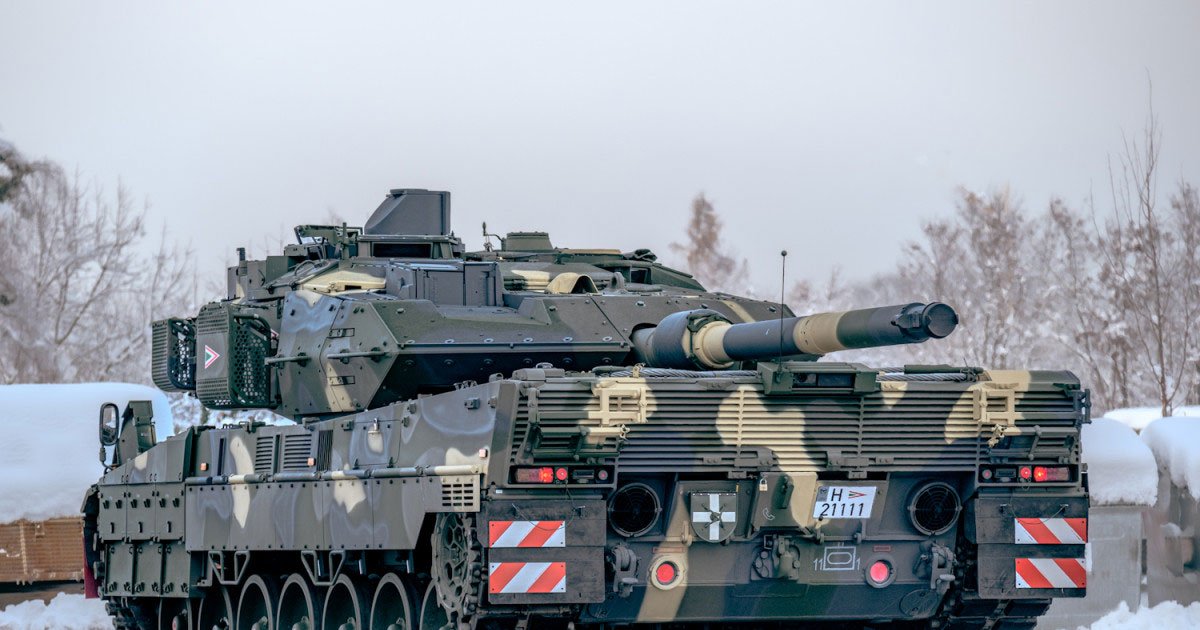
- 110 tanks (Leopard 2 A4 and A7HU)
- 165 infantry fighting vehicles
- 424 armored vehicles
- 14 Gripen fighter jets
- 14 NASAMS 3 air defense systems
- Multipurpose helicopters Airbus
The modernization of the Hungarian Defense Forces began in 2016 with the Zrinji 2026 project. The project was extended until 2032.
The modernization program of the Hungarian Defense Forces, which began in 2016, is called Zrinji or Zrinjski 2026 and was named after the famous Hungarian general of Croatian origin Petar Zrinji or Zrinjski from the 17th century.
The project exceeded expectations because most of the Hungarian army is modernly equipped after 10 years, and the military budget has already exceeded the old NATO standard of 2 percent of gross domestic product. Numerous foreign military companies have opened plants in Hungary, in partnership with domestic companies.
Former Chief of General Staff, new Minister of Defense
The Tisa party announced that Peter the Hungarian has already chosen several ministers for the future government of Hungary. The new Minister of Defense will be Romulus Rusin-Sendi, a retired general and former Chief of Staff of the Hungarian Defense Forces from 2021 to 2023. The news was also transmitted by the official portal of the Defense Forces of Hungary.
The German “Rajnmetal” opened a factory of combat vehicles and ammunition, the Czech factory of small arms, and the Turks a factory of light armored vehicles.
“I think that behind all this was the strategic decision of the Hungarian government, because when we see from whom they took weapons, it is mostly from the Western alliance, that is, NATO, plus, of course, Brazil, with which the entire NATO maintains quite good relations, and of course Israel, which is often forgotten in this series of arms acquisitions,” explains Petar Ćurčić, a researcher at the Institute for European Studies, and writes RTS.
Ground weapons
Hungary has 32,000 active soldiers and another 20,000 in reserve, with plans to increase the number of people. Of the main land armament there are 110 tanks, of which 45 are “Leopard 2 A4” and A7HU from Germany. They are accompanied by 165 infantry fighting vehicles, of which 45 are newer “links KF-41” models that are made in the “Rajnmetal” factory in Hungary.

Hungary then has 424 armored vehicles, and for now they are mostly old Russian BTR-80 machines, but there are also 106 new Turkish “eyder jalcin” or “sidran”, which are made in Hungary.
| System | Origin | Purpose |
|---|---|---|
| Leopard 2 | Germany | Main battle tank |
| Gripen | Sweden | Fighter plane |
| NASAMS 3 | Norway/USA | air defense system |
| Karl Gustav M4 | Sweden | Anti-armor weapons |
Anti-tank weapons
The anti-tank weapons of the older generation are of Soviet origin, and the newer ones come from Sweden in the form of “Karl Gustav M4” hand-held rocket launchers and Israeli “spike” launchers, which are made in Germany as “Eurospike”.
Air defense and artillery
Artillery is still mostly of the older generation. Of the 55 howitzers, 24 are self-propelled PzH 2000 caliber 155 millimeters from Germany. The river flotilla of Hungary has 3 river minesweepers of the “neštin” class, of Yugoslav production, which were acquired in the 80s of the last century.
The anti-aircraft defense has 14 NASAMS 3 launchers and it is a joint project of Norway and America, eight Soviet “cubes” and several short-range air defense launchers “mistral” from France. NASAMS 3 is also one of the most modern weapons, because it can work in conditions of strong electronic jamming and target targets without an active radar, like the Russian “armor”.
The maximum range is 60 kilometers. The Hungarian army has connected NASAMS and “mistral” into a single system managed by the operational center SAMOK. NASAMS targets targets at longer distances, while the “mistral” is in charge of shorter distances and altitudes.
Military aviation is a special story – 14 “gripen” fighter planes from Sweden, two “KC-390 embraer” transport planes from Brazil, eight Soviet-made Mi-24 combat helicopters, 20 multi-purpose H145M helicopters from “Airbus”, then also from “Airbus” 12 pieces of H225M and two light transport “Airbus H125”.
The planes also have numerous components and weapons from the USA, such as AMRAAM AIM-120 long-range air-to-air missiles and numerous systems from several European countries. There are also facilities for the production of components for “Erbas”.

Privatization of the defense industry
In the last few years, the Hungarian state has entered into serious public-private partnerships with domestic and foreign companies. First, the German “Rajnmetal” opened a factory in the town of Zalaegerseg for the production of “links” infantry combat vehicles, and then an ammunition factory for combat vehicles, tanks and howitzers with a capacity of one million shells per year was opened.
Jobs have been agreed for the next few years.
The Czech-American company “Kolt CZ” (majority owned by Czech businessmen) opened a factory of automatic rifles, submachine guns and pistols for the needs of the Hungarian army. The Czech military aircraft factory “Aero Vodohodi” is majority owned by the Hungarian consortium “4iG” from Budapest.
The main product is the “L-39 albatross NG” fighter jet, which was also ordered by Hungary. Petar Ćurčić indicates that private capital will greatly influence the future paths of arms procurement and the development of the defense industry.
“In the company 4iG, 25 percent of the shares are held by the German ‘Rajnmetal’, and for the same consortium 4iG is also the owner of the N7 consortium that participated in the privatization of the Hungarian dedicated industry,” says the researcher of the Institute for European Studies.
Peter the Magyar inherited numerous contracts and agreed deals – another 172 combat vehicles “links”, 11 tanks “leopard” and up to 700 Turkish light armored vehicles “gidran”, then further purchases of infantry weapons, anti-tank systems “karl gustav” and “eurospajk”.
By the end of 2029, 12 “albatros NG” planes should arrive from the Czech Republic, and ELM-2084 radars from Israel, with a target detection radius of 474 kilometers. Already after the declaration of victory, Peter the Magyar announced a rapprochement with European politics, which also means greater investments in defense.
Further investments
The logical question is whether Hungary can follow it. The RTS interlocutor believes that economic policy will also determine the level of investment in the army and the procurement of weapons.
“At the beginning of the last decade, Hungary allocated 0.9 percent of the gross domestic product for the army, and in 2024 it reached 2.2 percent, and the level of public debt has not increased,” points out Petar Ćurčić.
And in the light of the future of the Hungarian army, it is a little known fact that during the visit of the US Vice President JD Vance on the eve of the Hungarian elections, the purchase of HIMARS missile launchers, worth 700 million dollars, was agreed upon.
All this awaits the formation of the new Hungarian government. One thing is certain – investment in the military will continue. Hungary, as before, will continue to fulfill its obligations as a NATO member country, but with a slightly changed foreign policy of the new government in Budapest and greater cooperation with European countries.