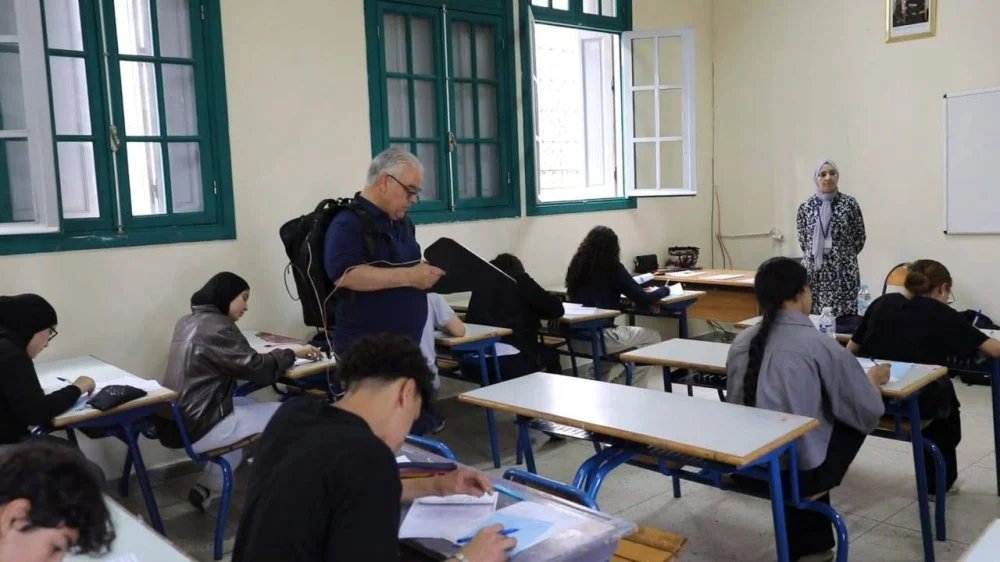
The 4,929 cases of fraud detected during the unified regional exam of the first year of baccalaureateJune 2026 session, with an announced increase of 167% compared to 2025, and the 4,126 cases recorded during the ordinary session of theunified national Baccalaureate examup 49% compared to last year, naturally struck public opinion. But the decisive word remains “detected”. The figure does not measure all actual fraud. It measures fraud identified by a control system that has become more vigilant and more equipped, in a context where the ministry links this progression to the strengthening of surveillance and electronic means of assisting detection.
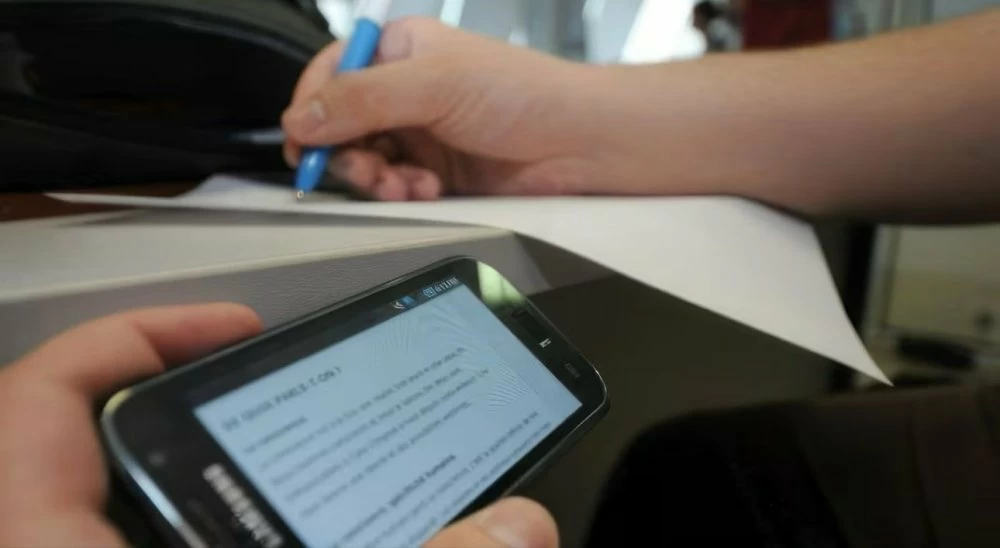
This nuance avoids transforming a figure into a general accusation against students. It does not diminish the seriousness of the subject. She moves it. If the school detects better, it also discovers what was installed in its blind spots. Fraud no longer appears only as a disciplinary anomaly. It reveals a troubled relationship with effort, with rules and with success.
The grammar of cheating
A student who cheats doesn’t just steal a grade. He learns, sometimes without measuring its scope, that it is possible to obtain an advantage without making the expected effort. He discovers that a rule can be neutralized, that an injustice can be disguised as skill, that an illegitimate performance can be described as resourcefulness.
We must not blame an entire generation. Many pupils work faithfully, sometimes in difficult conditions. Many experience the pressure of the baccalaureate as a family ordeal as much as an academic one. It is precisely for them that fraud must be taken seriously. It first hurts those who enter the room with only their preparation and who know that the value of a diploma depends on the sincerity of everyone.
When academic fraud is minimized, a dangerous idea sets in very early: the rule exists, but it can be circumvented if one has the right tool, the right accomplice or the right silence. At this age, cheating is not yet a bribe, a falsified election, an arranged deal or a circuitous administrative procedure. However, it can install the first moral syntax.
From baccalaureate to vital professions
The baccalaureate is not a simple paper. It is one of the first public acts by which society recognizes that a student can move to a higher level. After the baccalaureate comes the competitive exams, the selective faculties, the grandes écoles, then the professions.
In these professions, insufficient skills no longer only produce poor academic results. It can involve a patient, a building, a litigant, a class, a public decision. This is not to say that a fraudulent candidate will necessarily become a failed professional. But a nation cannot sustainably build its hospitals, its courts, its schools, its administrations, its businesses and its infrastructure on a weakened relationship between diploma and competence.
This vigilance should not erase, either, the other reality of the Moroccan system. Morocco is not starting from a desert of skills. It already trains graduates and students capable of succeeding in demanding environments, in Morocco and internationally. It is precisely for this reason that fraud must be fought firmly. It not only threatens the institution, but also the recognition due to those who work, succeed loyally and bear, through their careers, proof that the Moroccan school can produce excellence.
The competent citizen is developed in stages. The exam certifies, the competition selects, the university trains and the profession incurs responsibility. If the first step is routinely bypassed, the scourge risks spreading to other selection thresholds and the entire chain will have to be extra vigilant. Baccalaureate fraud therefore affects the trust that the country will be able to place tomorrow in those who will care for it, build it, defend it, teach it and administer it.
Detecting is not enough
Technological strengthening of surveillance is necessary. The electronic detection devices used in the examination centers mark a desire to restore the normality of the test. The MENPS approach contrasts with an implicit tolerance that had been established around fraud. It takes a necessary action: reminding people that the exam is not a negotiable space. The possible Morocco will need seriousness, work and real skills to emerge in an increasingly complex world. This requirement also begins in the sincerity of a copy.
But we must give this technology its rightful place. The detector can accurately locate a hidden communications device. He cannot, alone, teach a student that success without merit is a moral debt to society. It may make fraud more risky, but it may not be enough to make the effort more desirable.
The public response must hold both requirements together. Punishing without educating locks the exam in fear. Educating without sanctioning suggests that the rule can be violated without consequence. We need a clear rule, credible controls, real consequences, but also a longer reconstruction of the relationship with learning.
This reconstruction begins before the door to the examination room, when the student learns to read with confidence, to count methodically, to understand instructions, to organize his thoughts and to follow reasoning. The current educational reform is not based on a single lever. With the Pioneer Schools, it combines remediation, explicit teaching, monitoring of learning, teacher training and return to the real level of students. In this set, TaRL (Teaching at the right level) allows learning to be resumed from the student’s actual level, while explicit teaching clarifies the method, progression and expectations.
The strengthening of control comes at a time when educational reconstruction necessarily takes time. This transition requires a balanced response: firmness against fraud, but also accelerated consolidation of acquired knowledge, organized review and targeted support before decisive deadlines. A fair school does not choose between sanctioning and supporting. It punishes fraud because it protects loyal students, and it supports vulnerable students because it refuses to abandon them in a dead end.
Amanah put to the test of everyday life
This requirement also implies not making the baccalaureate the only social dignity. As long as the baccalaureate is experienced as the border between a possible future and relegation, the pressure will remain overwhelming. Vocational training, technical professions, bridges, recognized certifications and second chance pathways should not be presented as escape routes, but as real pathways to skills. Saying no to fraud means saying yes to other forms of success.
In a Muslim country, the moral question cannot be avoided. It only needs to be posed accurately. Amanah, sincerity, justice and the refusal of undue advantage cannot remain values proclaimed in speeches and suspended in practices. They are verified in ordinary gestures: not stealing a note, not taking someone else’s place, not transforming the common rule into an obstacle reserved for the less skilled.
Academic fraud sometimes reveals a broader contradiction. We want honest leaders, sincere elections, transparent markets, fair competitions, efficient administrations. But these demands do not start at large institutions. They start in the family, in the class, in the way people look at effort, in the way they talk about someone who cheats. Is he ashamed because he broke the rule, or admired because he knew how to circumvent it?
This culture of probity does not only concern the school. It also concerns higher education, competitive examination centers, recruiting administrations and institutions responsible for preventing corruption. The INPPLC (National Authority for Integrity, Prevention and Fight against Corruption) can, through its mission of disseminating the values of probity and education in the general interest, find in exam fraud an area of civic prevention. Not to replace the departments concerned, nor to transform the examination into a repressive case, but to contribute to a national pedagogy of integrity. This pedagogy must speak to pupils, students and candidates, but also to adults who make the exam or competition sincere: teachers, invigilators, administrative executives, juries and competition organizers. Because cheating never prospers alone. It thrives when the adult gaze tires, resigns or trivializes.
The school can monitor, sanction, reform and remedy. The family transmits the first idea of right and wrong. When cheating is minimized, the child learns that success can be separated from loyalty. In a society which places amanah at the heart of its moral horizon, this separation cannot be considered secondary.
Morocco is not only at stake in the future of its baccalaureate, but part of its moral future. Nations are not only held together by their roads, their strategies, their universities and their hospitals. They are held together by the trust they can place in each citizen called to take their part in common life.
Academic fraud cannot therefore become a tolerated normality and it is not a small ruse against the exam. The citizen we are preparing learns today, in an examination room, what a common rule is worth. What he learns from it will not only affect his diploma, but the future of an entire nation.