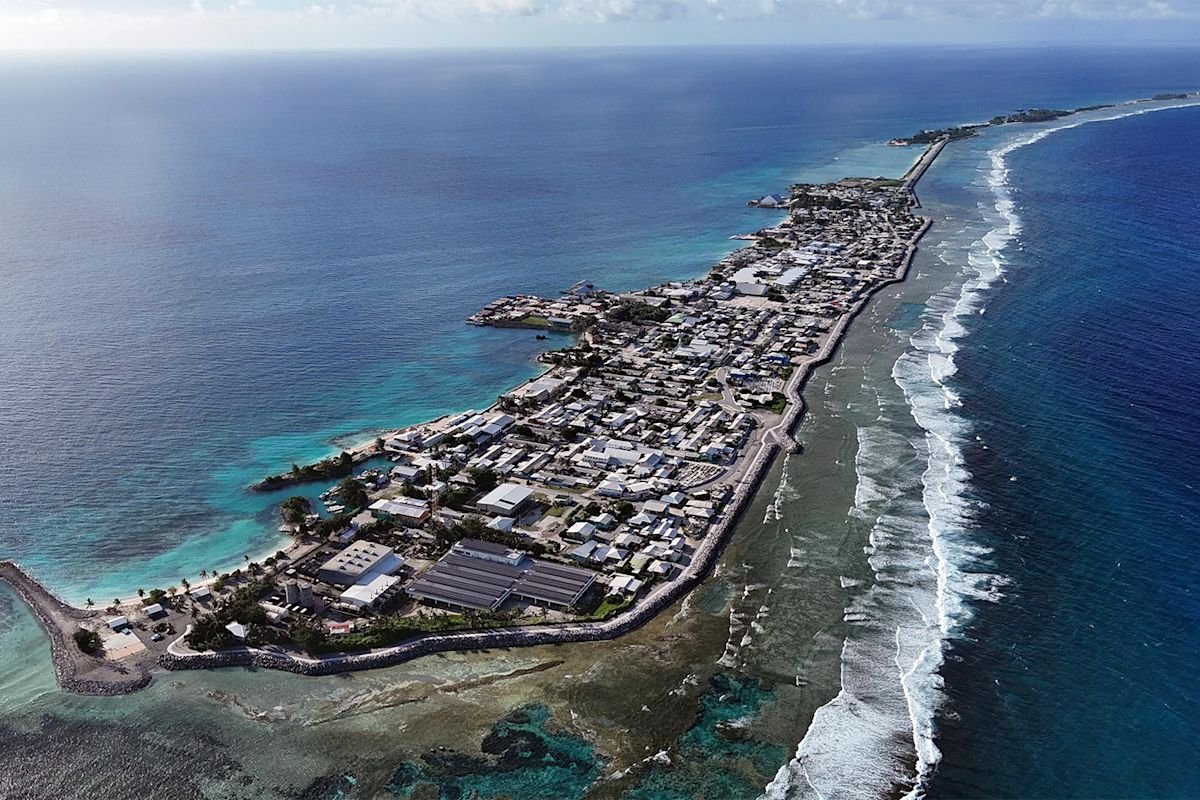
Aussie construction workers and engineers have led a project to build a 1.81km sea wall to protect the Marshall Islands from coastal flooding and waves.
Located in the Pacific, over 3,500km northeast of Cape York, the isolated chain of 29 coral atolls and five main islands is particularly vulnerable to climate change.
On average, its atolls are just two metres above sea level. By comparison, Sydney is an average of 25 metres above sea level, and Melbourne 18 metres.
The multi-million-dollar wall’s purpose is to protect homes and roads on low-lying Ebeye Island from sea-level rise of up to 0.5 metres.
The island is located within the Kwajalein Atoll, which is home to 10,000 people.
The need to create further protections has been clear for decades — the atoll was almost wiped out in 1991 by Typhoon Zelda, which destroyed infrastructure and left half the population homeless.

An Australian-based team worked alongside local workers to build the wall which was opened last week.
(Hall Contracting)The Marshall Islands have a population of just 35,000 people and have a very small domestic emissions footprint.
But it is home to the world’s third-largest shipping registry, and estimates suggest these vessels emitted over 88 million tonnes of carbon emissions in 2022.
Its leaders have been pushing for the industry’s decarbonisation.
Neighbouring Australia also has a relatively small population of just under 28 million people.
But it accounts for a staggering 4.5 per cent of global carbon emissions, 80 per cent of which stem from its controversial fossil-fuel export industry.
Heavy equipment shipped from Australia to Marshall Islands
The wall was built by Sunshine Coast-based marine infrastructure experts Hall Contracting and designed by Netherlands-headquartered engineering firm Haskoning.
The total cost of the sea wall was US$52.64 million (A$75m).
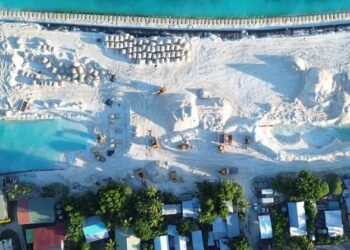
Heavy equipment was shipped in from Australia via barge, and over 84,000 tonnes of armour rock — a heavy quarried stone often used in seawalls — were sourced from the United Arab Emirates.
Behind the seawall, a new footpath was created, allowing residents to walk from one end of the island to the other.
RELATED:
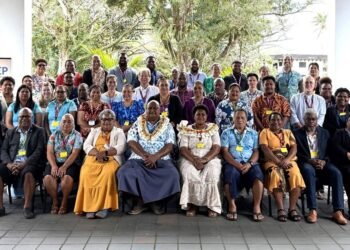
Hall Contracting CEO Cameron Hall said 35 Marshallese workers, including women, were hired alongside the Aussie expat crew, giving them experience in a traditionally male-dominated industry.
“This project highlights what can be achieved in remote Pacific communities by combining strong technical capability with careful logistical planning and meaningful local participation,” he said.
You can also follow us on Facebook, Instagram, TikTok, X and YouTube.