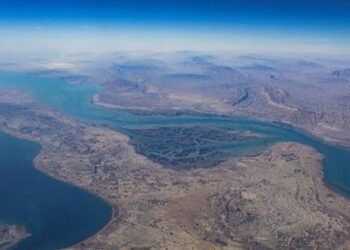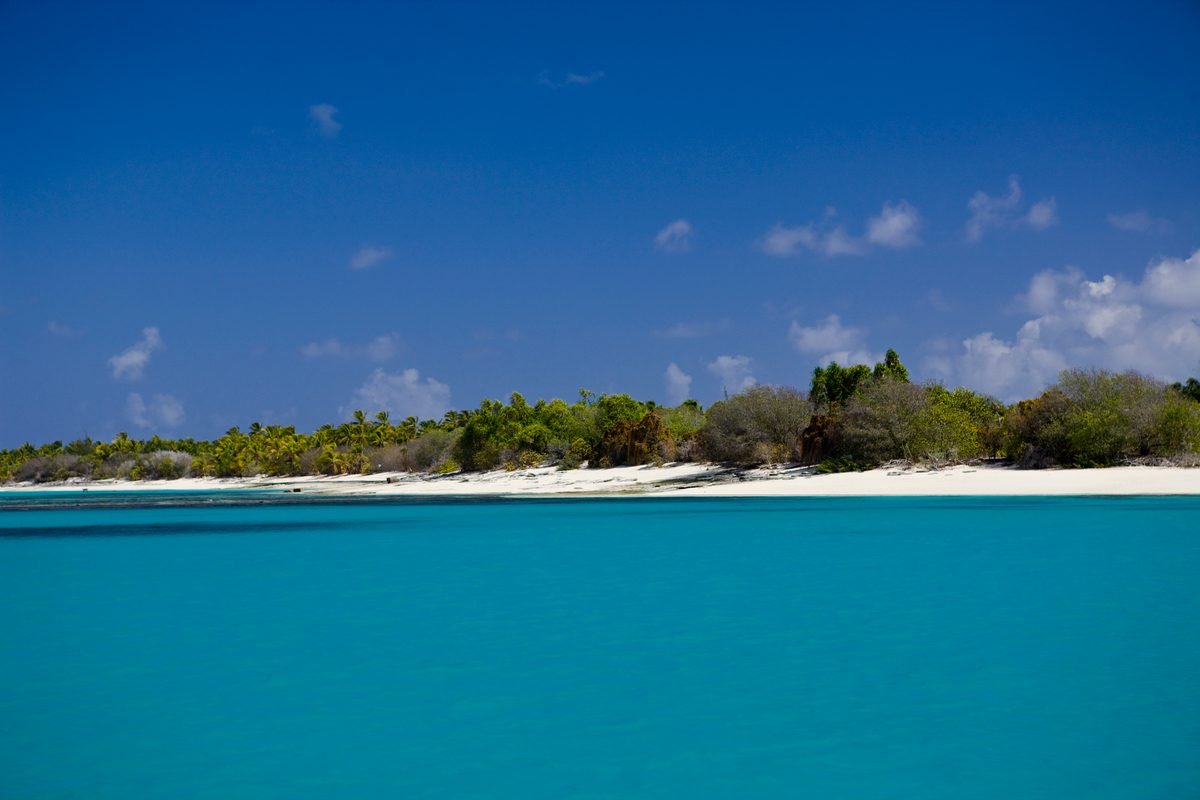
Bikini Atoll is a remote coral reef in the Marshall Islands, in the central Pacific Ocean. It consists of 23 small islands encircling a deep central lagoon roughly the size of Toronto.
The idyllic-looking oasis gets its name from the Marshallese word Pikinni, which loosely translates as “land of many coconuts”. With its palm-fringed shores, turquoise waters and bustling coral reefs, Bikini is home to an abundance of tropical wildlife, including seabirds, turtles, shark sand colourful reef fish. But this picture-postcard paradise has an infamously dark history.
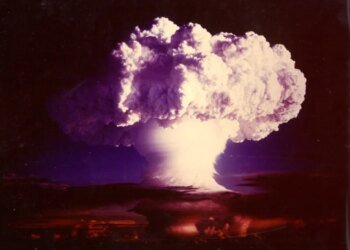
Between 1946 and 1958, the atoll was used as a US nuclear test site. The destruction began when the US military used dynamite to blast channels through the surrounding coral reef, allowing a fleet of more than 90 naval vessels to enter the lagoon. Then they blew it all up.
In July 1946, two nuclear weapons were detonated under the codename Operation Crossroads. The first, codenamed Able, was dropped from a B-29 bomber and exploded 158 metres above the fleet. The second, Baker, was detonated 27 metres underwater. Together, the blasts sank 14 ships, while Baker sent an enormous column of radioactive water into the air, dousing the surviving vessels in radioactive contamination.
It didn’t stop there. Over the next 12 years, a further 21 nuclear tests were conducted, including several increasingly powerful hydrogen bombs. Collectively, the 23 explosions released an astonishing amount of energy, equivalent to around 78 million tons of TNT.
Radioactive fallout spread across the atoll, contaminating its islands, soil, vegetation and surrounding waters. Radioactive materials also entered the food chain, affecting plants and animals, and making it unsafe for the displaced Bikinians unable to return home.
Today, radiation levels remain well above the maximum allowed for human habitation, and the Bikini islanders are still unable to return to the atoll. No one lives there permanently, and many of those living on nearby islands have gone on to develop cancer and thyroid disorders.
From a wildlife perspective, however, the picture is more complicated. A 2008 study indicated that the tests led to the local extinction of up to 42 coral species. But there’s good news too. The study also found that, five decades after testing began, around 70% of the atoll’s coral community had either survived the ordeal or bounced back. As Jurassic Park’s Dr Ian Malcolm famously put it, “Life, uh, finds a way.”