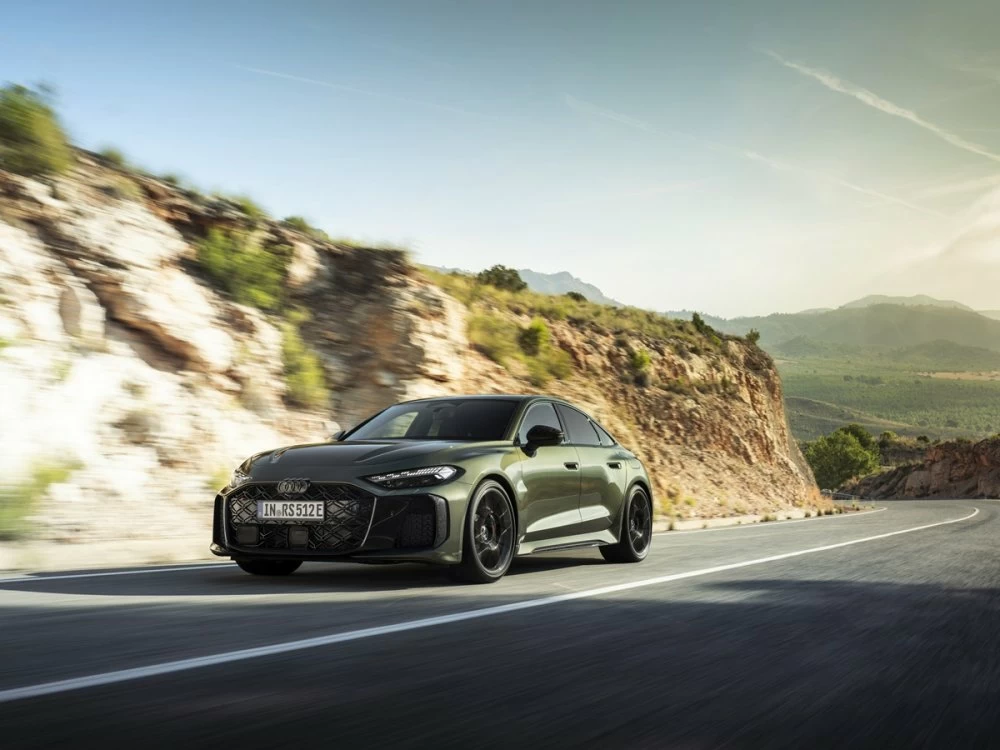
With this upgrade, the German brand is not satisfied with a simple facelift. It thoroughly reviews the on-board experience and the performance of the model, with a clear objective: to make it more relevant on a daily basis.
The main progress concerns overall efficiency. Thanks to an optimized electric motor and improved energy management, autonomy increases significantly. The most efficient Sportback version now reaches up to 592 km in the WLTP cycle.
Charging is also evolving. On the most efficient versions, the maximum power increases to 185 kilowatts (kW). Result: a passage from 10 to 80% in approximately 27 minutes, and up to 185 km recovered in just ten minutes on a rapid terminal.
Audi is also introducing new energy-related features. The Q4 e-tron becomes the brand’s first model to offer bidirectional charging. It can power electrical appliances or even serve as a source of energy for a home in some countries.
This development strengthens its positioning as a versatile vehicle, capable of integrating into a broader energy ecosystem.
A modernized and more technological interior
On board, the transformation is more visible. L’Audi Q4 e-tron adopts a new digital interface, with a panoramic screen combining an 11.9-inch handset and a 12.8-inch central screen. A 12-inch passenger screen is also available as an option.
Infotainment is progressing with a system based on Android Automotive and integrating third-party applications directly into the vehicle. The voice assistant, enriched by artificial intelligence, allows for more natural interaction.
Interior design is evolving towards greater clarity and perceived quality. The materials, finishes and ambient lighting contribute to a more upscale experience.
On the outside, the Audi Q4 e-tron adopts a more assertive style. The lines are sharper, the proportions reinforced and the digital light signatures allow advanced customization.
A more complete SUV for reinforced daily use
With this development, Audi seeks above all to reinforce the versatility of Q4 e-tron. The model retains its practical advantages, while improving its daily capabilities. The trunk still displays 515 liters, expandable to 1,487 liters once the seats are folded.
The towing capacity is also increasing, now reaching 1,800 kg on the quattro versions. An important point for family or professional customers.
Driving assistance systems are evolving in the same direction. The Audi Q4 e-tron has a full range of assistance, ranging from adaptive cruise control to active lane keeping assistance, including advanced parking functions. On the road, the objective is to offer a smoother and safer experience, in particular thanks to better integration of online data and more advanced assistance functions. Audi also improves the overall efficiency of the vehicle, with gains of up to 10%. Optimizations that involve new electronic components and finer energy management.
The commercial launch is planned in Europe from May, with deliveries expected during the summer. In Germany, the price starts at 47,500 euros for the entry-level version.
Audi Q4 e-tron: a rise in electric maturity
With this update, Audi is not revolutionizing the Q4 e-tron, but is making it evolve in depth. The model is gaining in consistency and maturity, two essential elements in the electric SUV market. The improved range, which reaches up to 592 km, directly meets customer expectations. Faster charging and new energy functions, such as bi-directional charging, also enhance its daily use.
But it is above all the overall experience that progresses. The modernized interior, digital interfaces and integration of artificial intelligence demonstrate a desire to align the model with current standards in the premium segment. Audi also focuses on versatility. Increased towing capacity, generous interior space, comprehensive equipment: the Q4 e-tron targets a broad customer base, beyond simple urban use.
Finally, this development is part of a broader strategy. The Q4 e-tron remains the entry point into Audi’s electric world. By making it more efficient and more attractive, the brand strengthens its position in the face of increasingly structured competition.
This restyling thus appears to be a key step, intended to prolong the commercial success of the model in a rapidly accelerating market.