What started as a painful period of abuse in her marriage grew into a mission to help other women. Lolita Soedamah (63) has processed her experiences with domestic violence in two books and also uses social media to create awareness about a subject that she believes is still too often silent about.
Text Steven Seedo
Image: Lolita Soedamah collection
She was born in Nickerie and moved to the Netherlands at the age of twelve. Since then she has not returned to Suriname. “In 2003, after 23 years of abuse by my husband, I fled to India. There I rebuilt myself and gained a lot of knowledge. When I returned to the Netherlands, I decided to use that knowledge to help others,” Soedamah tells the True Time
Consciously focus on Hindustanis
In November 2025, she started openly sharing her story via social media under the title ‘Abuse of Hindustani woman’. This led to a flood of messages from women who had experienced similar experiences, but did not dare to come forward themselves. “These women were afraid to tell their stories, so I became their voice and shared their experiences anonymously,” she says.
‘I talk about the culture I was born into. I examine my own culture.’
– Lolita Soedamah
According to Soedamah, her work has now helped several women to take steps towards a safer and more independent life. Some have left their abusive relationships, others have stood up for themselves. She also guides women who need support to rebuild their lives. Although she believes domestic violence occurs in all cultures, she consciously focuses on the Hindustani community. “I talk about the culture I was born in. I examine my own culture.”
Recovery process
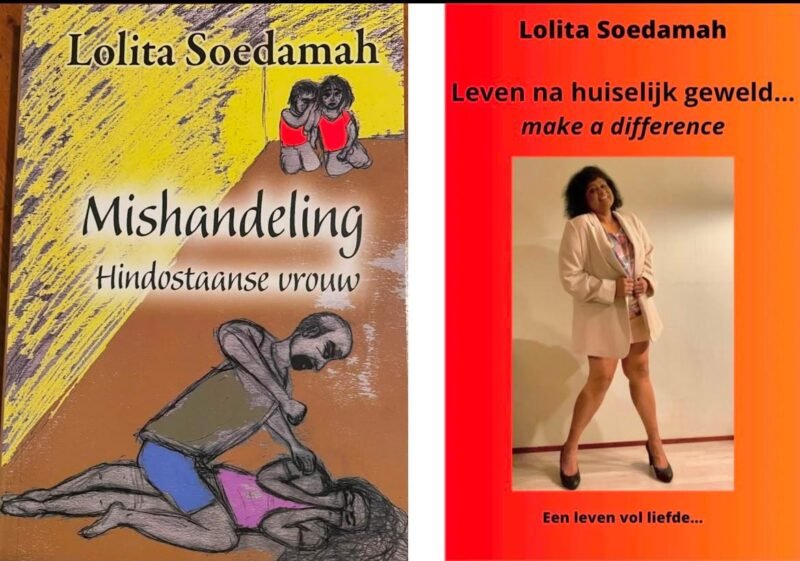
In her first book, ‘Abuse of Hindustani women’, she describes her personal experiences with violence. Her second book, ‘Life after domestic violence’, which was published in 2023, is about her recovery process and the road to a new life. Soedamah is currently working on a third book, based on the life story of another woman. “She was raped at the age of five by her twenty-year-old uncle. A lot happened in her life after that. I am writing her story down.” The aim is to publish the book in April 2027.

Soedamah was born in Nickerie and moved to the Netherlands at the age of twelve. Since then she has not returned to Suriname. By speaking openly about her own experiences, she wants to let fellow sufferers know that they are not alone. Through her books and Facebook she shares stories, insights and encouraging messages that should inspire victims of domestic violence to seek help and regain their own strength. “The change I would like to see within the Hindustani community is that women realize that they are not obliged to stay in an abusive relationship. A woman should be able to make her own choices without being seen as a shame to the family.”
Known issue
Cultural anthropologist Carla Bakdraad, board member of the Women’s Rights Center (WRC) and the Institute for Women, Gender and Development Studies, says Soedamah’s experiences are not isolated. “We regularly encounter such cases. People who know what is happening but remain silent are making the problem possible.” Bakbaas points out that domestic violence occurs in all ethnic groups. WRC regularly receives reports from victims and refers them to assistance agencies. During research, training and workshops, she often hears stories from women who have experienced violence.
‘The change I would like to see within the Hindustani community is for women to realize that they are not obliged to stay in an abusive relationship.’ – Lolita Soedamah
Nandenie Dinai, chairman of the ‘Het Moederhart Nickerie’ foundation, condemns any form of violence. Her organization also has to deal with reports of domestic and partner violence and violence at school. “You should not oppress anyone. We stand for equal rights. Problems must be solved without violence and people must treat each other with respect. Violence causes both physical and mental damage.”
Listen to the message
Journalist and women’s and children’s rights activist Seshma Bissesar says that she has not followed Soedamah’s work substantively, but welcomes the discussion of domestic violence within the Hindustani community. “People who raise taboo topics are often criticized. Those who condemn her may not be ready to confront the injustice within their own environment.”
Violence against women and children occurs in all cultures, but within the Hindustani community, closed social structures sometimes play a role, making victims less likely to come forward.’- Seshma Bissesar
According to Bissesar, everyone has their own way of discussing sensitive topics. “My advice is: listen to the message and not just the emotions it evokes. Violence against women and children occurs in all cultures, but within the Hindustani community, closed social structures sometimes play a role, making victims less likely to come forward.”
Bissesar emphasizes that patriarchal systems and power relations can prevent women and children from feeling free to share their experiences. That is precisely why she believes it is important that such stories are made visible.