
The deputy prosecutor Maria Soledad Machuca Vidalin charge of the Specialized Area for Cassation Appeals of the State Attorney General’s Office, requested the Criminal Chamber of the Supreme Court of Justice (CSJ) to declare inadmissible the extraordinary appeal presented by the defense of the former Colorado senator Erico Galeano Segoviaand leave firm his sentence to 13 years in prison for money laundering resulting from drug trafficking and criminal association, within the framework of the case Extreme.
In the response presented to the highest court this Thursday June 4the deputy prosecutor highlights that the defense of the former Chartist parliamentarian based in the cassation brief that the evidentiary elements incorporated into the process do not constitute sufficient direct evidence to prove the fraud required by the punishable acts attributed to Erico Galeano.
However, Machuca points out that this position is reiterated in each grievance under different formulations, without adequately delimiting whether the questioning is directed against the evaluation of the evidence, against the determination of the facts or against the application of substantive criminal norms.
“The defense limits itself to questioning certain passages of the reasoning presented by the Court of Appeal, selecting in isolation those aspects that, according to its interpretation, would evidence an alleged error in judgment, without carrying out a comprehensive analysis of the content of the ruling or confronting all of the foundations that support the contested decision,” highlights part of the prosecutor’s response to the cassation raised by Galeano’s defense.
Money Laundering: Tax Position on Defense Grievances
In the appeal, Erico Galeano’s defense maintains that the article 44 of law No. 1340/88 (money laundering from drug trafficking) requires the presence of direct fraud of the first degree, given that the legal provision uses the expression “knowingly”a circumstance that, in the opinion of the representatives of the former Colorado senator, the Public Ministry could not prove.

On this point, the defense adds that none of the evidentiary elements produced in the oral trial allowed it to be demonstrated, with the degree of certainty required by the norm, that Erico Galeano acted with the knowledge required by the criminal offense.
However, in the opinion of the deputy prosecutor María Soledad Machuca, even when the defense tries to build its question on the basis of a interpretive discrepancy Regarding the grounds used by the Court of Appeal, the grievance lacks the minimum elements of argument, because the appellants fail to identify precisely what grievance was introduced at the level of special appeal that gave rise to the jurisdictional reasoning that they now consider erroneous.
“The defense limits itself to stating, in generic terms, that there is no witness, document or expertise that demonstrates that the defendant knew of the illicit origin of the money involved in the events. However, they fail to specifically identify the means of evidence whose assessment they question, explain how they were assessed by the jurisdictional bodies and demonstrate what the logical, scientific or experience error would have been that would vitiate the conclusions reached,” highlights part of the prosecutor’s response document.
Deputy prosecutor points to generic defensive hypothesis
Regarding the conviction for criminal association, Erico Galeano’s defense affirms in the cassation brief that the Court of Appeal incurred a argumentative contradiction by maintaining, on the one hand, that the punishable act does not require that the author know “the purpose of each flight or the exact origin of the funds” and, on the other, recognizing that the configuration of the punishable act requires the concurrence of “knowledge and will.”
The representatives of the former parliamentarian add that the contested ruling does not identify any direct evidence that links their client to the activities carried out by the criminal organization led by Miguel “Uncle Rico” Insfrán and Sebastian Marset; and maintains that there is no evidence that demonstrates instructions given by Galeano to the pilots involved, nor communications with the members of the alleged criminal structure.
Read more: Erico Galeano provided support to the Marset cartel to continue operating
However, at the discretion of the Public Ministry This position is reiterated in each grievance under different formulationswithout adequately delimiting whether the questioning is directed against the evaluation of the evidence, against the determination of the facts or against the application of substantive criminal norms.
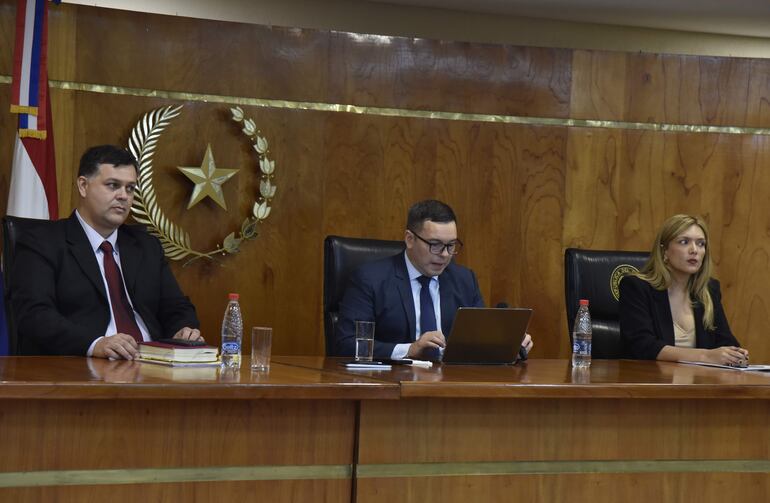
The deputy prosecutor Soledad Machuca highlights at this point that by reducing the approach to the reiteration of a generic defensive hypothesis, without specific connection with a specific evaluative error or with a specific violation of the structural elements of the criminal offense invoked, corresponds declare inadmissible the present grievance.
Disagreement with the sentence time
Regarding the defense’s questions, raised regarding the measurement of the sentence (13 years in prison), deputy prosecutor Soledad Machuca concluded that the arguments presented by the defense in the cassation brief do not satisfy the minimum admissibility requirements required.
With respect to the alleged consideration of circumstances unrelated to the procedural object and the assessment of the convicted person’s status as National Deputy, Machuca points out that the appellants limit themselves to stating their disagreement with the parameters considered by the Sentencing Court, without specifically demonstrating how such circumstances were legally analyzed, nor what was the specific error contained in the jurisdictional ruling.
Read more: Erico Galeano: “I remain calm, Sebastián Marset said he didn’t know me”
Likewise, the deputy prosecutor maintains that the defense failed to develop how each of these aspects would have had a decisive impact on the setting of the quantum of sorrow and what would have been the correct legal solution that should have been adopted.
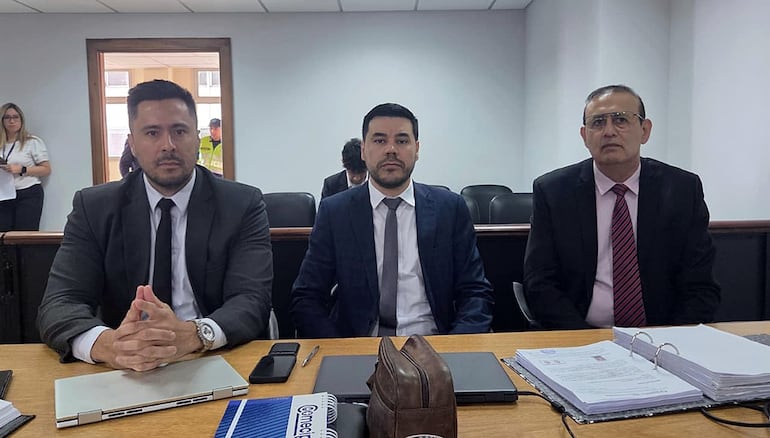
“The defense limits itself to stating that the sentence is disproportionate and that the reviewing body did not exercise sufficient control over its determination, without specifically identifying what grievance would have remained unanswered, what the precise content of said approach was and how that eventual omission influenced the confirmatory decision,” Machuca highlighted.
With preventive detention since May 20
Former Colorado parliamentarian Erico Galeano is serving preventive detention in the National Center for the Prevented (ex-Tacumbú)since Wednesday, May 20, by order of the Specialized Sentencing Court for Organized Crime, made up of judges Pablino Barreto (president), Inés Galarza and Juan Dávalos; that on Tuesday the 19th he responded to the request of the Prosecutors Deny Yoon Pak and Silvio Corbetarevoked Galeano’s ambulatory freedom and ordered his preventive detention.
The lawyers Luis Almada and Ricardo Estigarribiadefenders of the convicted man for his links to the drug scheme thwarted with Operation A Ultranza Py, hope that the Criminal Chamber of the Supreme Court of Justice make room for extraordinary appeal of cassation who raised the Tuesday May 12annul the 13-year prison sentence and directly order the definitive dismissal of the former legislator.
In parallel, Galeano’s defense also promoted a unconstitutionality actionrequesting the Constitutional Chamber of the highest court to annul the first and second rulings to be annulled and rendered “worthless”, arguing that the conviction contains at least six violations against the Magna Carta.
Read more: Former Senator Erico Galeano is already imprisoned in the former Tacumbú Penitentiary
The sentenced to 13 years in prison for Erico Galeano was issued by Final Sentence No. 68 of the March 4, 2026by the Specialized Sentencing Court for Organized Crime made up of Pablino Barreto (president), Inés Galarza and Juan Dávalos.
The first instance ruling was ratified through Agreement and Sentence No. 10 of the May 4, 2026 issued by the Court of Criminal Appeals Specialized in Economic Crimes, Organized Crime and Anti-Corruption, made up of the chambermaids Paulino Escobar (pre-opinant), Arnulfo Arias and Camilo Torres.