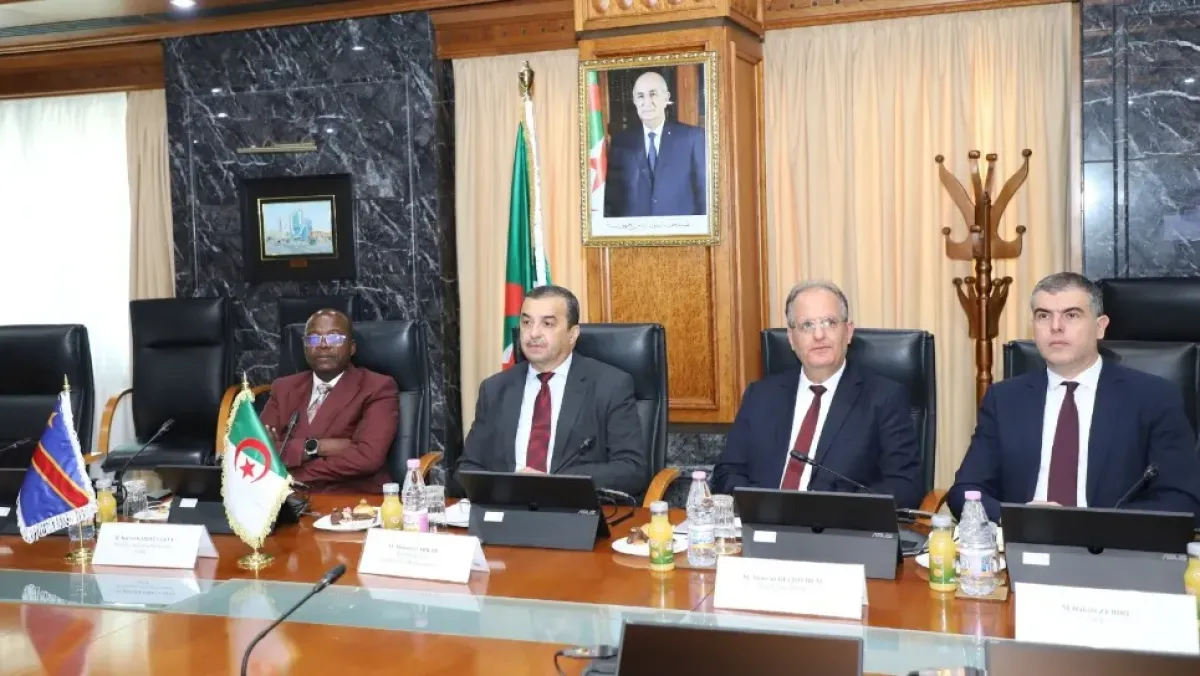
The Minister of State and Minister of Hydrocarbons, Mohamed Arkab, participated today, via videoconference technology, in the work of the forty-ninth extraordinary ministerial meeting of the Council of Ministers of the African Petroleum Producing Organization (APPO). The meeting was chaired by the Secretary-General of the Organization, Farid Ghazali, in the presence of the Chairman of the Executive Council, Mr. Carol Kadiata Letta, who is in Algeria as part of the working visit carried out by the Minister of State and Minister of Hydrocarbons of the Democratic Republic of the Congo, Acacia Bandobola Ambongo, at the head of a high-level delegation, along with the Ministers of Oil and Energy and representatives of member states.
The meeting was devoted to studying and discussing a number of priority files related to the organization’s functioning and the prospects for developing its work, especially the organizational and institutional aspects, and evaluating the level of implementation of its programs and activities, in addition to discussing the roadmap and strategic priorities of the organization during the next phase.
The ministers touched on developments in the African Energy Bank project as one of the strategic initiatives aimed at providing sustainable financing mechanisms for oil, gas and energy projects on the continent, which contributes to supporting investment, enhancing energy security and achieving economic development for member states. The attendees also discussed developments in global energy markets and their repercussions on African oil and gas producing countries, and ways to enhance cooperation and partnership between member states in light of the transformations taking place in the energy sector at the international level. The African Organization of Petroleum Producing Countries, which was established in 1987, is an African governmental organization concerned with enhancing cooperation and coordination between member states in various fields of the hydrocarbon industry, whether in upstream or downstream activities, through exchanging experiences and information and coordinating policies and strategies related to the development and exploitation of hydrocarbon resources. The organization includes 18 member states: Algeria, Angola, Benin, Cameroon, Congo, Côte d’Ivoire, Democratic Republic of the Congo, Egypt, Equatorial Guinea, Gabon, Ghana, Libya, Namibia, Niger, Nigeria, Senegal, South Africa and Chad, in addition to the Bolivarian Republic of Venezuela as an honorary member. Member states hold more than 90 percent of the proven oil reserves on the African continent, making the organization a pivotal framework for promoting African energy integration and supporting joint initiatives aimed at valuing natural resources and achieving sustainable development on the continent.