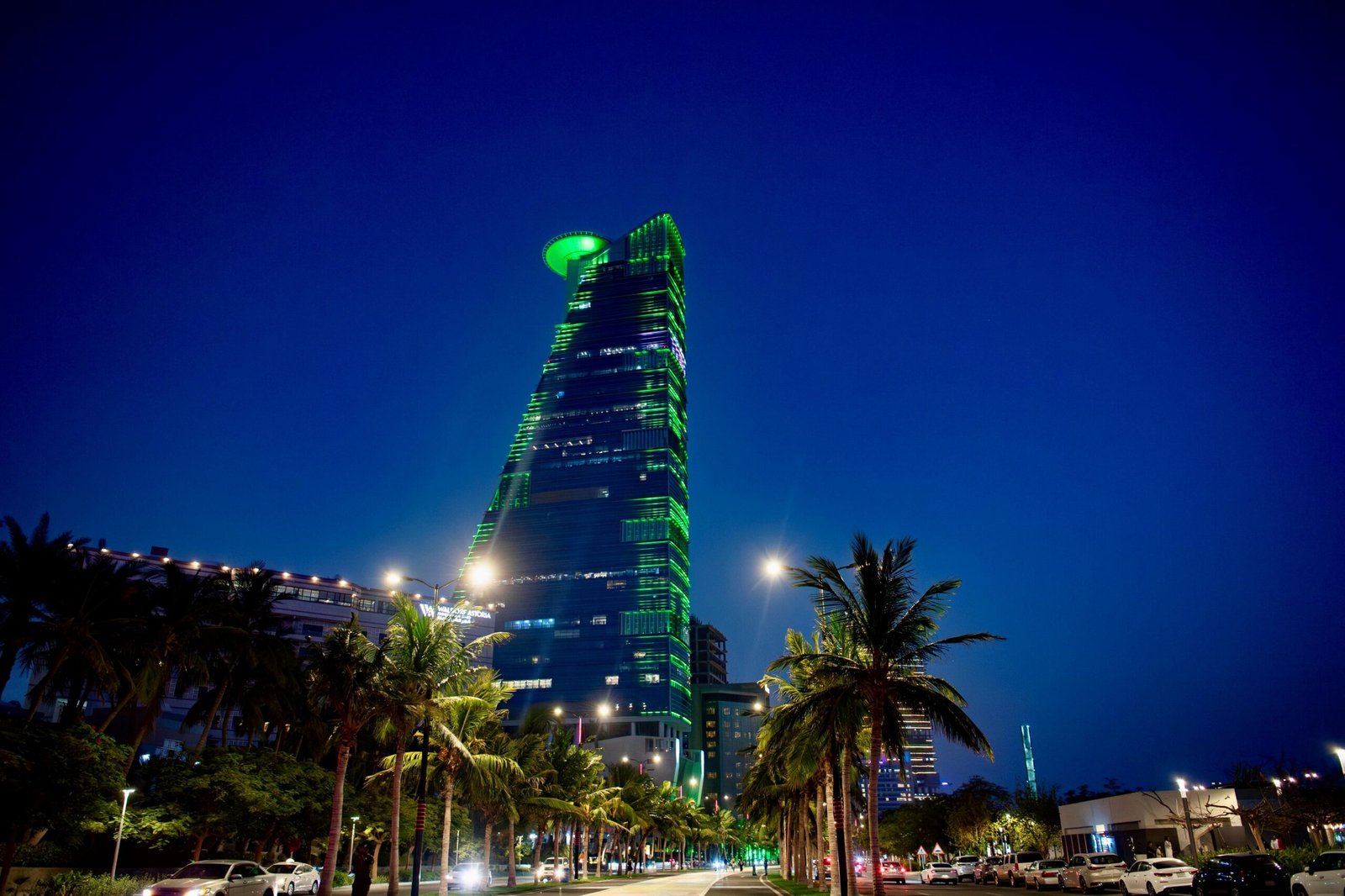
The sky of Jeddah awaits this evening the crossing of a group of Starlink satellites, an opportunity for astronomers to observe newly launched satellites with the naked eye immediately after sunset.
The head of the Astronomical Society in Jeddah, Engineer Majid Abu Zahra, explained that these satellites belong to the Starlink Group 17-47 mission that was recently launched into orbit and carries 24 new generation satellites. Due to the recent launch, the satellites are still relatively close together along their orbital path and have not yet reached their final operational positions, which increases the possibility of more than one satellite appearing during transit in a scene that may resemble the well-known Starlink train.
He added that according to monitoring data, the transit begins at approximately 7:36 pm local time, where the moons appear low above the southern horizon at an altitude of approximately 10 degrees and then gradually rise across the sky until they reach an altitude of approximately 80 degrees above the horizon before continuing their movement toward the northern horizon.
The expected brightness reaches an apparent magnitude of about 3.1, which is sufficient brightness to make some satellites visible with the naked eye from within the city of Jeddah if the skies are clear and free of clouds or heavy dust. Also, newly launched satellites are usually brighter than satellites that have long since settled into their final operational orbits.
The expected apparent magnitude of approximately 3.1 represents the brightness of the brightest moon in the group, while others may appear less bright to varying degrees, so the ease of observing each moon during the transit may differ.
Abu Zahra pointed out that, in general, the visibility of Starlink satellites cannot be guaranteed 100%, although expectations indicate that they can be monitored with the naked eye if suitable conditions are available. The clarity of viewing in this event depends on the clarity of the sky at the time of crossing and the degree of illumination at the monitoring site within the city, in addition to the presence of dust or light clouds that may reduce the brightness of the satellites. The satellites may be clear and visible in the form of successive points of light during their passage, while they may appear faint or difficult to distinguish in some locations or if they are not Ideal twilight conditions are not available, so observing them is still possible but not completely guaranteed and varies from one location to another within Jeddah.