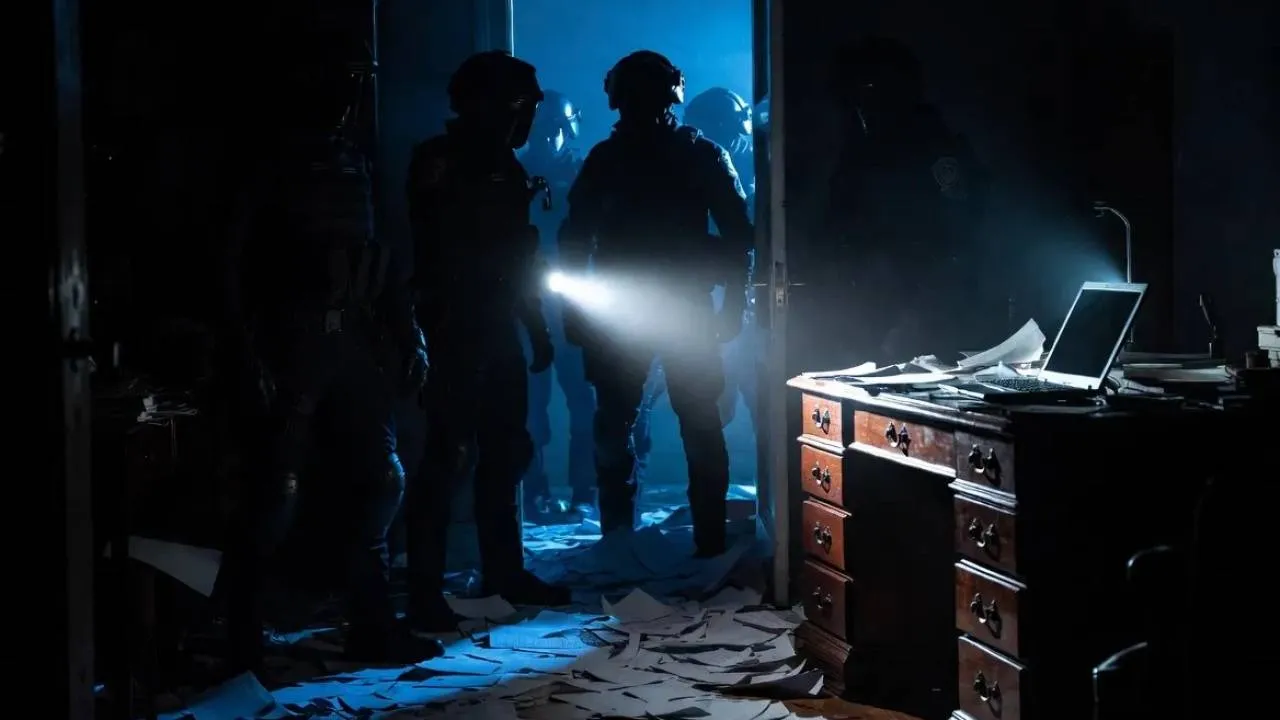
The hell that has unfolded around TV Republika, Gazeta Polska, and our other media outlets after the disclosure that Zbigniew Ziobro is one of our commentators resembles the worst periods of communist repression. Raids on our homes by officers who had neither grounds nor the appropriate documents to do so, intimidation through bomb alerts accompanied by suggestions that our children might be in danger, attempts to discredit us by insinuating the “disclosure” of compromising intimate materials, public ridicule and humiliation of our journalists by representatives of the authorities, and the already traditional abuse and humiliation of women by this ruling team — these are only a small part of the secret-police-style arsenal used in this operation.
The authorities will try at all costs to shift responsibility onto Russian cyberterrorists, but many things can no longer be concealed:
- The timing of the operation coincided with announcements of retaliation for employing Ziobro.
- Open violations of the law and threats by supervising prosecutors when the undersigned was summoned to the prosecutor’s office in connection with the Ziobro case.
- The attack was concentrated on a single environment.
- The complete lack of coordination despite our public appeals not to treat each incident separately.
- The lack of contact between the police and security services and the victims of the attacks, along with their unwillingness to obtain important information from us.
- The dismissal of a prosecutor who had previously caught one of the cyberterrorists.
- The acquisition of address data concerning journalists and even unknown administrative employees of our media outlets.
- Real-time monitoring of the work of the security services by the cyberterrorists.
- Excellent knowledge of police and other emergency-service procedures in alarm situations, as well as knowledge of the mentality of officers and when they might choose to circumvent the law.
- A complete lack of transparency in the actions taken, including deliberately misleading members of parliament and senators regarding the actual state of affairs.
- Concealing recordings from the raid on the home of the editor-in-chief and president of Republika despite public promises to release them.
- The lack of legally required approval for police actions.
- A style of public communication that encouraged cyberterrorists to continue their activities: promises of intervention in response to every alarm and the mocking of victims.
- The same operational model across all services subordinate to a single ministry — the Ministry of the Interior and Administration.
- Increasingly aggressive actions by police officers toward victims after a second false alarm concerning the same location (when the response should have been exactly the opposite).
- The police concealing personal data, including information whose disclosure is required by law.
- Openly creating a risk of inviting further attacks by hostile foreign services by demonstrating vulnerabilities in the security system.
- The cessation of interventions after “new” instructions were issued to the police only a dozen or so days after the operation began. This means that such instructions could indeed have been issued earlier and that there must have been previous directives that resulted in the earlier interventions.