Of Debora Donnini
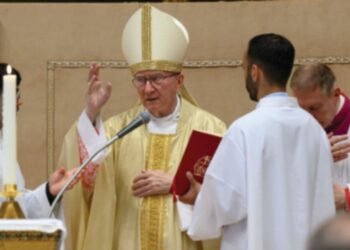
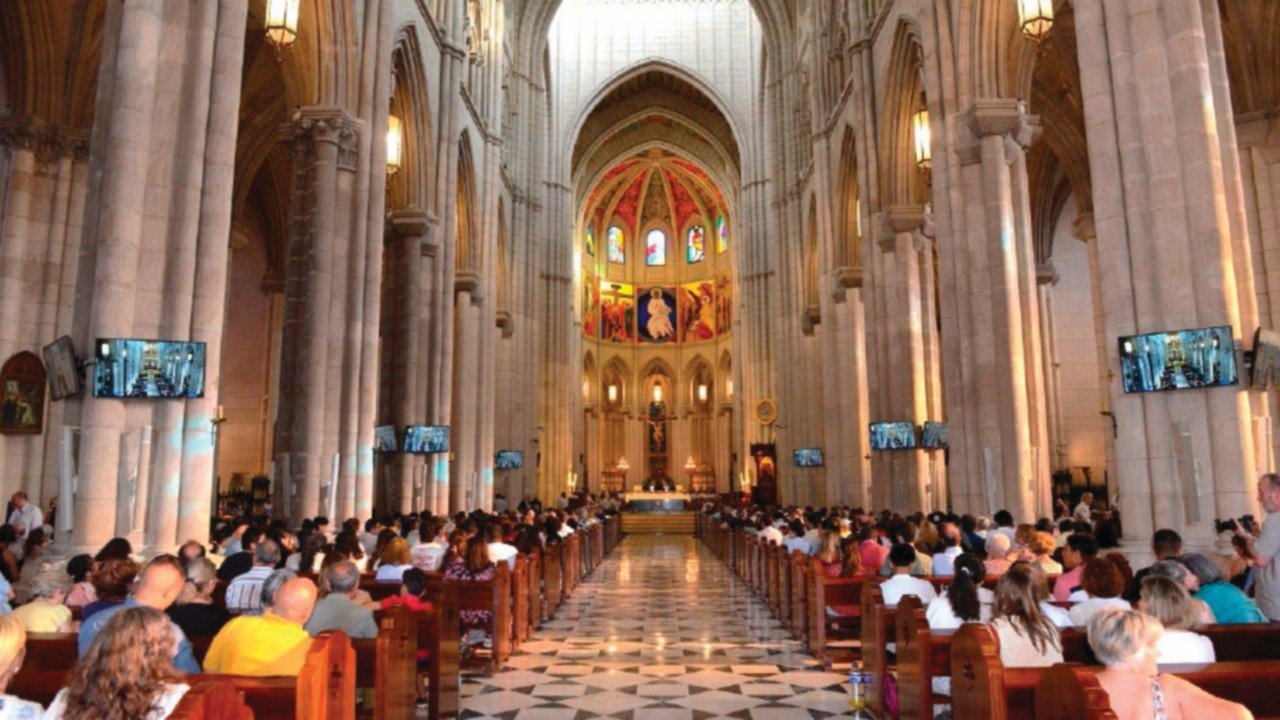
With gratitude for God’s faithfulness, a festive crowd of thousands of people participated in the mass celebrated on Saturday 30 May in the Almudena Cathedral, in Madrid, for the 60th anniversary of the birth of the Neocatechumenal Way, presided over by Cardinal José Cobo Cano. Emotion and gratitude could be felt among the elderly people sitting at the front pews, witnesses of how this ecclesial experience took its first steps since the time when the initiators, Kiko Argüello and Carmen Hernández, met in the barracks of Palomeras Altas, in the mid-1960s. Among those present were many children and grandchildren of those same people who saw the origins of the Way, which developed not as a reality created “at the table” but slowly and which today is widespread in 138 countries around the world, with over 20,350 communities. Also concelebrating were Cardinal Antonio María Rouco Varela, archbishop emeritus of Madrid, some bishops and more than one hundred priests.
The missionary commitment of the Way was recalled in a greeting message from Leo XIV, signed by Cardinal Secretary of State Pietro Parolin, read at the end of the mass. “It is necessary to remember – we read – that the evangelizing mission is a fundamental task of the whole Church which, with joy and humility, seeking the unity of all its members and docile to the action of the Holy Spirit, undertakes to bring the gift of salvation to all”. “Let this belief – continues the Pope – be a motivation to take on the missionary commitment in favor of God’s beloved children”.
An unimaginable story, that of the birth of the Neocatechumenal Way, which Kiko himself spoke about at the beginning of the mass, saying that in November 1964, at just 25 years old, he had left his career as a painter and, wishing to follow in the footsteps of Saint Charles de Foucauld, had gone to live among the poor in this area of Madrid. Around him who prayed, played the guitar and read the Bible, people who were marginalized and suffering in various ways gradually gathered and listened to the announcement of the kerygma. When in August 1965 the Civil Guard went to that place to demolish the barracks, Kiko managed to call the then archbishop of Madrid, Monsignor Casimiro Morcillo González, on the phone, who went there immediately and stopped the destruction. The archbishop was deeply moved by seeing that small “community” of such poor people praying. This love and attention that Carmen saw in Monsignor Morcillo convinced her to collaborate with Kiko. The archbishop invited them to go to the parishes and therefore, starting from 1966, the first catecheses began in the churches of Madrid and other areas. For this reason, Kiko explained, “Cardinal Cobo’s presence at this celebration is so important”. During the mass, Father Mario Pezzi and Ascensión Romero, who together with Kiko form the international team, highlighted the importance of communion and of having been helped on the Path to experience that the Word becomes flesh in people’s lives.
“The Church of Madrid and its bishop wish to thank the Neocatechumenal Way for its journey of evangelization, in these sixty years, in many contexts of this city”, said Cardinal Cobo Cano in the homily, urging us to continue the missionary impetus in harmony with diocesan life, ecclesial communion and attention to people’s freedom. “There has been no shortage of gestures of holiness among you,” he remarked, “and we are pleased to have started, in our diocese, the cause of canonization of Carmen”, which will experience a fundamental moment on Tuesday 2 June with the closing act of the diocesan phase of the beatification process, presided over by the cardinal himself at the Redemptoris Mater seminary in Madrid.
Cardinal Kevin Farrell, prefect of the Dicastery for the Laity, Family and Life, also sent his greetings. Spain, the cardinal recalled, has given the Church shining examples of spiritual renewal, through saints, martyrs and evangelization initiatives. “Among these fruits we can undoubtedly include the Neocatechumenal Way”, remarked the cardinal, noting how “many fruits have emerged from those humble beginnings, sixty years ago: the bringing of many people closer to the faith and the Church, countless conversions, the birth of Christian families, vocations to the priesthood and religious life, and missionary activity in numerous countries around the world”. «It can be said – Farrell further underlined – that from the “tree” of Christian initiation, rediscovered and put into practice by taking up the ancient ecclesial tradition of the catechumenate, many other “branches” were also born which have done, and continue to do, much good for the Church: the itinerant catechists, the diocesan missionary seminaries, the missionary families, the new parishes founded in mission territories, the evangelizing activity of missio ad gentesthe accompaniment paths for young people”. Numerous works which, he exhorts, “you are called to safeguard and grow for the good of the whole Church”.