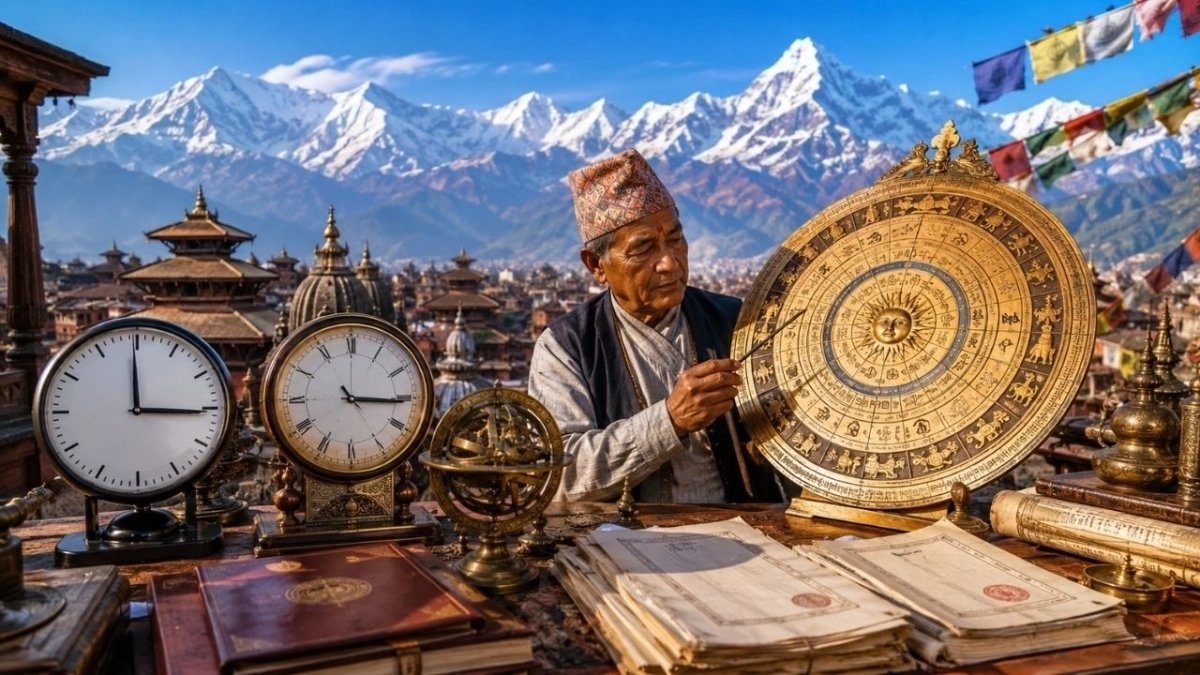
A different system of measuring time has the Nepalwhich makes it stand out, beyond Everest and the Himalayas. At a time when most of the world is living by calendars in 2026, Nepal has already entered the year 2083 according to the Bikram Sambat calendar, which is widely used in daily life, public services and local celebrations.
The new year 2083 started on April 14, 2026, the first day of the month of Baisakh. To a visitor, the image may seem almost surreal: to see in announcements, diaries or official documents a date showing 57 years ahead. In reality, however, there is nothing metaphysical. It’s just that Nepal uses a different dating system than the Gregorian calendar, which has prevailed in most international transactions.
It’s not the future, it’s another way of measuring it
Bikram Sambat does not completely replace the Gregorian calendar. The two systems coexist. In international flights, diplomatic relations, travel documents and foreign contacts, the known dates of 2026 are used. In the inner life of the country, however, 2083 is completely normal: enters holidays, administrative documents, holidays, local programs and daily reports.
The uniqueness doesn’t stop at the calendar. Nepal also has one of the most unusual time zones in the world. Instead of being on a whole hour or even a half hour difference from UTC, it uses UTC+5:45. This means that when the international clock is 12:00, in Nepal it is 5:45 PM. It is even 15 minutes ahead of India, which uses UTC+5:30.
The current time format was established in 1986 and is associated with the country’s attempt to maintain its own identity, between two huge neighbors, India and China. Nepalese time is also traditionally associated with the Gaurishankar mountain region, east of Kathmandu, further strengthening the link between geography, history and national self-image.
For travelers, all of this can be a little confusing. A ticket, a local announcement or a celebration can to display date 2083, while the time requires attention due to the 45 minute difference. But for the residents, it’s just normalcy. A way of organizing their lives based on their own cultural and historical references.