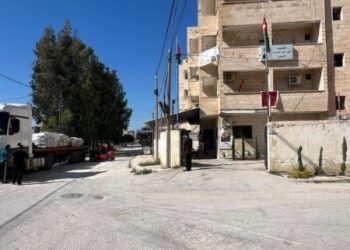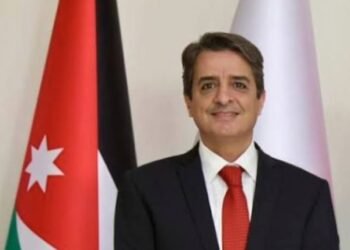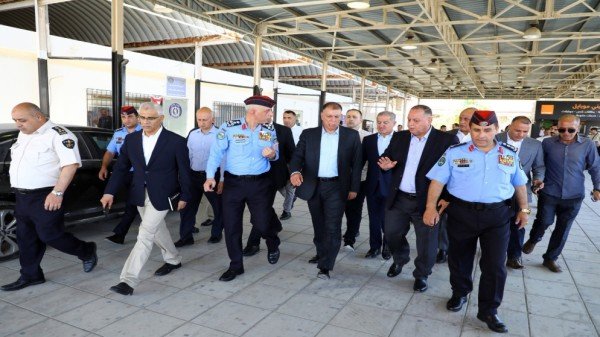
In the meantime, the Minister of the Interior, Mazen Al-Faraya, is conducting a surprise inspection visit to the King Hussein Bridge, the second in a week, to review the progress of work and stand on the ground at the level of services provided to travelers and the procedures followed at the crossing.
The visit comes within the framework of monitoring the conditions of the bridge and examining the reality of the services provided to travelers, in addition to evaluating the measures taken to deal with travel traffic and reduce overcrowding.
Last Sunday, Al-Faraiya conducted a field visit to the King Hussein Bridge, during which he confirmed that the bridge is considered a special humanitarian crossing, as it connects Jordan to the Palestinian territories and is directly affected by the actions of the Israeli side, its working hours, and the sudden closures that sometimes occur.
During the visit, he stressed the importance of the electronic platform in organizing travel and advance reservations according to the available capacity, stressing that commitment to advance reservations contributes to reducing overcrowding and accelerating the completion of procedures.
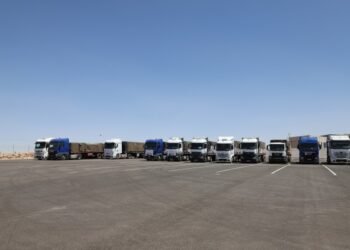
He also explained that the Ministry of Interior is implementing projects to develop the infrastructure on the bridge, which include constructing waiting halls and canopies for travelers, and establishing new facilities for shipping and public transportation, in addition to rehabilitating the immigration halls and improving the level of services provided to travelers.
Al-Faraiah confirmed earlier that Jordan receives all those arriving via the King Hussein Bridge without being restricted by the number or time, while some cases of delay and crowding are related to the procedures and restrictions imposed on the other side.