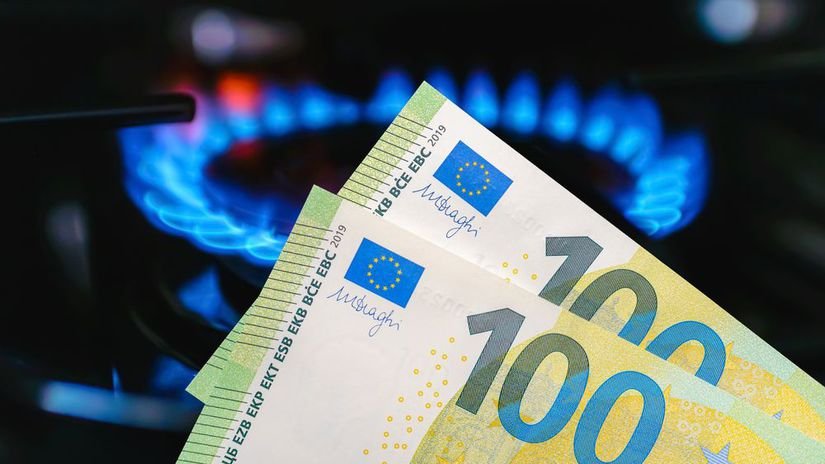
The owners of apartments with their own heating, who years ago legally disconnected from the central heat source, experience great satisfaction. The Constitutional Court of the Slovak Republic, under the leadership of President Ivan Fiačan, issued a long-awaited ruling in May, definitively sweeping the questionable parts of the ministerial decree off the table.
They have been forcing disconnected apartments to pay disproportionately high sums for the heat of their neighbors for a long time. The decision of the court in Košice is a clear signal for the entire state administration that if it wants to impose financial obligations on citizens and interfere with their property, it must do so in a clean way through parliament, and not through official decrees. The unfairness in the system was pointed out by a group of 32 members of the National Council of the Slovak Republic, which the court fully upheld.
As a state, it created a trap for the wallets of disconnected apartments
The whole problem flared up after the new heat budgeting rules came into force in mid-December 2024, brought about by the decree of the Ministry of Economy of the Slovak Republic No. 503/2022 Coll. Simply put, even if the citizen had an apartment with individual heating and was completely disconnected from the common heating system of the apartment building, the state forced him to participate financially in the so-called basic component of the heat costs of the entire apartment building.

Officials used charts and formulas to figure it out. The floor area of the disconnected apartment was multiplied by a coefficient from 0.2 to 1.0, depending on where exactly the property was located in the apartment building, whether it was an attic, a ground floor or an apartment without passing common distribution lines. In practice, it happened that the owners of disconnected apartments paid enormous sums for joint heating, while their bills were often comparable or even higher than those of neighbors who actually took heat from radiators connected to a central source. The Ministry defended this step with physics, namely the transfer and penetration of heat through the walls, from which the disconnected apartments were supposed to benefit.
Long-term practice or other laws will not stand as an excuse
The Ministry of Economy defended itself before the Constitutional Court of the Slovak Republic by saying, among other things, that payments for apartments with individual heating were nothing new and were already introduced in the legislation in 2005. However, the court resolutely rejected this argument. In the justification, the judges clearly stated that the long-term existence of some legal regulation in the decree does not justify the conclusion of its compliance with the constitution and the law without further ado. In other words, just because a state has been doing something wrong and illegal for years does not automatically give it the right to continue doing it.
The ministry’s attempt to hide behind the law on ownership of apartments and non-residential premises was equally unsuccessful. Officials tried to claim that this law gives them support for their interpretation, but according to the Constitutional Court of the Slovak Republic, this was an unreasonably extensive interpretation by the ministry. The Act on the ownership of flats contains only a basic definition of a common device, which is also a device for the production of heat in the house, regulates payments for real supplies of heat and hot water and stipulates the obligation to allow access to the flat for the installation or maintenance of meters. With the exception of one provision, which deals exclusively with consent to disconnection from common heating distributions, this law does not specify any special obligations or financial burdens for the owners of disconnected apartments.
When officials rewrite and supplement the will of Parliament
The court’s decision brings an important lesson from constitutional law and the functioning of the rule of law. In order to impose any obligation on a citizen, it is in no way sufficient that the law prohibits the imposition of such an obligation. The Constitution requires the explicit imposition of the obligation directly in the law. Although the power of attorney in the Act on Thermal Energy did not explicitly prohibit, due to the lack of specification of the subjects, that the budgeting of costs by decree should also apply to disconnected apartments, this did not give the officials a free hand.

The legal regulation must be sufficiently comprehensible and predictable for its addressee by itself, i.e. even without an implementing decree. Deducing from the current law on thermal energy that disconnected apartments should also share in the costs was only possible using an extremely loose interpretation with a lot of implicit assumptions. However, the Act on Thermal Energy does not sufficiently and certainly not name these apartments and their owners. With its decree, the Ministry did not just create a kind of secondary technical obligation, but instead of making it more specific, it unjustifiably added a completely new range of recipients to whom the law itself does not impose any obligations. In short, according to the Act on Thermal Energy, the owners of disconnected apartments cannot be considered final consumers, since they do not take any heat directly from the central source.
Encroachment on property and a stopgap for the silent arbitrariness of the executive power
Since the decree forced people to pay without a proper and clear legal basis, the constitutional judges concluded that the contested provisions impermissibly interfered with the property sphere of owners of detached apartments. They imposed a financial burden on them and interfered with their sphere of disposition to dispose of their own property, which they lost as a result of payments not foreseen by law. Therefore, the twilight clauses of the decree contradicted the protection of property rights guaranteed by the Constitution and the Additional Protocol.
The Constitutional Court went even further and, on the basis of the Act on the Constitutional Court, declared unconstitutional not only the challenged paragraphs in section 8, but in a direct substantive context also canceled the provision of section 7, paragraph 5 of the decree, originally unobjected to by the petitioners. It also illegally ordered to calculate the basic component between detached apartments and non-residential premises. On the other hand, the court did not comply with the proposal of the deputies to declare inconsistency with the principle of legal certainty, because the very question of bearing part of the costs due to heat transfers has its own logic and the intensity of the misconduct did not reach such a level as to deny the foundations of the functioning of the rule of law as a whole.
It is not a tax, paying for heat is legitimate, but the parliament must decide
An interesting moment of the entire ruling is that the court rejected the argument according to which these forced payments would be in the nature of an illegal tax or fee. The payment is made for the heat actually supplied to the object. The equivalence here consists in the form of delivered heat on the one hand and payment of the costs of its delivery on the other hand, which does not meet the definition of tax according to the constitution. The problem wasn’t the fact that detached apartments should pay anything at all, but the way the state required them to do so.
The question of whether the apartment owner can disconnect from the heating system and what rights and obligations he has in relation to other neighbors in the house in connection with heating costs is not just a purely expert question for ministerial officials. It is an important issue of public policy in energy. The essence of the law’s proviso is that interference with the rights of individuals should not only be a closed technocratic decision of the ministry as an executive power body, but the result of a democratic decision and a broad debate in parliament. The court confirmed that it appears to be fully legitimate for the owners of detached apartments or apartments with individual heating to bear part of the costs due to the physical characteristics of the buildings, but such an obligation must be regulated stably, predictably and fairly directly in the law.
What will follow and what it means for practice in apartment buildings
The annulled provisions of the decree lose their effectiveness on the exact day when this finding is published in the Collection of Laws of the Slovak Republic. The Ministry of Economy has exactly six months from this moment to bring the decree into compliance with the Constitution and the legal opinion expressed by the Constitutional Court. If he does not do so within the specified period, these disputed paragraphs will lose their validity permanently and will definitively disappear.

This has immediate consequences for ordinary citizens and apartment building managers. Valid decisions that have already been issued in civil or administrative court proceedings in the past and where these unconstitutional sections were applied remain formally intact, but the obligations imposed by such decisions can no longer be forcibly enforced, for example through executions. At the same time, it is clear from this unenforceability that, based on the unconstitutional provisions of the decree, administrators, housing cooperatives and courts cannot impose any new obligations on the owners of detached apartments or issue new decisions on payment regulations. No appeal can be filed against this decision of the Constitutional Court of the Slovak Republic, the verdict is final and binding on the state authorities. The executive power has been taught a lesson and the ball is now in the court of the legislators, who will have to prepare a truly fair law.