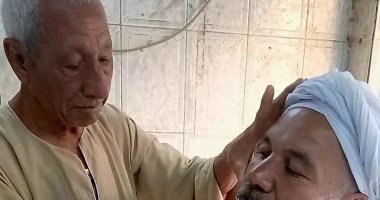
Here time stops and refuses to pass. A miniature picture from days gone by that you will find at Uncle Ali Hamed, the oldest barber in Qena GovernorateOnly elderly people with white hair frequent his shop. Some of them lean on their sticks to reach Uncle Ali’s barber shop and no one else. Here, the scissors are a mouthpiece that tells the story of 70 years of struggle in a profession from which he raised his children and their spouses. The customer is not standing inside an ordinary shop, but in front of a witness to an era that has lasted for days. King Farouk.
The 81-year-old man spent nearly seven decades in the barber profession, during which his hands, which had preserved the features of generations, were exhausted, but he still worked for a living, and his story remains a living example, written with scissors and a 120-year-old chair, a legacy from his father, from whom he passed on the craft, so that Qena remains a gateway to heritage in its various forms and fields.
A barber chair he inherited from his father
Ali Hamed, the oldest barber in… QenaHe began his work in the profession at a young age, as he inherited it from his father, who also worked in it. He began in an old shop that was about 200 years old, from which he recently moved to another place, but he kept the old equipment and the barber chair as it was, the father’s legacy and a fragrance of the scents of the good old days.
Uncle Ali explained that he still keeps the old tools that he used before the introduction of electricity into his shop, including the manual razor that relies on manual effort, as well as the old razor that he still uses to this day, in addition to modern machines that operate with electricity, stressing that his customers are elderly due to the nature of the cuts he is good at, and his lack of mastery of modern youth cuts.
The wandering barber in the villages
Uncle Ali continued that the barber profession in the past differed greatly from the present time in terms of wages, as the barber would roam the villages and markets with a manual razor and a razor, and the compensation was often grains, eggs, or part of the agricultural crop. Then the matter developed to simple pennies, saying: “Now whoever has it pays, and whoever does not have it also.”

_The oldest barber in Qena Governorate
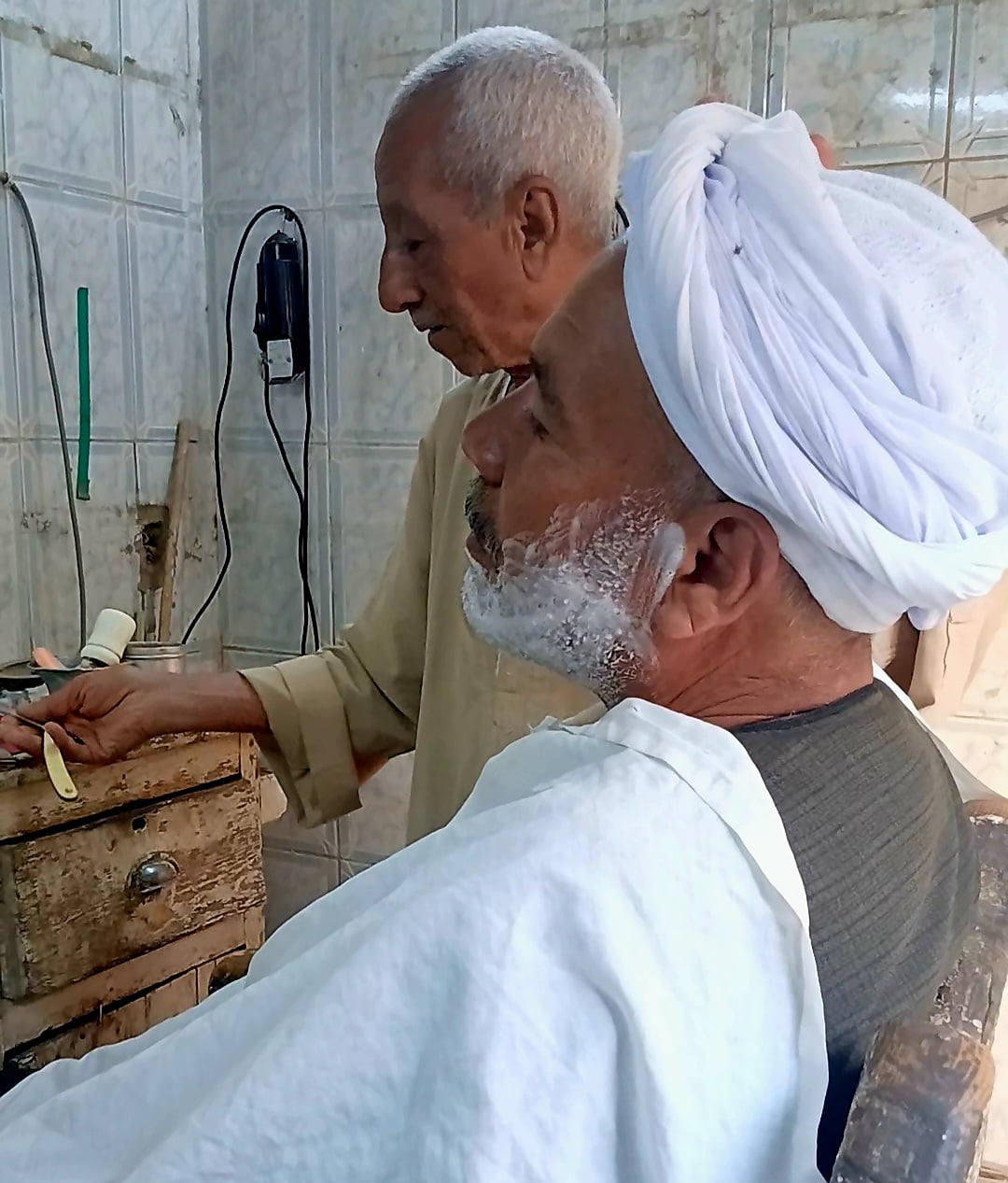
_Uncle Ali at work
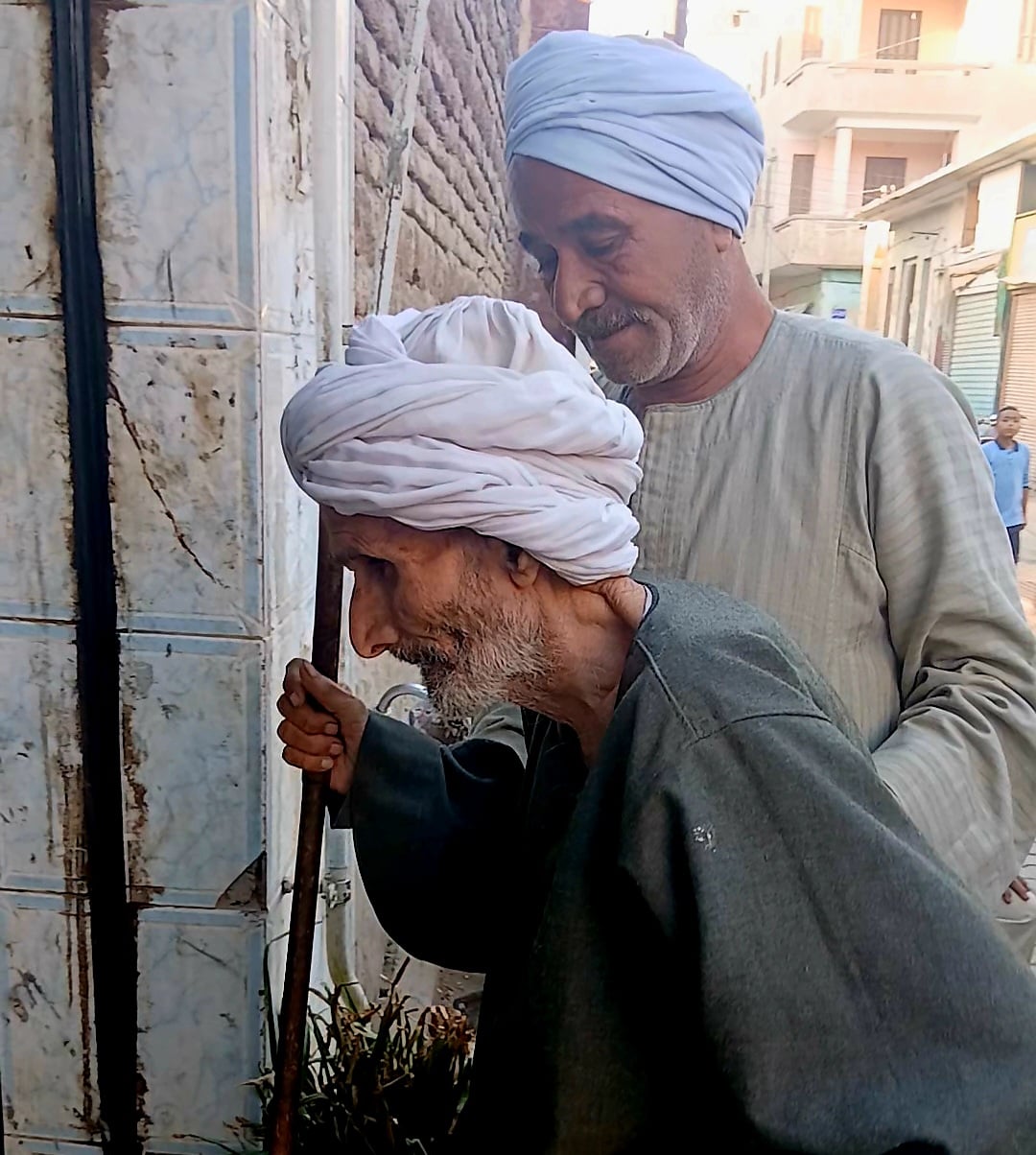
_The elderly in front of the store
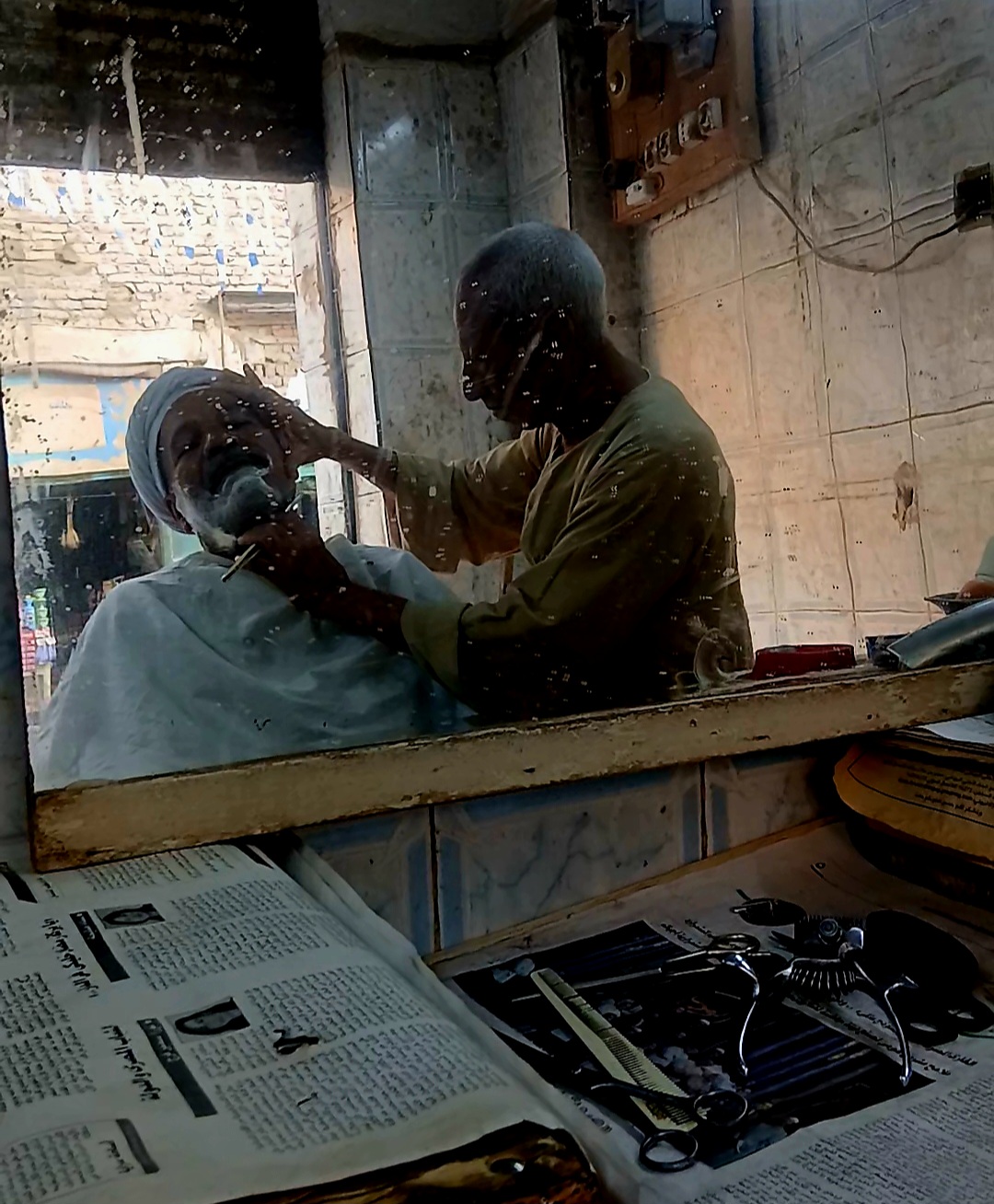
_Uncle Ali Hamed’s barber shop