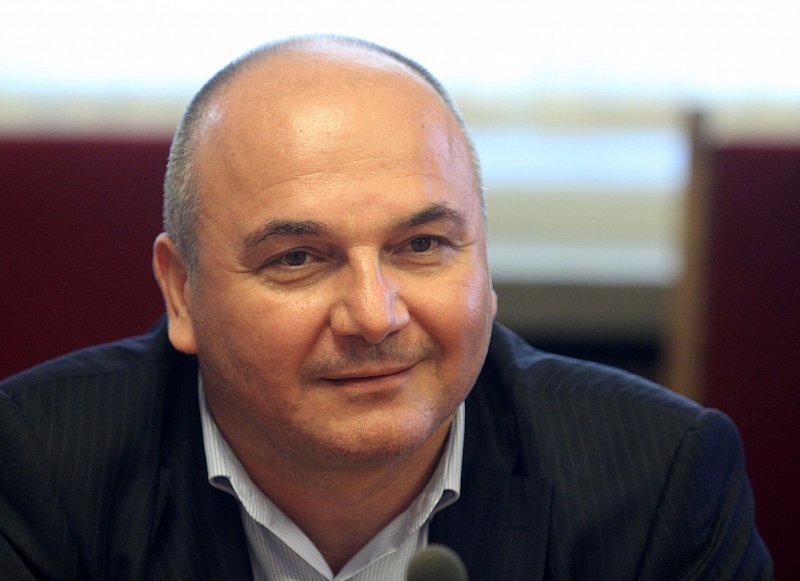
“At the moment there are negotiations on changes that give the criminal authorities more rights for higher fines. But this comes at the expense of the light business. What they can do is add problems. I don’t know how it does not occur to them that if they want to improve – they have to touch, where there are deviations and including the gray sector. All are practiced on the back of light business, on the people who bear the burden. I am skeptical if they continue with these narratives that they can to do whatever,” explained Datsov.
He commented on the statement of PB MPs Petar Vitanov and Slavi Vasilev, who claimed that the budget deficit would be 7%, the acting finance minister, Georgi Klisurski, claimed that the deficit for April was 0.
“As of April, for the month itself, they come out to 0%. But if we compare with the last 10 years, the deficit for April alone varied from 200 million to 400 million euros. Currently, historically, the April deficit deviates significantly and this result is not good. For the first quarter, the deficit on a quarterly basis is 5.8% of GDP. It is not always correct when you reflect a quarterly deficit to annual GDP, because it does not give the true value.”
Once again, Lyubomir Datsov said that the budget for 2026 is not exactly an extension, because it includes a 5% salary increase and foresees an increase in pensions.
“Let’s say that this extended budget is real, I don’t know exactly what they will accept, because the extended budget by definition must comply with the law on public finances. These requests were modified in the National Assembly and we have a budget with changed parameters – increased salaries by 5%, an increase planned for pensions, increased capital expenditures. And the deficit is due to the fact that the municipalities will pay off projects in the first quarter the amount they spend on an annual basis,” he said the financier.
According to Datsov, this shows how big the deficit is and there are almost no buffers to make policy. And he commented that the 16 billion euro fiscal reserve means that the state is not obliged to take out a loan.
“Bulgaria has an obligation for this year’s net expenses to grow by no more than 4.5%. Perhaps it is not bad for people who make a decision to read what we have committed ourselves to as a country and what our obligations are. And Bulgaria has violated the restrictions for the second year. If you exceed the growth of the budget in the first 2 years, there must be compensation in the second two. Unfortunately, we need to think about what is being done with the budget in the direction of optimization and starting structural reforms. It would be good if we put the real public sector reform package with emphasis on the real economy.”
The financier pointed out that there are currently 90,000 more people in the public sector compared to 2005, and at the moment these managers have a difficult decision to make.
“The good decision to make a consolidation to shrink the budget is to make structural reforms in the expenditure part. If they give up, the other is to raise taxes,” warned Datsov.