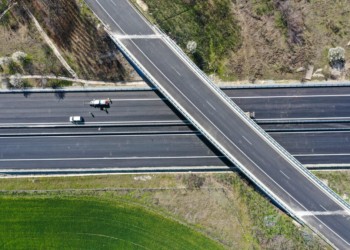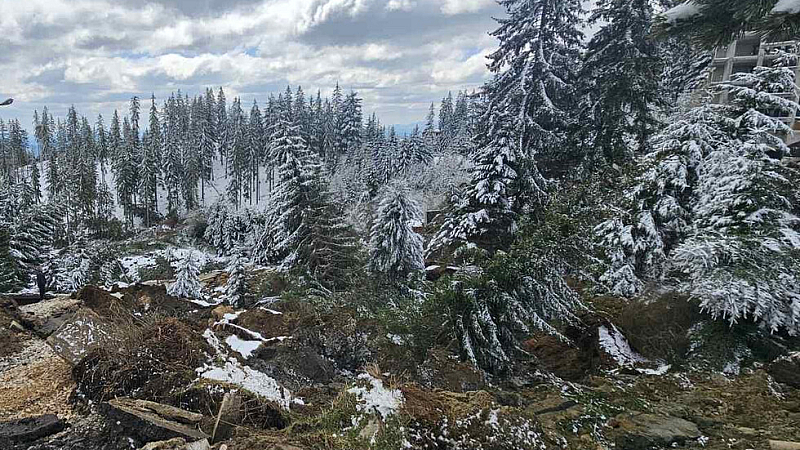
The situation is becoming increasingly alarming. According to the latest data from the Regional Road Administration in Smolyan, the compromised section is growing. A new 100 meters of the road in the direction of Smolyan show visible cracks in the pavement, a direct consequence of the pressure of the huge earth masses, which calls into question not only the main road, but also the security of the adjacent territories.
The expert view of what happened adds the necessary scientific depth that often escapes us in tense moments of crisis. According to Prof. Stefcho Stoynev, head of the Department of Hydrogeology and Engineering Geology at the St. Ivan Rilski University of Mining and Geology, each landslide goes through three phases: preparatory, active and subsidence. In the specific case of the Smolyan – Pamporovo road, the preparatory stage was extremely short – only a few hours, which made prevention almost impossible. We are currently at the end of the second, most critical stage – the active landslide, and the danger of growth remains real. Prof. Stoynev emphasizes that this landslide is actually a small part of the largest landslide in Bulgaria – the Smolyan one, which was studied in detail at the end of the last century. It was then clearly established that the main driver of these processes is groundwater and soil saturation, reinforced by the specific geological morphology of the Rhodopes. This “waterlogging” provoked by the melting snows and rains deteriorates the properties of the earth’s masses and turns them into “lubricated” sliding surfaces on which our infrastructure is built.
To understand the depth of the problem, we must first recognize that the geological instability of the region is not a curse, but a fact that any construction must fundamentally take into account. The cause of such landslides is rarely single. It is almost always a combination of natural resources and human intervention that inadvertently or due to poor planning facilitates this process. When we talk about artificial waterlogging, we need to take a critical look at the way we build roads and their adjacent drainage systems.
In many cases, the constructions change the natural outflow of surface and underground water and turn the slopes into masses “pregnant” with moisture, which are mechanically activated during the first serious snowmelt. Deforestation of hillsides and compromised drainage are factors often overlooked in the search for quick and cheap solutions, but the bill is invariably paid by society when road infrastructure collapses.
Analyzing the situation on a large scale, it becomes clear that the risk is not limited to the main road, but is systemic to almost the entire transport network in the region. The institutions are already looking for solutions in motion, with the priority being the restoration of a collapsed wall along the bypass route through the village of Stoikite – where traffic has been limited to one lane for five years. The upcoming meetings in the regional and municipal administration in Smolyan aim to move the administrative machinery to specify the ownership of the properties and to organize specialized studies by geologists and experts.
The intention to expand this bypass to two lanes is a step towards normalizing traffic, but it brings us back to the problems of bureaucracy and the need for long-term planning. The process requires complex coordination between the Regional Road Administration, the Road Infrastructure Agency and the Ministry of Regional Development and Public Works, and the actual decision is impossible without serious expert analysis.
The current “crisis management” approach of putting out fires after the road has already failed is expensive, dangerous and unsustainable. The state must shift its focus from reactive recovery to proactive prevention based on monitoring systems to track the factors leading to landslides. However, as experts note, we must be realistic. Possibilities for prevention exist, but nature is always capable of surprises, especially in an area like the Rhodopes, where hundreds of landslides are a natural result of geology. The use of InSAR-type satellite data, which allows the detection of micrometric terrain deformations months before they become visible, is a standard that is long overdue. Placing groundwater level sensors and tilt meters at key locations would provide “early warning” that would save huge money and ensure the safety of thousands of commuters.
The truth is that the mountain requires humility and a deep scientific approach. Any piecemeal solution only temporarily calms the tension without addressing the root cause. If we want to transform the Rhodopes into a place with sustainable and safe infrastructure, we must accept that engineering facilities must be designed not according to the current budget, but according to the long-term behavior of the soil. This means that any planned fortification must include integrated drainage systems to absorb the volumes of water, avoiding fatal waterlogging.
Konstanza Ilieva