
He entrepreneurship In Costa Rica it maintains a trend of growth and transformation. A study by the Ministry of Economy, Industry and Commerce (MEIC) showed a high interest in formalization and a strong participation of women in this activity, according to data released this April 9, 2026 in San José.
The research, prepared by the General Directorate of Support for Small and Medium Enterprises (Digepyme), analyzed 451 responses from entrepreneurs registered in the Costa Rican Business Information System. The study reached a confidence level of 95% and a margin of error of 5%.
One of the main findings is the female leadership in entrepreneurship. Women represented 82% of the people surveyed, while 76% were between 35 and 65 years old, reflecting a high participation of productive age.
Regarding territorial distribution, the study identified a concentration in the Central Regionwhere 54% of the ventures are located. They are followed by the Chorotega and Central Pacific regions with 11% each, while Brunca registers the lowest participation with 6%.
By sector, the majority of initiatives focus on industrial activitywhich groups 47% of the ventures. They are followed by services with 35% and commerce with 14%. Among the main activities are food and beverages, textiles, crafts, professional services and tourism.
The report also shows a relevant educational base. 51% of entrepreneurs have completed or incomplete university studies, while 32% have secondary education.
In terms of operation, 86% of businesses remain active and generate income. Together, they provide nearly 898 jobs, with an average of 1.9 positions per venture. Additionally, 69% report monthly income of up to ¢1,000,000.
The study points out a high interest in formalizing business. 80% claimed to know the steps to formalize, while 86% expressed willingness to do so with institutional support.
However, barriers remain. Among them, the need to better understand the process, have financial resources and access training in areas such as marketing, sales, finance and administration stands out.
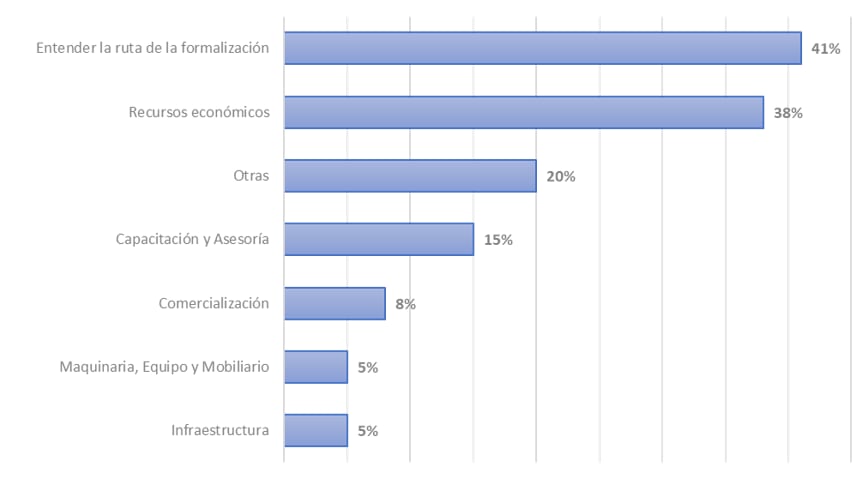
In terms of compliance, the report showed partial progress. 68% of the enterprises are registered with the Ministry of Finance, 38% with the Costa Rican Social Security Fund and 35% have a workplace risk policy.
The MEIC indicated that these results allow public policies to be oriented toward strengthening the entrepreneurial ecosystem, with emphasis on formalization, access to resources and capacity development.