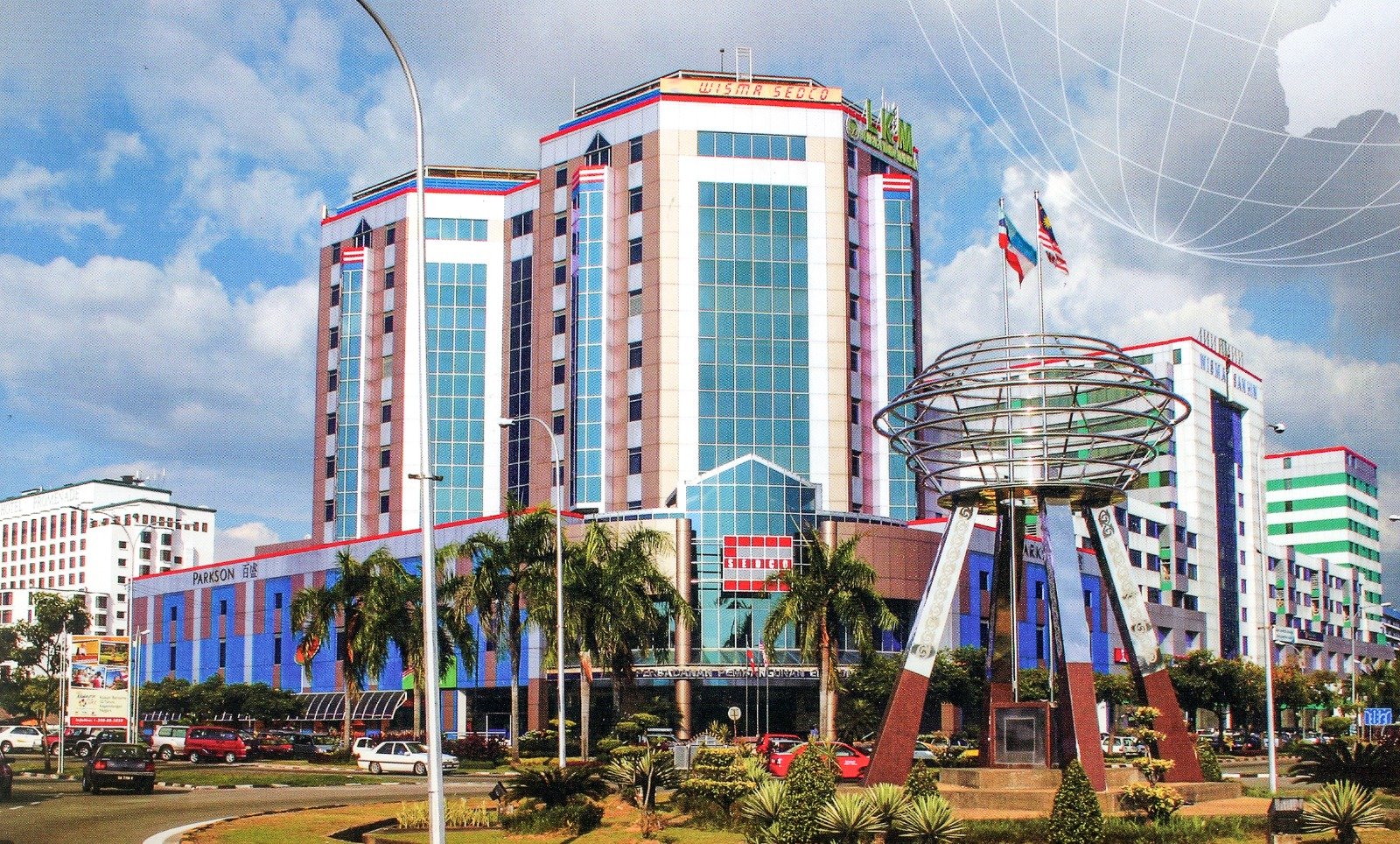

Under Chief Executive Officer Datuk James Wong Kein Peng, Sabah Economic Development Corporation (SEDCO) has achieved a turnaround and is now among Sabah’s better performing GLCs.
 THE performance of government-linked companies (GLCs) in Sabah has increasingly attracted public attention, often accompanied by strong and sometimes sweeping criticisms. A commonly expressed view is that most of these entities are underperforming, failing to deliver meaningful returns either financially or socially. While such a conclusion may appear overstated at first glance, it reflects a broader concern about whether GLCs are fulfilling their intended role as instruments of economic development and public value creation. A more careful and balanced evaluation suggests that although not all Sabah GLCs are failing, a significant number are performing below expectations. The issue, therefore, is less about universal failure and more about widespread inefficiency and unrealised potential.
Recent data lend weight to these concerns. It has been observed that only about 30 per cent of Sabah’s top-tier GLCs consistently pay dividends to the state government, suggesting that the majority operate at marginal profitability or incur losses. When the wider ecosystem is considered, comprising more than 200 subsidiaries and associated entities, the scale of the problem becomes even more pronounced. Some estimates go as far as to suggest that up to 90 per cent of Sabah’s GLCs fail to deliver meaningful financial or social outcomes. These figures, while open to interpretation and dependent on how performance is defined, point to systemic weaknesses that deserve serious attention.
At the same time, official narratives present a more measured assessment, describing the overall performance of GLCs as moderate rather than catastrophic. This perspective is important because it recognises the unique nature of GLCs. Unlike purely private enterprises, many are established with dual mandates. They are expected to generate economic returns while fulfilling social and developmental objectives such as supporting rural economies, creating employment opportunities or investing in sectors that seem less profitable in the short term yet remain strategically important. Evaluating all GLCs solely on profitability would therefore be misleading. Nevertheless, even when these broader roles are taken into account, there remains a compelling argument that many GLCs fall short of their objectives efficiently or effectively.
One of the most significant contributors to this underperformance is weak governance. Good governance is fundamental to organisational success, providing the structure through which decisions are made, accountability is enforced and long-term strategies are implemented. In the case of some Sabah GLCs, governance has been compromised by political interference and appointments that prioritise loyalty over competence. When leadership positions are filled without regard to merit, organisations are deprived of the expertise and professionalism required to navigate complex economic environments. This practice often results in unclear strategic direction, inconsistent decision-making and diminished accountability.
Closely linked to governance issues is the challenge of unclear or conflicting mandates. Many GLCs operate under dual expectations, being tasked with both commercial profitability and social responsibility. While this dual role may be appropriate in principle, it becomes a source of inefficiency when left poorly defined or weakly managed. Without a clear prioritisation of objectives, GLCs may pursue initiatives that dilute their focus or stretch their resources too thinly. In some cases, commercially driven strategies are undermined by policy obligations while in others, social initiatives are pursued without adequate financial support. The absence of well-defined performance metrics further complicates the situation, making it difficult to assess success or failure in a meaningful way.
Another important factor is the historical lack of robust accountability and performance monitoring. In certain instances, GLCs have operated with limited oversight, allowing inefficiencies to persist over long periods. The introduction of more structured reporting systems and key performance indicators in recent years suggests that the earlier gap is being recognised. However, the effectiveness of these measures depends heavily on consistent enforcement and a willingness to act when performance falls short. Without tangible consequences, monitoring frameworks risk becoming procedural exercises rather than tools for genuine improvement.
The structural complexity of Sabah’s GLC ecosystem contributes to its challenges. Over time, a large number of entities have been established, often in response to specific policy objectives or development projects. While some of these companies may have served their intended purpose, many continue to exist despite diminished relevance. This proliferation leads to duplication of functions, administrative inefficiencies and the persistence of dormant or underperforming entities. Managing such a large and fragmented ecosystem becomes increasingly difficult, and rationalisation is both necessary and inevitable, even if it presents political and administrative challenges.
Financial discipline represents another area of concern. Some GLCs are burdened by high levels of debt, poorly structured investments and weak cost control mechanisms. In the absence of strong financial governance, these issues can escalate quickly, undermining long-term sustainability. Furthermore, fully state-owned GLCs often lack exposure to market discipline. Unlike publicly listed companies, which are subject to scrutiny from investors and regulators, many GLCs operate without comparable external pressures. This absence of accountability can contribute to complacency and inefficiency.
The question of talent and leadership lies at the heart of the issue. The success of any organisation depends largely on the quality of its leadership, particularly for GLCs operating in complex environments. In Sabah, there have been instances where leaders lack the necessary experience, expertise or strategic vision to drive performance. This pattern reflects broader systemic weaknesses in the way leaders are selected, developed and evaluated. Without a strong pipeline of capable professionals, efforts to reform GLCs are unlikely to achieve lasting success.
Addressing these challenges requires a comprehensive and sustained approach to reform. Strengthening governance remains a central priority. This reform involves establishing independent and professional boards, clearly delineating the roles of policymakers and managers, and enforcing adherence to high standards of corporate governance. Transparency and accountability deserve treatment as essential components of organisational culture rather than optional ideals.
Equally important is the need to ensure that leadership appointments are based on merit. Transparent recruitment processes, competency-based evaluations and the involvement of independent panels can help restore confidence in the system. When capable individuals are placed in leadership roles, organisations are better positioned to develop clear strategies, make informed decisions and deliver results.
Clarifying the mandates of GLCs is another critical step. Each entity should have a well-defined purpose, supported by measurable objectives that align with the state’s broader development goals. Where social responsibilities are involved, these should be explicitly recognised and adequately funded. This clarity will enable more accurate performance assessment and ensure that resources are allocated efficiently.
Rationalising the GLC ecosystem remains necessary. This process may involve merging overlapping entities, restructuring operations or closing companies that are no longer viable. While such measures may be politically sensitive, they are essential for improving efficiency and reducing waste. A more streamlined ecosystem is likely to be more effective and easier to manage.
Strengthening accountability mechanisms is equally important. The introduction of clear and outcome-based performance indicators, combined with regular audits and reviews, can help ensure that GLCs remain aligned with their objectives. These mechanisms require real consequences to retain credibility. Leadership accountability should be meaningful, with underperformance leading to corrective action where necessary.
Improving financial discipline is another key area of reform. This effort involves adopting rigorous budgeting practices, enhancing investment evaluation processes, and ensuring that financial decisions are guided by sound economic principles. Financial sustainability should remain central, enabling GLCs to operate effectively without placing undue strain on public resources.
Increasing exposure to market discipline can play a significant role in improving performance. Where appropriate, listing GLCs on stock exchanges or encouraging partnerships with the private sector can introduce additional layers of scrutiny and benchmarking. Such measures can help instil a culture of efficiency, competitiveness and transparency.
At the same time, investment in talent development deserves attention. Building a strong pipeline of skilled professionals requires a commitment to training, mentorship and the attraction of experienced individuals. Human capital is a critical determinant of organisational success, and GLCs should prioritise its development if they are to achieve sustainable improvement.
Central to all these reforms is the role of leadership. Transforming underperforming GLCs or sustaining successful ones requires leaders of exceptional calibre. Such individuals should possess strong academic and professional credentials, coupled with extensive experience in managing complex organisations. A deep understanding of finance, strategy and operations is essential as is the ability to navigate the unique challenges associated with public sector entities.
Equally important is integrity. Leaders should demonstrate a commitment to transparency, accountability and ethical conduct. They need the resolve to resist undue influence and prioritise the long-term interests of the organisation and the public. Without integrity, even the most well-designed reform is unlikely to succeed.
The ability to manage change is another critical attribute. Transforming a GLC often involves restructuring operations, reshaping organisational culture and overcoming resistance. Leaders should be able to articulate a clear vision, inspire confidence and guide their teams through periods of transition. This requirement extends beyond technical expertise to include strong interpersonal and communication skills.
Stakeholder management is essential. GLC leaders operate within a complex environment where they balance government expectations, public interests and commercial realities. Effective communication and negotiation are therefore crucial.
Ultimately, leadership needs to be results-oriented. Vision and strategy ought to translate into tangible outcomes, including improved financial performance, enhanced service delivery and meaningful contributions to the state’s development goals. Accountability for results should define leadership in GLCs.
While it may be inaccurate to claim that most GLCs in Sabah are performing badly, there is little doubt that many are underperforming. The data indicating low dividend contributions and widespread inefficiencies underscores the need for reform. At the same time, it is important to recognise the diverse roles that GLCs play and to evaluate them within the appropriate context. With strong governance, clear mandates, rigorous accountability and capable leadership, Sabah’s GLCs have the potential to become powerful drivers of economic and social progress. The challenge lies not in the concept of GLCs themselves but in the way they are managed and led.
Dr Richard A. Gontusan is a Human Resource Skills Training and Investment Consultant. He writes on academic, economic, political and social issues. His views expressed in this article are not necessarily the views of The Borneo Post.