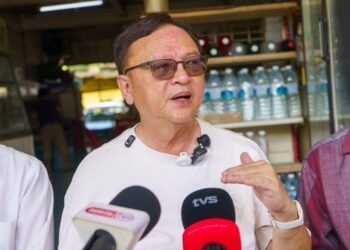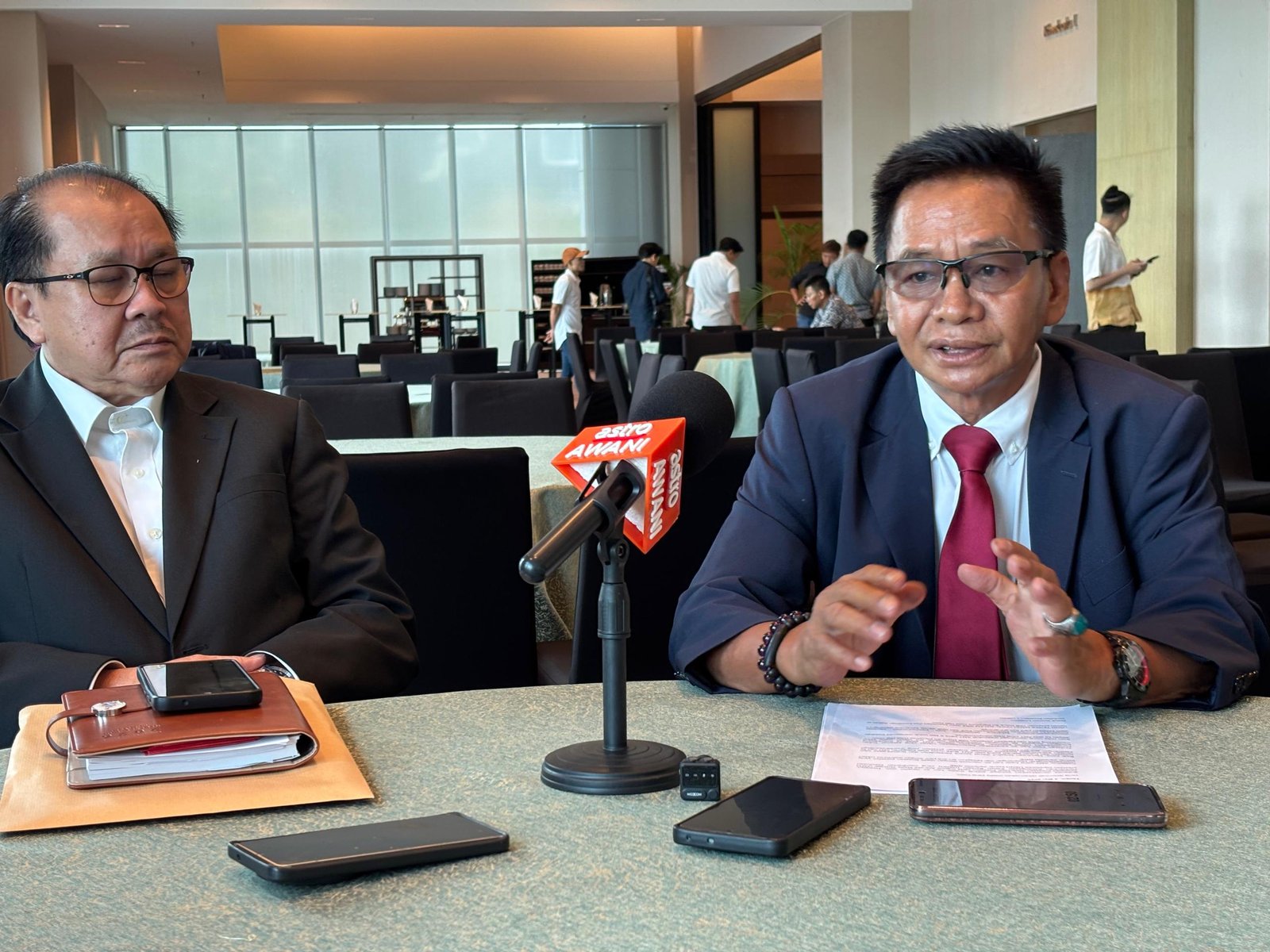

Edmund (left) and Ibrahim speaking to the media.
KOTA KINABALU (May 4): The majority of Supreme Council (AMT) members of the United Sabah National Organisation (Usno) have openly rejected the party president’s decision to withdraw from Gabungan Rakyat Sabah (GRS), describing the move as unilateral, rushed and not reflective of the party’s collective stance.
Usno Deputy President I Datuk Ibrahim Linggam said a press conference on Monday was attended by deputy presidents, vice presidents and the majority of AMT members who stood united in opposing the decision.
“All AMT members present firmly reject the president Tan Sri Pandikar Amin’s action, which disregards the interests and welfare of party members by taking Usno out of GRS,” he said when met by reporters.
Ibrahim stressed that the decision was made hastily and without consensus from the party’s top leadership.
“In our view, the decision was made unilaterally and not unanimously by the AMT. The presence of the majority of council members today clearly shows that we reject the action, which sidelines the interests of Usno members,” he said, adding that their stance was based on the party’s constitution.
According to him, support from 19 out of 26 division chiefs, together with the majority of AMT members, indicates that most Usno members want the party to remain within GRS and continue backing the state government led by Chief Minister Datuk Seri Panglima Hajiji Noor.
Ibrahim also revealed that a notice had been issued to convene a Supreme Council meeting on May 6, where disciplinary action is expected to be discussed against members who do not support the president.
“Any dismissal or termination must be based on the provisions of the party constitution and must not be carried out arbitrarily, in the interest of the party and its members,” he said.
On the coalition’s response, Ibrahim, who is also a GRS Supreme Council member, said there has been no official acceptance of the withdrawal.
“As far as we know, there has been no official acceptance by the GRS Supreme Council. Some leaders, including GRS Secretary Datuk Seri Panglima Masidi Manjun, have expressed respect for the decision, but such matters cannot be handled casually. The GRS Supreme Council will ultimately decide it,” he said.
He maintained that the move to leave GRS was made without proper consultation within the party.
“There was no discussion among the top leadership, not at the Supreme Council, youth or women’s wing levels. A meeting was simply held on April 22, without voting and without a sufficient majority,” he said.
He pointed out that only 18 out of 37 Supreme Council members attended the meeting, arguing that the decision did not meet constitutional requirements.
“There was no unanimity as claimed. Such a decision cannot be made in this manner,” he said, describing the move as a personal decision by the president.
“If he does not wish to remain in GRS, he should leave on his own and not take Usno out. That would be unfair to party members,” he said.
He confirmed that the president remains in his position but noted that support within the party leadership has shifted.
“Out of 26 divisions, 19 are with us, including the deputy president and other top leaders. The majority of central leadership supports our position,” he said.
Ibrahim added that the president should take responsibility following the party’s performance in the last election.
“He should reflect and step down. He did not consult us before deciding to leave GRS, so in effect, it is he who has left,” he said.
Despite the internal dispute, Ibrahim said the group had informed the Chief Minister who is also GRS chairman, of their continued support for GRS.
“We are still within Usno for now, but our position is clear, the majority supports the leadership of the Chief Minister,” he said.
On the upcoming May 6 meeting, Ibrahim said key agenda items include the party’s direction, leadership restructuring and appointments to the Supreme Council.
He also alleged that members had been instructed to submit resignation letters.
“That essentially means they want to remove us. Many of us do not agree with this approach,” he said.
He further claimed that a disciplinary board had been set up as part of efforts to take action against dissenting members.
“If we had tarnished the party’s name, action could be taken. But instructing us to resign in this manner is, in my view, somewhat dictatorial,” he added.
Meanwhile, Usno Deputy President III Datuk Edmund Jivol Doudilim, echoed similar concerns, describing the decision-making process as rushed and lacking proper procedure.
“Under normal requirements, a notice period of about 14 days is needed. While there is a provision allowing the president to call a meeting without adhering to the standard notice, matters of this seriousness should not be handled in such a way,” he said.
Edmund noted that the GRS government was only recently formed in December, and both the administration and party members were still adjusting.
“If we look at the situation, the government and the Chief Minister are still very busy. Many Usno members are also relying on this government as they rebuild their livelihoods and seek opportunities,” he said.
He said the president’s announcement did not adequately take into account the welfare and interests of members who had worked hard to ensure GRS’ victory.

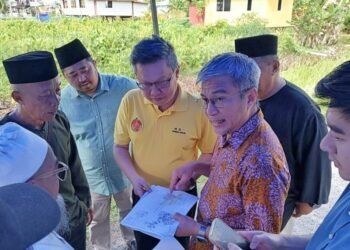
Ibrahim (third from left), Edmund (third from right) with Usno leaders and members who rejected Usno President Tan Sri Pandikar’s decision to leave GRS.
“That is why many members oppose the decision,” he said.
Edmund added that there was no urgency for such a move, particularly when the party’s direction after leaving GRS remains unclear.
On whether a post-mortem had been conducted following the last state election, Edmund said none had been carried out.
“The president said Usno did not need to conduct a post-mortem because it did not field candidates. However, this is a rather odd statement,” he said.
He said that Pandikar said that although he and his wife are from Usno , they contested under the GRS banner. Pandikar contested in Pintasan while his wife Puan Sri Diana Diego contested in Sekong. Both failed in their bid.
Edmund added that such reasoning raises questions about the party’s internal accountability, noting that Ibrahim had called for a post-mortem to examine the coalition’s electoral losses.