Tuesday, May 5, 2026
    The GeoStrategic Consensus
    No Result
    View All Result
    • Login
    • HOME
    • AMERICAS
      • Argentina
      • Brazil
      • Canada
      • Chile
      • Colombia
      • Costa Rica
      • Cuba
      • Dominican Republic
      • Ecuador
      • El Salvador
      • Greenland
      • Guatemala
      • Honduras
      • Mexico
      • Nicaragua
      • Panama
      • Paraguay
      • Peru
      • United States
      • Uruguay
      • Venezuela
    • ASIA-PACIFIC
      • Australia
      • Brunei Darussalam
      • Cambodia
      • China
      • Federated States of Micronesia
      • Fiji
      • Indonesia
      • Japan
      • Kiribati
      • Laos
      • Malaysia
      • Marshall Islands
      • Mongolia
      • Myanmar
      • Nauru
      • New Zealand
      • North Korea
      • Palau
      • Papua New Guinea
      • Philippines
      • Samoa
      • Singapore
      • Solomon Islands
      • South Korea
      • Taiwan
      • Thailand
      • Timor-Leste
      • Tonga
      • Tuvalu
      • Vanuatu
      • Vietnam
    • CARICOM
      • CARICOM – Non-English
        • Haiti
        • Suriname
      • CARICOM Associates
        • Anguilla
        • Bermuda
        • British-Virgin-Islands
        • Cayman-Islands
        • Curacao
        • Turks-and-Caicos
      • CARICOM English
        • Antigua and Barbuda
        • Barbados
        • Belize
        • Dominica
        • Grenada
        • Guyana
        • Jamaica
        • Montserrat
        • Saint Kitts and Nevis
        • Saint Lucia
        • Saint Vincent and the Grenadines
        • The Bahamas
        • Trinidad and Tobago
    • EURASIA
      • Armenia
      • Azerbaijan
      • Balarus
      • Georgia
      • Kazakhstan
      • Kyrgyzstan
      • Moldova
      • Russia
      • Tajikistan
      • Turkmenistan
      • Ukraine
      • Uzbekistan
    • EUROPE
      • Albania
      • Andorra
      • Austria
      • Bosnia and Herzegovina
      • Bulgaria
      • Croatia
      • Cyprus
      • Czech Republic
      • Denmark
      • Estonia
      • Finland
      • France
      • Germany
      • Greece
      • Holy See
      • Hungary
      • Iceland
      • Ireland
      • Italy
      • Kosovo
      • Latvia
      • Liechtenstein
      • Lithuania
      • Luxembourg
      • Malta
      • Monaco
      • Montenegro
      • Netherlands
      • North Macedonia
      • Norway
      • Poland
      • Portugal
      • Romania
      • San Marino
      • Serbia
      • Slovakia
      • Slovenia
      • Spain
      • Sweden
      • Switzerland
      • United Kingdom
    • MIDDLE EAST AND NORTH AFRICA
      • Algeria
      • Bahrain
      • Egypt
      • Iran
      • Iraq
      • Israel
      • Jordan
      • Kuwait
      • Lebanon
      • Lybia
      • Morocco
      • Oman
      • Palestinian Territories
      • Qatar
      • Saudi Arabia
      • Syria
      • Tunisia
      • Turkey
      • United Arab Emirates
      • Western Sahara
      • Yemen
    • SOUTH ASIA
      • Afghanistan
      • Bangladesh
      • Bhutan
      • India
      • Maldives
      • Nepal
      • Pakistan
      • Sri Lanka
    • SUB-SAHARAN AFRICA
      • Angola
      • Benin
      • Botswana
      • Burkina Faso
      • Burundi
      • Cabo Verde
      • Cameroon
      • Central African Republic
      • Chad
      • Comoros
      • Cote d’Ivoire
      • Democratic Republic of the Congo
      • Djibouti
      • Equatorial Guinea
      • Eritrea
      • Eswatini
      • Ethiopia
      • Gabon
      • Gambia
      • Ghana
      • Guinea
      • Guinea Bissau
      • Kenya
      • Lesotho
      • Liberia
      • Madagascar
      • Malawi
      • Mali
      • Mauritania
      • Mauritius
      • Mozambique
      • Namibia
      • Niger
      • Nigeria
      • Republic of the Congo
      • Rwanda
      • Sao Tome and Principe
      • Senegal
      • Seychelles
      • Sierra Leone
      • Somalia
      • South Africa
      • South Sudan
      • Sudan
      • Tanzania
      • Togo
      • Uganda
      • Zambia
      • Zimbabwe
    • HOME
    • AMERICAS
      • Argentina
      • Brazil
      • Canada
      • Chile
      • Colombia
      • Costa Rica
      • Cuba
      • Dominican Republic
      • Ecuador
      • El Salvador
      • Greenland
      • Guatemala
      • Honduras
      • Mexico
      • Nicaragua
      • Panama
      • Paraguay
      • Peru
      • United States
      • Uruguay
      • Venezuela
    • ASIA-PACIFIC
      • Australia
      • Brunei Darussalam
      • Cambodia
      • China
      • Federated States of Micronesia
      • Fiji
      • Indonesia
      • Japan
      • Kiribati
      • Laos
      • Malaysia
      • Marshall Islands
      • Mongolia
      • Myanmar
      • Nauru
      • New Zealand
      • North Korea
      • Palau
      • Papua New Guinea
      • Philippines
      • Samoa
      • Singapore
      • Solomon Islands
      • South Korea
      • Taiwan
      • Thailand
      • Timor-Leste
      • Tonga
      • Tuvalu
      • Vanuatu
      • Vietnam
    • CARICOM
      • CARICOM – Non-English
        • Haiti
        • Suriname
      • CARICOM Associates
        • Anguilla
        • Bermuda
        • British-Virgin-Islands
        • Cayman-Islands
        • Curacao
        • Turks-and-Caicos
      • CARICOM English
        • Antigua and Barbuda
        • Barbados
        • Belize
        • Dominica
        • Grenada
        • Guyana
        • Jamaica
        • Montserrat
        • Saint Kitts and Nevis
        • Saint Lucia
        • Saint Vincent and the Grenadines
        • The Bahamas
        • Trinidad and Tobago
    • EURASIA
      • Armenia
      • Azerbaijan
      • Balarus
      • Georgia
      • Kazakhstan
      • Kyrgyzstan
      • Moldova
      • Russia
      • Tajikistan
      • Turkmenistan
      • Ukraine
      • Uzbekistan
    • EUROPE
      • Albania
      • Andorra
      • Austria
      • Bosnia and Herzegovina
      • Bulgaria
      • Croatia
      • Cyprus
      • Czech Republic
      • Denmark
      • Estonia
      • Finland
      • France
      • Germany
      • Greece
      • Holy See
      • Hungary
      • Iceland
      • Ireland
      • Italy
      • Kosovo
      • Latvia
      • Liechtenstein
      • Lithuania
      • Luxembourg
      • Malta
      • Monaco
      • Montenegro
      • Netherlands
      • North Macedonia
      • Norway
      • Poland
      • Portugal
      • Romania
      • San Marino
      • Serbia
      • Slovakia
      • Slovenia
      • Spain
      • Sweden
      • Switzerland
      • United Kingdom
    • MIDDLE EAST AND NORTH AFRICA
      • Algeria
      • Bahrain
      • Egypt
      • Iran
      • Iraq
      • Israel
      • Jordan
      • Kuwait
      • Lebanon
      • Lybia
      • Morocco
      • Oman
      • Palestinian Territories
      • Qatar
      • Saudi Arabia
      • Syria
      • Tunisia
      • Turkey
      • United Arab Emirates
      • Western Sahara
      • Yemen
    • SOUTH ASIA
      • Afghanistan
      • Bangladesh
      • Bhutan
      • India
      • Maldives
      • Nepal
      • Pakistan
      • Sri Lanka
    • SUB-SAHARAN AFRICA
      • Angola
      • Benin
      • Botswana
      • Burkina Faso
      • Burundi
      • Cabo Verde
      • Cameroon
      • Central African Republic
      • Chad
      • Comoros
      • Cote d’Ivoire
      • Democratic Republic of the Congo
      • Djibouti
      • Equatorial Guinea
      • Eritrea
      • Eswatini
      • Ethiopia
      • Gabon
      • Gambia
      • Ghana
      • Guinea
      • Guinea Bissau
      • Kenya
      • Lesotho
      • Liberia
      • Madagascar
      • Malawi
      • Mali
      • Mauritania
      • Mauritius
      • Mozambique
      • Namibia
      • Niger
      • Nigeria
      • Republic of the Congo
      • Rwanda
      • Sao Tome and Principe
      • Senegal
      • Seychelles
      • Sierra Leone
      • Somalia
      • South Africa
      • South Sudan
      • Sudan
      • Tanzania
      • Togo
      • Uganda
      • Zambia
      • Zimbabwe
    No Result
    View All Result
    Agentially
    No Result
    View All Result
    Home EURASIA Tajikistan

    Digital carelessness. Tajik journalists learned how traditional trust interferes with the safe behavior of young people online

    The Analyst by The Analyst
    May 5, 2026
    in Tajikistan
    Digital carelessness. Tajik journalists learned how traditional trust interferes with the safe behavior of young people online


    Question: Will you share your personal account password with a friend? All respondents answer positively – and do not understand why this could be dangerous. These respondents are Tajik teenagers, participants in in-depth interviews conducted by journalists from the Asia-Plus media group.

    READ ALSO

    The first Tajik restaurant OMAR KHAYAM opened in Minsk

    In Dushanbe, issues of assessing radiation doses during work related to natural radioactive materials are discussed

    Their parents showed similar carelessness in matters of digital security. The sample is small, but indicative. Its results formed the basis of the large project “Zireh”, which ultimately showed that this is not just about digital literacy, but about a deeper gap between generations.

    “New Reporter” I talked to the author of the project.

    What is “Zireh”?

    Tajikistan is one of the youngest countries in Central Asia. In the sense that, according to various estimates, more than 60% of the population here are people under 30 years old. This demographic situation is due to the high birth rate. However, despite this, surprisingly little is known about the lives of young people in the broader sense. There are practically no specialized youth media in the country, and topics related to teenagers are rarely the focus of journalists. To complicate the situation, conservative social norms remain strong in Tajikistan and young people are not often given the opportunity to speak openly about themselves.

    “

    “Our project “Zirekh” (protection) is an attempt to understand how teenagers in Tajikistan actually live and what they face in the digital environment,” says project coordinator, journalist and documentarian Makhpora Kiromova.

    She adds that over several months of work, the team repeatedly revised approaches and even changed the focus of the project. But the basic idea remained the same – to help teenagers who, due to inexperience and naivety, find themselves in the most vulnerable position in the digital world.

    What did the authors learn from the in-depth interviews?

    The focus on the digital environment in this project was not chosen by chance. The fact is that in Tajikistan there are strict prohibitions on the use of gadgets in schools. Children do not go to school with a phone, and if they bring it, the gadget will be confiscated during the inspection that takes place in most secondary schools.

    Makhpora Kiromova. Photos from social networks
    “

    “At school there are a lot of prohibitions related to the telephone and the Internet. At home, parents also often prohibit the Internet, trying to protect them. On the one hand, I agree, on the other, I don’t: children were born in the digital age, and for them the phone is an extension of the hand, their world works differently. For us there is online and offline, but for them it is one whole. Therefore, artificially dividing this world is wrong. Instead of prohibitions, we need to give tools on how to live safely in it,” says Mahpora.

    To understand what the digital world looks like through the eyes of teenagers and their parents, the media group conducted 30 in-depth interviews – 15 with teenagers and 15 with their parents – in Dushanbe, as well as in the Sughd and Khatlon regions. First, journalists talked to the children and then to their parents to compare perceptions on both sides.

    “And I discovered a very interesting fact. So we think that if children were born in the digital age, then by default they understand better than us how the Internet works. But this turned out to be absolutely not the case. Our in-depth interviews included questions on basic understanding of the digital environment, and almost all the children failed them,” continues Makhpora.

    What can gullibility lead to in the digital environment?

    One of the indicative questions concerned the willingness to share a gaming account with a friend – and almost all children answered “yes, I will share”, not seeing any risk in this. At the same time, it is gaming accounts that often become the target of fraud: they are hacked and resold. If another person gains access, he can simply change the password and deprive the owner of the account. For teenagers, this is a serious loss, but despite this, they are still ready to share access, explaining this by trust in friends and confidence that nothing bad will happen.

    Project participants. Photo by M. Kiromova

    Mahpora attributes this to naivety and underestimation of digital risks.

    “We also asked how many friends you have. And most often the children answered – yes, a lot. But then it turned out that these were online friends and most of them had never seen them, did not know what country they were from, what their names were or what they looked like. This dramatically increases the risks—primarily the risk of grooming. Because anyone can gain trust,” she shares.

    As for parents, their answers proved that in most cases, they do not know what is happening in the digital world of their children. For example, children said that they spend up to 10 hours a day on the Internet and perceive this as the norm, while their parents were confident that they were in control of the situation and limited this time to two to three hours. This gap in perception is systemic: adults continue to view the Internet as a dangerous addition to real life that can be regulated by prohibitions, while for teenagers it is the main medium of communication and everyday life.

    As a result, prohibitions do not reduce risks, but on the contrary: children begin to share their experiences less so as not to disturb their parents. This creates the illusion of control in adults, but in practice it leads to the fact that they do not understand how children really live. At the same time, Mahpora emphasizes that more conscious parents took part in the interviews.

    #Itwasdouble: what teenagers face online

    Another important part of the Zirekh project was the production of reels in which teenagers talked about a variety of situations they found themselves in on the Internet, and experts commented on what was happening.

    “During the interview, we realized that children do not like being talked to from the position of “you don’t know anything, I’ll teach you now.” They simply do not perceive such information. But it is easier for them to talk with peers – even with those whom they do not know personally, because there is less fear of condemnation. So we decided that the teenager should tell the teenager. This is how the “It Happened to Me” format appeared, where children share their experiences with each other. And it worked – we got very large coverage and views,” says Mahpora.

    One of the stories she draws attention to is the story of schoolgirl Todzhinisso Makhatova, who decided to write a German language blog. She almost immediately encountered a wave of hate: in the comments they discussed not the content, but her appearance, and her classmates also reacted with ridicule.
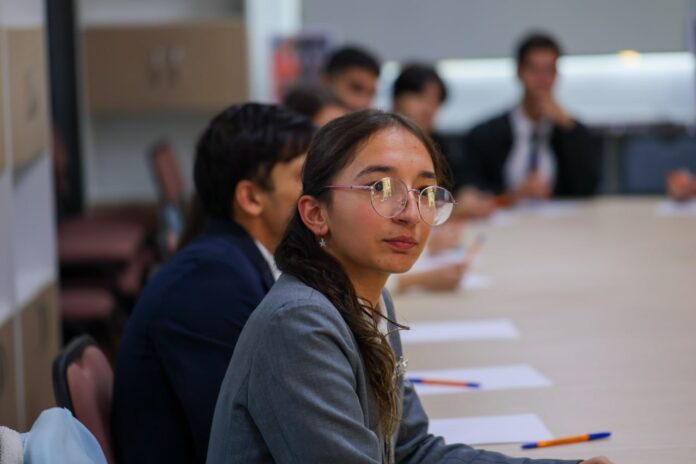
    Project participant. Photo by M. Kiromova

    As a result, the girl closed her blog for several years. She decided to return to it only after participating in an educational program on media literacy, where, in particular, they discussed how to respond to hate and what is behind it. According to her, this helped her take a fresh look at the situation – and even see the practical side of negativity: hate, as it turns out, increases engagement and reach. After this, Thodjinisso decided to continue blogging.

    Another story from this series was the story of a ninth-grader Daler (not his real name), who thought he had finally found a close friend online, but it all turned out to be a joke. Under the guise of a girl named Shukrona, his classmates corresponded with him. At first everything looked like normal communication, but soon “Shukrona” began asking for intimate photos and insisting on a meeting. Daler realized that something was wrong. It later turned out that a group of students specifically created a fake account to mock him, and then discussed what was happening in the general class chat.

    In total, 10 such stories were published as part of the project, which, judging by the comments from the audience, can be called typical for young people in Tajikistan.

    Chatbot that answers questions from Tajik teenagers

    A key element of the Zirekh project was the creation of a chatbot, where schoolchildren, their parents and teachers can turn to with their questions regarding digital security (and not only).

    “

    “The content of our chatbot is not formed abstractly, but based on real stories of teenagers. First, we identified typical patterns through in-depth interviews and then filled the instrument with them. In the process, it became obvious that many situations go beyond digital safety and media literacy and are related, for example, to gender stereotypes,” continues Mahpora.

    She explains that the cases here are analyzed from several points of view – legal, psychological and taking into account the local context, which makes the tool as close as possible to real situations. Currently this chatbot works in Russian, but the team is also developing a Tajik-language version.

    “At the beginning of the project, when we were just collecting data, I went to Tashkent to a conference on countering extremism and terrorism, and there I presented our idea. I was asked a question that changed everything: how will you get teenagers to use your chatbot if ChatGPT is available? I didn’t have an answer then. We started thinking about it,” recalls Mahpora.

    The team began testing ChatGPT with the same questions they were preparing for their chatbot, and came to the conclusion that its answers remained too generic. This is where they saw their uniqueness: the key difference of the chatbot was localization – reliance on the realities of Tajikistan, cultural characteristics and specific cases from local practice.

    “

    “We worked on it for a very long time, but it is important to understand: this is only a first support tool. This is, rather, the initial stage of a large work, which can then be picked up by specialized structures – for example, the Ministry of Education – and developed, strengthened, and added new topics. We came up with the mechanics, but then everything depends on how much this tool will actually be used. Without this, it simply won’t work,” explains Mahpora.

    Schools without media literacy: why even the best are not ready

    The final touch of the project was six mobile laboratories in schools and educational centers in Tajikistan. The team initially planned to work only in public schools, assuming that the situation was better in private ones, but did not receive permission and ended up conducting classes in private ones.

    The laboratories were dedicated to two areas – media literacy and digital security. Artificial intelligence and the risks associated with it were also discussed as part of media literacy. Local experts were responsible for the program: Rustam Gulov – for media literacy, Kumushoy Murtazakulova – for digital security.
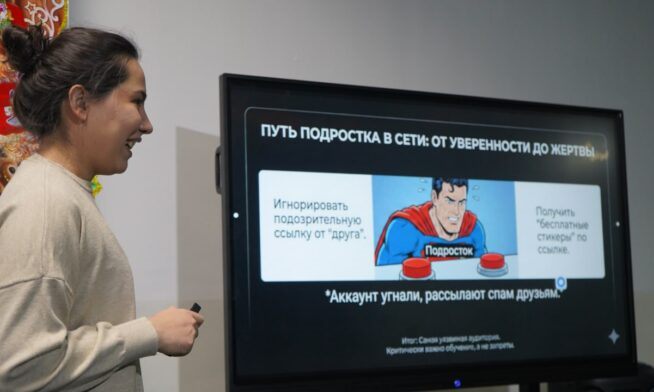
    During the laboratory. Photo by M. Kiromova

    “But what a surprise we were that in private, including international schools, children also have a poor understanding of these issues. Even where there are formal media literacy classes, students have little understanding of digital risks, and most schools do not have such classes at all. We were mistaken in thinking that somewhere the situation was fundamentally better – in fact, the level of awareness is approximately the same. We were faced with a huge field of work that we couldn’t handle alone,” explains Makhpora.

    Despite the scale and variety of formats, the team recognizes that this is only the first step. Over almost a year of work, they managed to identify key problems, test approaches, and draw the main conclusion: in the youngest country in Central Asia, where a significant part of the population is teenagers and young people, the conversation about them is just beginning.


    Source link

    Related Posts

    The first Tajik restaurant OMAR KHAYAM opened in Minsk
    Tajikistan

    The first Tajik restaurant OMAR KHAYAM opened in Minsk

    May 5, 2026
    In Dushanbe, issues of assessing radiation doses during work related to natural radioactive materials are discussed
    Tajikistan

    In Dushanbe, issues of assessing radiation doses during work related to natural radioactive materials are discussed

    May 5, 2026
    6 plants to produce electricity from waste will be built in Uzbekistan
    Tajikistan

    6 plants to produce electricity from waste will be built in Uzbekistan

    May 5, 2026
    The winners have been determined at the international paragliding championship in Tajikistan
    Tajikistan

    The winners have been determined at the international paragliding championship in Tajikistan

    May 5, 2026
    Markazi IVF Istanbul Medical Center: your path to motherhood with care
    Tajikistan

    Markazi IVF Istanbul Medical Center: your path to motherhood with care

    May 4, 2026
    Jasmine An-Nimr: bodybuilding queen from Tajikistan
    Tajikistan

    Jasmine An-Nimr: bodybuilding queen from Tajikistan

    May 4, 2026
    Next Post
    The Bitcoin rate has updated its three-month high above $80 thousand

    The Bitcoin rate has updated its three-month high above $80 thousand

    POPULAR NEWS

    Justin Bieber fans flood Coachella festival for headlining show – Entertainment

    Justin Bieber fans flood Coachella festival for headlining show – Entertainment

    April 20, 2026

    Over 600 flee homes as Army, NPA clash in Negros Occidental

    April 21, 2026

    Ex-DPWH exec recalls P800-M ‘delivery’ to Zaldy Co 

    April 20, 2026

    Former PM Paluckas suspends party membership, to waive immunity over criminal probe

    April 24, 2026
    Pres. Ali challenges CARICOM to transform into health research powerhouse

    Pres. Ali challenges CARICOM to transform into health research powerhouse

    April 23, 2026

    EDITOR'S PICK

    Recent moves at Petro-Perú suggest that efforts to prevent the company from further squandering money will once again fall on deaf ears.

    Recent moves at Petro-Perú suggest that efforts to prevent the company from further squandering money will once again fall on deaf ears.

    April 24, 2026
    Dutch destinations: time to get an Utrecht getaway underway?

    Dutch destinations: time to get an Utrecht getaway underway?

    April 22, 2026
    Armstrong strikes gold as Barbadian medal tally moves up to nine in Grenada

    Armstrong strikes gold as Barbadian medal tally moves up to nine in Grenada

    April 6, 2026
    Iran responds by force to the extension of the ceasefire

    Iran responds by force to the extension of the ceasefire

    April 30, 2026

    Recent Posts

    • Prosecution holds Lar do Comércio responsible for 18 deaths caused by covid-19 | Justice
    • Trump wants a new deal with Iran, but what did the Obama one that he tore up say?
    • “We measure media freedom, not government communication” – Reporters Without Borders responds to Rama: Albania’s ranking in 83rd place reflects political attacks and threats against journalists
    • Lost the bet, won the quiz: Dean Kotiga is coming to Oslobodjenje.ba

      © 2026 Agentially - Navigating shifting sovereignties and global risk .

      Welcome Back!

      Login to your account below

      Forgotten Password?

      Retrieve your password

      Please enter your username or email address to reset your password.

      Log In
      No Result
      View All Result

        © 2026 Agentially - Navigating shifting sovereignties and global risk .

        This website uses cookies. By continuing to use this website you are giving consent to cookies being used. Visit our Privacy and Cookie Policy.