With trade union conference season in full swing, calls for better pay and industrial action are commonplace. Senior officials believe the Government and employers will have to recognise the realities facing workers in advance of talks on a new public-sector pay deal and countless smaller ones in the private sector.
The mood of union members has not been helped, their representatives told senior Ministers and business groups, by the failure to index tax bands in Budget 2026, the provision of an expensive tax break for hospitality that lacked an evidence-based rationale, rising inflation and soaring fuel prices.
After a meeting of the Labour Employer Economic Forum last Friday, Irish Congress of Trade Unions (Ictu) general secretary Owen Reidy said it had been made clear that a package of measures was required to address workers’ concerns.
He said he expected to know within the next four to six weeks whether the Government was willing to adopt the sort of measures being sought.
The fact that protests by farmers and hauliers over fuel prices so quickly prompted a package of reliefs is viewed as having added weight to the arguments made by those who believe the unions should be more militant in the face of growing cost-of-living pressures.
“If the situation now boils down to ‘he who screams loudest gets heard’ then that won’t be lost on our members,” says Brian Nolan, assistant general secretary at Connect, which represents many unionised workers such as electricians, carpenters and plumbers across the public and private sectors.
On the private side, the union is midway through a deal with the main employer representative group. Its focus, as with so many other unions these days, is the looming negotiation of a new pay deal for some 400,000 public-sector workers.
The deal agreed in 2024, which secured pay increases of 10.25 per cent over 2½ years, runs out at the end of June with just a 1 per cent increase outstanding from the core agreement.
There is dissatisfaction over widespread delays in paying a further 1 per cent set aside to resolve local issues in different sectors. Resolving that may, as the teaching unions suggested earlier this month, be a prerequisite for any talks on a new accord.

There are, however, broader issues to be addressed, says Kevin Callinan, general secretary of Fórsa, the country’s largest public-sector union and chair of the Ictu public sector committee, which will represent workers in any talks.
These include housing, public transport infrastructure and childcare provision – issues with which he says the union movement is in fundamental agreement with industry leaders.
“So this needs to be a different type of agreement, reflecting those sort of challenges,” he says. “The recent pattern of processes that just involved the Department of Public Expenditure and ourselves across the table at the Workplace Relations Commission (WRC) just isn’t going to cut it.”
[ Unite trade union’s public sector workers feeling cost-of-living pinchOpens in new window ]
Callinan says the cost of living is “obviously” going to be top of the agenda, but the talks will have to cover more than just that.
“If that’s not possible, by the end of June, I think there’ll be just a pure focus on a paid transaction to maintain living standards but the benefits that accrue for Government from a multiannual deal – industrial peace, cost certainty – won’t be there.”
Two other figures in any public pay talks, Siptu general secretary John King and Phil Ní Sheaghdha of the Irish Nurses and Midwives Organisation, have said any deal will have to include higher-than-inflation pay increases.
After a meeting of its national executive committee last week, Siptu said it would support members across all sectors who felt the need to take industrial action where employers did not respond positively to claims that sought to address the erosion of pay.
Neil McGowan, Siptu manufacturing division organiser, says pay deals in his area have averaged 4 per cent recently with add-ons such as tax-free vouchers a common feature.
The basic 4 per cent figure is slightly below the Ictu recommended target range of 4.6 to 7 per cent, though the vouchers, which Industrial Relations News recently suggested averaged €707, or changes to leave or other entitlements, would make up the difference in many instances.
Deals that involve lower and higher figures are being done, he acknowledges, with an employer’s ability to pay an important factor. Many smaller businesses, in particular, express concern about having to deal with higher costs across other areas including supplies, transport and pension auto-enrolment, making it unrealistic to match employee expectations.
The Government’s capacity to make a similar plea based on growing uncertainty around the State finances given events abroad took a hit this week.

The spring economic statement projected this year’s budget surplus was set to grow from €5 billion to more than €9 billion. The unions, at a time when they admittedly are setting out their stall, had given little indication of being open to that argument even before the positive revision.
“I don’t think industrial action in pursuit of higher increases can be ruled out in the private sector if inflation, especially around oil and food, where it has been stubbornly high, persists,” McGowan says.
Callinan suggests any public-sector deal would likely influence private-sector claims, a reversal of the former trend. Nolan argues the pay of public-sector craft workers has fallen behind that in other areas because of the one-size-fits-all nature of the deal, something he believes will have to be addressed if recruitment and retention is not to become a greater problem.
“We don’t want to get into a dispute with employers and we always confine ourselves to the rules of engagement, but where we have to, we do them well, we pull out all the stops. There would be carnage,” he says.
He says public-sector members “feel the door is being slammed in their face” and Connect would “rather work with employers”.
They all do, of course, as long as they can get what they want out of the process.
Where might we see industrial unrest in the months ahead, and why?
The public sector: pay increases for about 400,000 State workers are generally decided in a talks process and with the current deal running out at the end of June, engagement is expected to start in the coming months. The unions say they want any deal to go further than recent accords.
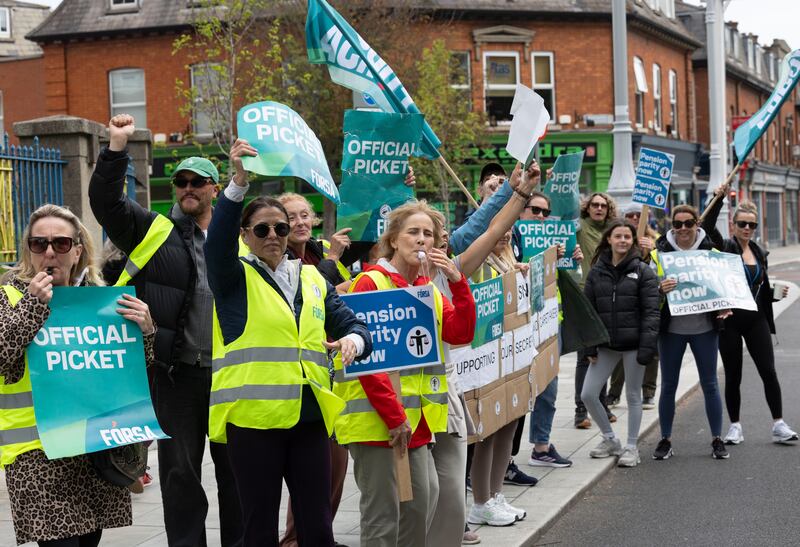
School secretaries and caretakers: one would be forgiven for thinking this dispute was sorted late last year when a strike by both groups over pensions led to some concessions and a return to talks. However, what has been on the table since has effectively been auto-enrolment, which the workers would have got anyway. A Labour Court process is ongoing, with a recommendation due.
Paramedics and the National Ambulance Service: members of Siptu and Unite in the service have voted for strike action, with a first 24-hour stoppage due to take place on May 12th. This is a tricky one for the unions as the Labour Court proposed a deal, which they recommended to the staff involved, who wanted more in a long-running dispute regrading changed work practices and pay.
Hybrid working: an issue in both the private and public sectors, but the current focus is on the Department of Social Protection which has instructed some staff who benefit from remote working to come in more often. A wider public-sector review of the status quo is due in the early summer and unions are also eyeing up the existing code of practice for private-sector employers that few believe does much for workers.
RTÉ: members of Siptu will ballot over the coming weeks on their willingness to take industrial action in the event that management presses ahead with rumoured outsourcing of high-profile programmes without “proper” consultation.
Aer Lingus: management has offered cabin crew and other workers a 4 per cent increase for this year and paid the first 3 per cent from January. Fórsa believes its members should get some of the concessions given to pilots after their 2024 strike and its members rejected the offer overwhelmingly. The dispute is on its way to the WRC.