Saturday, May 2, 2026 4:09 pm –
Jerusalem time

Recent data issued by the Association of Gas Infrastructure Operators in Europe revealed a remarkable decline in the filling levels of the continent’s underground reservoirs at the end of last April. The percentage of reserves stabilized at 32.73 percent, which represents the lowest level recorded during the last five years, amid a state of anticipation in global markets. This decline reflects a large gap compared to previous years, as the percentage in the same period last year reached about 39.52 percent, while it exceeded 60 percent in 2024.
Economic reports indicate that these low levels have not appeared since 2022, when the energy crisis struck the Old Continent following the outbreak of the conflict between Russia and Ukraine, when it recorded 33.47 percent at that time. In this context, German press reports warned of a clear possibility that Berlin will face a severe shortage of gas supplies during the coming winter. These expectations come as a result of the continuing repercussions of the energy crisis caused by the war, which places the largest economy in Europe before complex logistical challenges to secure the needs of heating and industry.
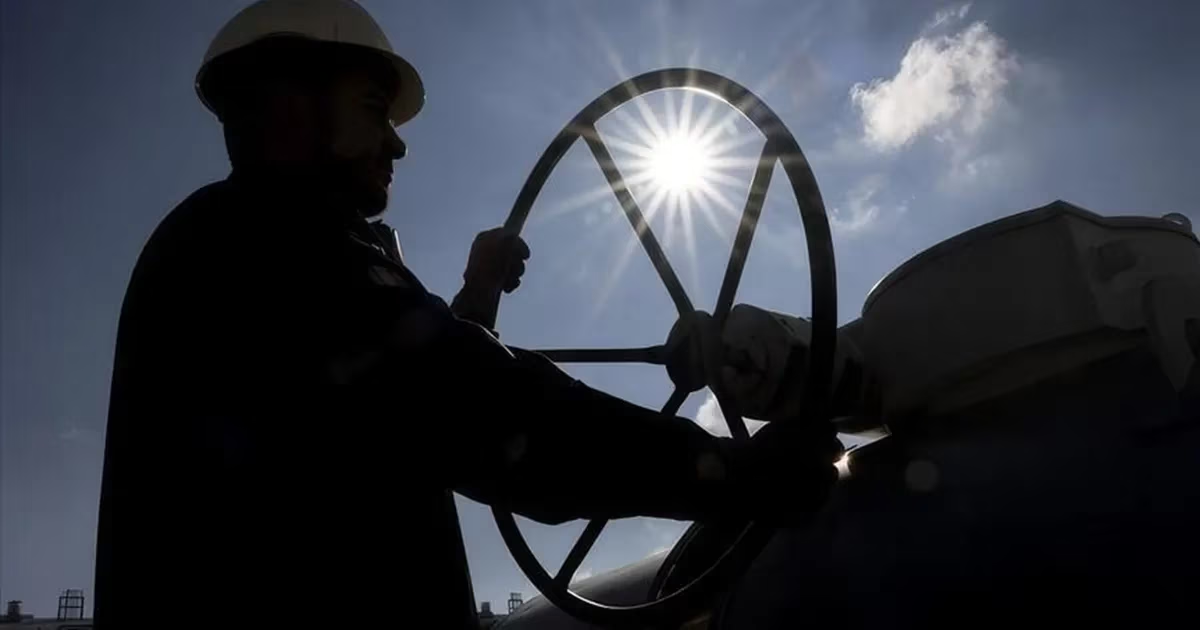
Low storage levels will cast a shadow on the ability of European countries to refill their warehouses in preparation for the next winter season.
For its part, the Russian company Gazprom entered the crisis line by issuing early warnings about the deteriorating field situation in European storage depots. The company explained that the current shortage in stocks will directly affect the ability of European capitals to refill their tanks before the extreme cold sets in. Observers believe that this shortage threatens continued instability in continental energy markets, and increases price pressures on consumers and companies alike.
What worries experts even more is monitoring the continuation of gas withdrawals from warehouses even after the end of April, a behavior that contradicts known seasonal patterns. Typically, European countries begin the phase of re-injecting and storing gas at the beginning of the spring, but the continued consumption of the reserve deepens concerns regarding energy security. These data put the continent facing difficult scenarios that require searching for quick alternatives to ensure stable supplies and avoid a comprehensive energy crisis.