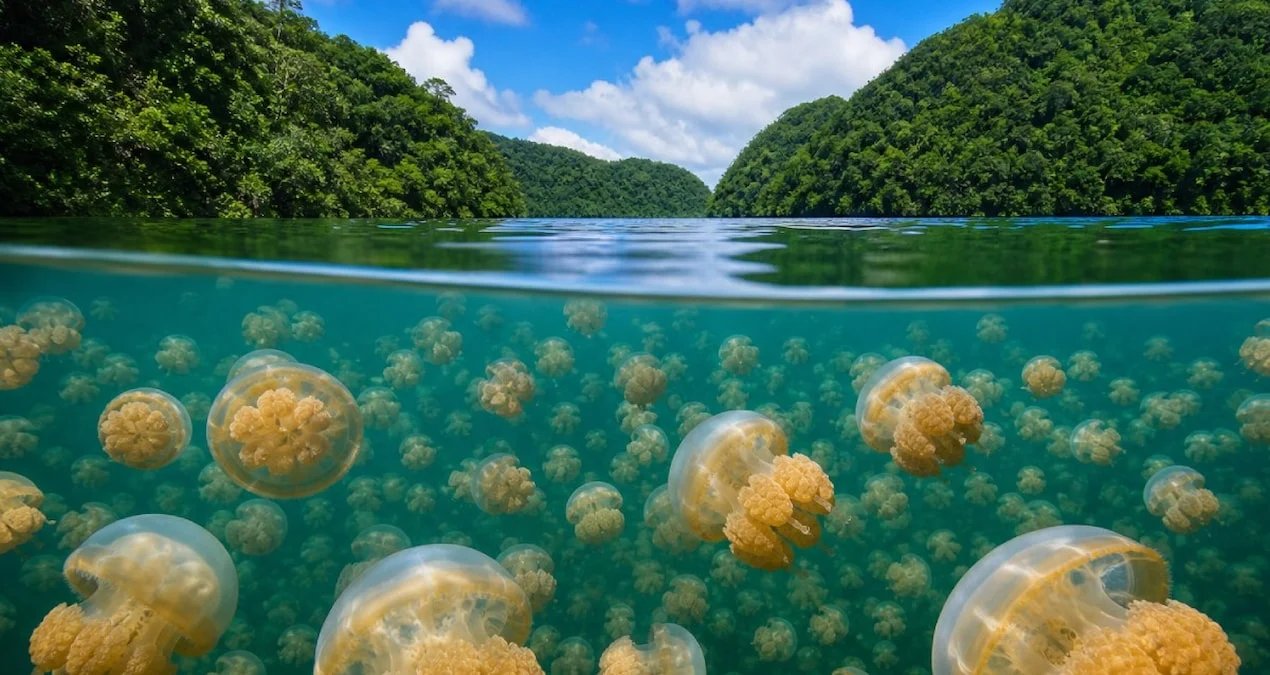
This lake, located within the borders of Palau and known as ‘Jellyfish Lake’, lost its connection with the sea after the last ice age. This isolated environment for approximately 12 thousand years caused living things to undergo a completely different evolution process.
Today, millions of jellyfish live in the lake, and a significant portion of these creatures belong to a special subspecies found nowhere else in the world. According to scientists, this situation reveals the effect of long-term isolation on living things.
One of the most striking features in the lake is the behavior of jellyfish. These creatures move collectively according to the position of the sun throughout the day. The herds moving eastward in the morning change direction and migrate westward during the day. This movement creates the appearance of a ‘living current’ on the lake surface.
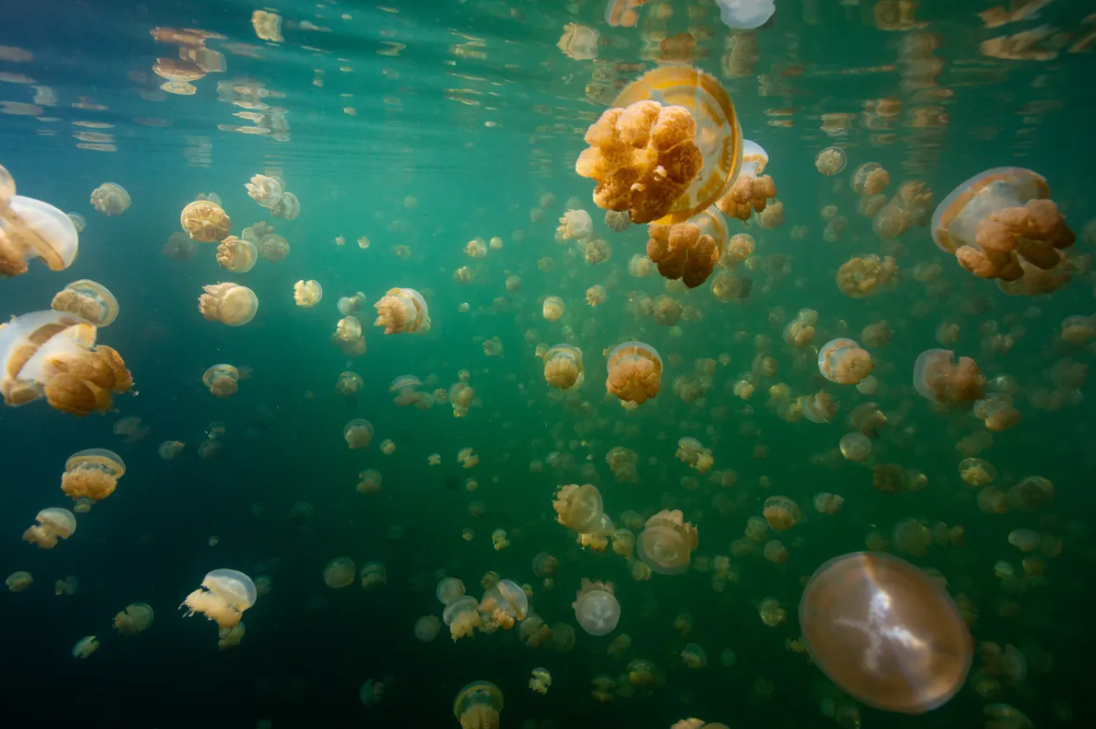
There is a symbiotic relationship behind this behavior. While the microscopic algae living inside the jellyfish produce energy with sunlight, the jellyfish moves, allowing these algae to receive light and obtaining food in return.
However, this delicate balance cannot always be maintained. Past climate changes, especially by increasing water temperatures, have led to a decline in algae and a serious decline in jellyfish populations. Despite this, the ecosystem recovered over time and reached the level of millions again.
This emerging picture shows how nature can follow a completely different path in isolated environments. This lake, which remained isolated from the outside world for thousands of years, continues to be a unique natural laboratory for scientists today.
All copyrights of the articles, news and photographs published on the website www.sozcu.com.tr belong to Mega Ajans and Rek. Tic. It belongs to A.Ş. It cannot be quoted without permission, even by citing the source.