Philips collaborates with SGH to train, upskill MRI clinical capabilities
Korea Herald correspondent
SINGAPORE — Artificial intelligence is fundamentally changing every industry, and the health care sector is no exception.
Singapore General Hospital, the country’s largest and oldest hospital, is going all out to improve AI implementation for patients and medical professionals alike.
As cognitive impairment becomes a bigger issue for Asian countries with aging populations, SGH has developed PENSIEVE-AI. This simple tool uses patients’ drawings done on a tablet to detect early signs of cognitive impairment and dementia.
“With limited health care resources in Singapore and our neighboring countries, neuropsychologists are usually in huge demand,” said Liew Tau Ming, senior consultant of psychiatry at SGH, stressing the role of the AI-driven testing tool at SGH on Thursday.
“We have so few neuropsychologists who do these big tests (for cognitive impairment) and we are hoping to bypass this.”
According to SGH, PENSIEVE-AI achieved 93 percent accuracy in detecting cognitive impairment and dementia among almost 1,800 seniors aged 65 and older, and requires less than five minutes to complete the process. After a drawing is submitted, the result is either a green, yellow or red light. Red indicates that the test taker needs to see a doctor as soon as possible.
The doctor noted that this tool can help address the problem of 80 to 90 percent of seniors with cognitive impairment remaining undiagnosed due to complex, time-consuming and costly testing methods. SGH estimates the AI-based test could save up to SG$3,650 ($2,870) per senior while saving about 15 hours of clinician time per patient.
“I think one of the questions that we are going to think about is, ‘What is the most important aspect of innovation in health care?’” said Tay Hsien Ts’ung, vascular surgery clinical director at SGH.
“It has to be impactful on the patient’s journey, not necessarily on the patient’s outcome, although that’s important. Morbidity and mortality are the main metrics that most medical devices and technologies and AIs are measured by, but it has to be impactful on the patient experience as these are all interrelated.”
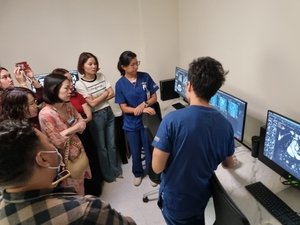
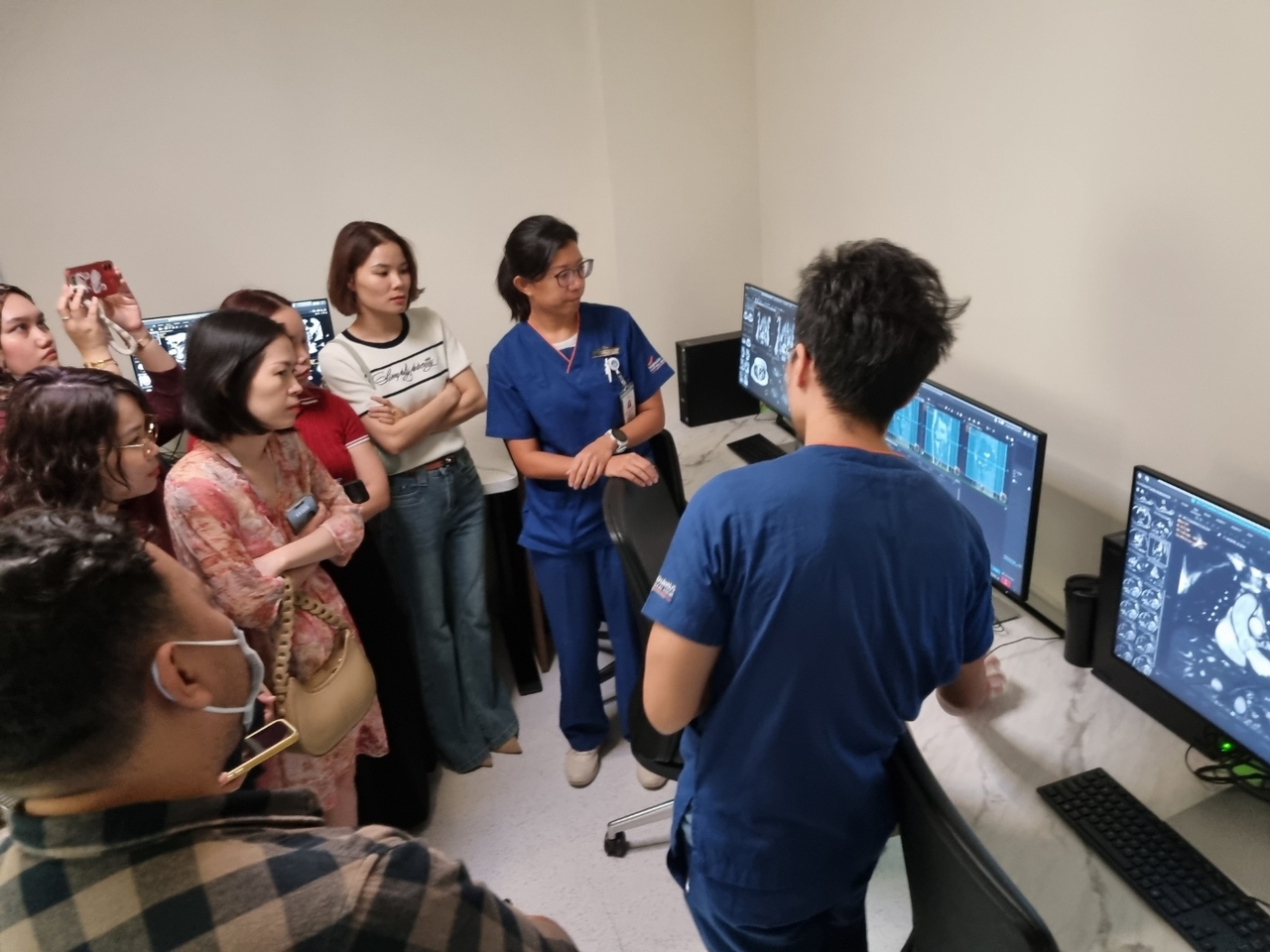
SGH has also teamed up with Philips to establish the SGH and Philips MRI Training Center to strengthen MRI education and clinical capabilities across Singapore and Southeast Asia.
The MRI training center, inaugurated in November, featured five workstations equipped with an AI-integrated workflow platform that automates routine tasks and streamlines image acquisition. According to an MRI training medical staff the center’s AI-powered imaging technology can reduce scan times per sequence by 15 to 50 percent.
“The SGH and Philips MRI Training Centre will host educational workshops, webinars and clinical talks, extending its benefits beyond Singapore to healthcare organizations across Asia Pacific,” said Philips. “By fostering collaboration and knowledge exchange, the initiative aims to build a strong foundation for MRI expertise in the region.”
hwkan@heraldcorp.com