Friday, May 1, 2026 10:08 AM –
Jerusalem time

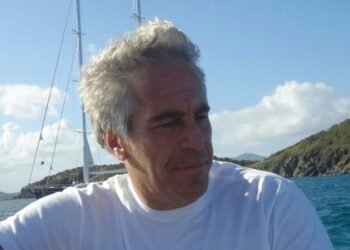
International press reports revealed exciting details about the efforts made by the late convict Jeffrey Epstein to build close relationships with influential figures in the Middle East. The sources indicated that Epstein exploited these relationships to obtain rare religious and historical collectibles, including original pieces of the covering of the Holy Kaaba, to decorate a mysterious building on his private island in the Caribbean Sea.
According to documents revealed by the New York Times, a domed building appeared on Little St. James Island, the walls of which were decorated with pieces of the Kaaba curtain decorated with Quranic verses. Reports indicated that Epstein’s interest in the region was not only commercial, but included a hobby of acquiring rare Islamic antiques and expanding his network of influence among the wealthy people of the Arab world.
Details of the investigations indicate that Epstein obtained pieces of the Kaaba curtain in Mecca through Sultan Ahmed bin Sulayem, the former president of Dubai World. This step comes within the framework of Epstein’s project to build what he described in his private correspondence as a ‘mosque’, despite the ambiguity surrounding the true goals of this building.
Epstein’s endeavors extended to include persistent attempts to get closer to decision-making circles in the Kingdom of Saudi Arabia, as he sought to secure meetings with high-level officials. Through these moves, he aspired to play the role of financial advisor in major projects, the most prominent of which is the plan to launch Aramco for public subscription, the features of which began in 2016.
Norwegian diplomat Terje Roed-Larsen played a pivotal role in strengthening Epstein’s relations, introducing him to advisors in the Saudi royal court. Through this mediation, Epstein was able to communicate with Raafat Al-Sabbagh and Aziza Al-Ahmadi, who assisted him in his attempts to reach the Saudi leadership and submit investment proposals.
In one of his controversial letters, Epstein put forward what he described as ‘radical ideas’, which included a proposal to create a digital currency or a new financial system called ‘Sharia’. The goal behind this proposal was to find a unified means of financial exchange between Islamic countries, in an attempt to win over decision-makers through unconventional projects.
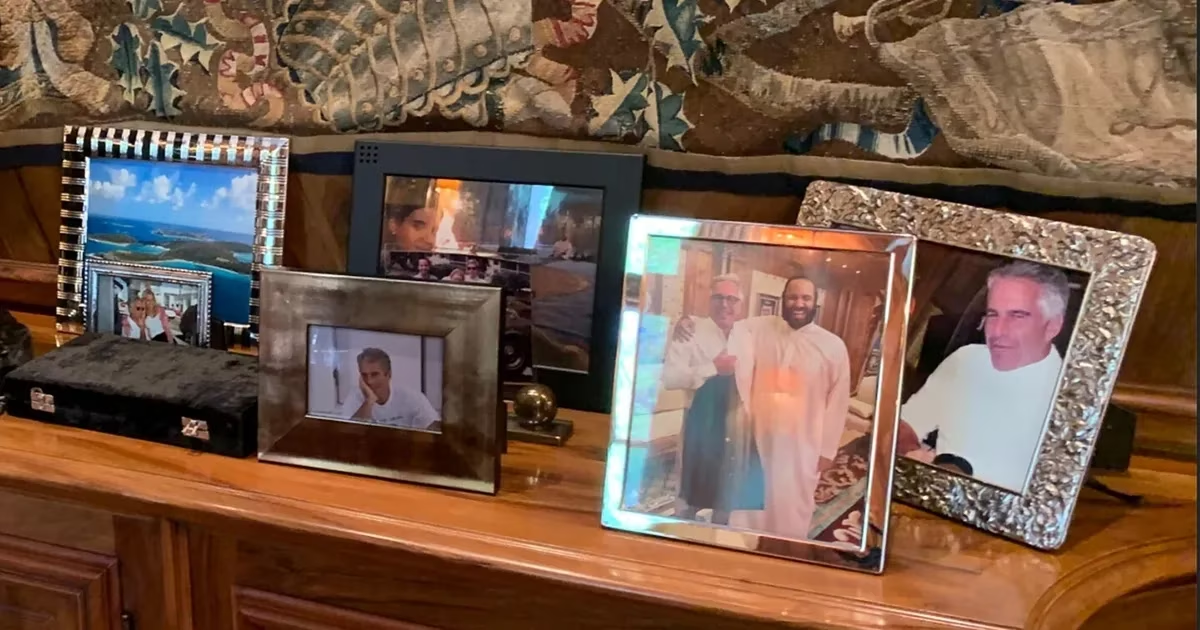
The documents confirm that Epstein actually succeeded in visiting Saudi Arabia after special arrangements, where he claimed an official invitation. Following that visit, Epstein bragged about his relationships by displaying photographs of him with Saudi officials in his luxurious home in New York City, as evidence of his growing influence.
The black pieces have been touched by more than 10 million Muslims who circumambulate the Kaaba… hoping that their prayers will be accepted.
In early 2017, correspondence increased between Epstein’s aides and Saudi advisors regarding the shipment of additional belongings to his private island, including a traditional Saudi tent. The correspondence reported that these pieces were intended to furnish the building that Epstein called the ‘Mosque’, with promises of sending more luxurious textiles.
The shipments included three main pieces of embroidered textiles, one of which had already been used inside the Kaaba, and another was the ‘kiswa’ covering the outer wall. As for the third piece, it was manufactured in the Royal Factory in Mecca, which reflects the great religious and historical value of these collectibles.
The Kaaba’s covering is of great sacred importance, as it is replaced annually in a solemn ceremony at a cost of up to $5 million. Hundreds of craftsmen participate in weaving it using huge quantities of pure silk and gold and silver threads, and parts of it are usually donated to prestigious international figures and institutions.
Although it is clear that these pieces arrived on Epstein’s island, the exact manner in which the intermediaries obtained these textiles remains a mystery. There were no official comments issued by the relevant authorities in Saudi Arabia or the figures whose names were mentioned in the reports about how these pieces left their custody.
The building that sparked controversy on Little St. James Island features a unique architectural design that combines white and blue colors with a golden dome in the middle. Although the local authorities had previously registered it as a music room or entertainment pavilion, Epstein’s secret correspondence confirmed his desire to transform it into an imitation of the Islamic architectural style.
Epstein was inspired by the design of the golden dome from historical Syrian architecture, specifically the style of ancient baths in the city of Aleppo, such as the ‘Yalbugha’ bath. He also requested the import of special marble from Uzbekistan to cover the interior walls of the building, out of his desire to make the design similar to historical mosques in Central Asia.
In a related context, the correspondence revealed Epstein’s long-standing interest in Islamic arts, as he had previously bragged about owning the largest Persian carpet in a private home. It seems that this passion for Islamic design was a cover for his ongoing attempts to build a global network of influence beyond traditional borders, exploiting religious symbols in his own projects.