In recent weeks, Argentina became one of the destinations chosen by senior executives of the main Swiss luxury watch companies.. The opening of boutiques, a meeting with President Javier Milei and the announcement of investment plans, in a market that they perceive to be in full transformation, marked their agenda.
This renewed interest in the local square has a clear basis: a new tax scheme, which would restore competitiveness to the sector compared to regional places such as Miami or San Pabloafter years of import restrictions.
The main catalyst is the reform that eliminated the internal tax on luxury goodsa tax that affected high-value products, such as cars and boats. The measure, which is part of a broader tax deregulation package, came into effect on Wednesday, April 1. Until then, the internal tax applicable to luxury goods had a rate of 20% of the retail price. That is, luxury watches paid an additional 20% as an indirect tax on consumption.
Another economic pillar that parent companies follow closely is the free trade agreement between Mercosur and EFTA (bloc that makes up Switzerland). This agreement, signed in 2025 and currently in the ratification process, would allow the elimination of export tariffs from that country, which today are around 10% for steel watches and 20% for those made of other materials.
“The projections are super positive due to these two reductions. Global executives from companies with lines of gold watches with diamonds visited Argentina in recent weeks, days before the Watches & Wonders fair, an event that brings together the most important brands in the world from April 14 to 19 in Geneva,” said Ernesto Kohen, vice president of the Argentine Swiss Chamber of Commerce and president of Chronex Group, representative in the country of the Omega watch brand.
With limited production and artisanal processes that can exceed 200 hours of manual work per piece, luxury houses are not looking for massive sales. On the contrary, they aim to consolidate Buenos Aires as a strategic pole for collectors seeking protection of value and exclusivity.
In that context, Audemars Piguet inaugurated its first boutique in Argentina: He did it with the help of Eve Joyerías, his representative in the country for 20 years. Located in Puerto Madero, the store combines a sales area and a space that replicates the most immersive experience of the so-called AP Houses, the global concept that the brand introduced in recent years to reinforce the personalized bond with its customers.
Louis Gabriel Fichet, CEO of AP Americasvisited the country for the event and was blunt about it: “We did not come for the present or for politics. The opening was an evolution of the relationship we have had with clients for 20 years; and I can assure you that we will continue here for the next 20.”
The Buenos Aires store It joins the exclusive network that the brand – which produces nearly 55,000 pieces a year – has in Latin America. This includes a boutique in Santiago de Chile – inaugurated this week – and another in Monterrey, Mexico. And to these is added an AP House, inaugurated in Mexico City in 2024.
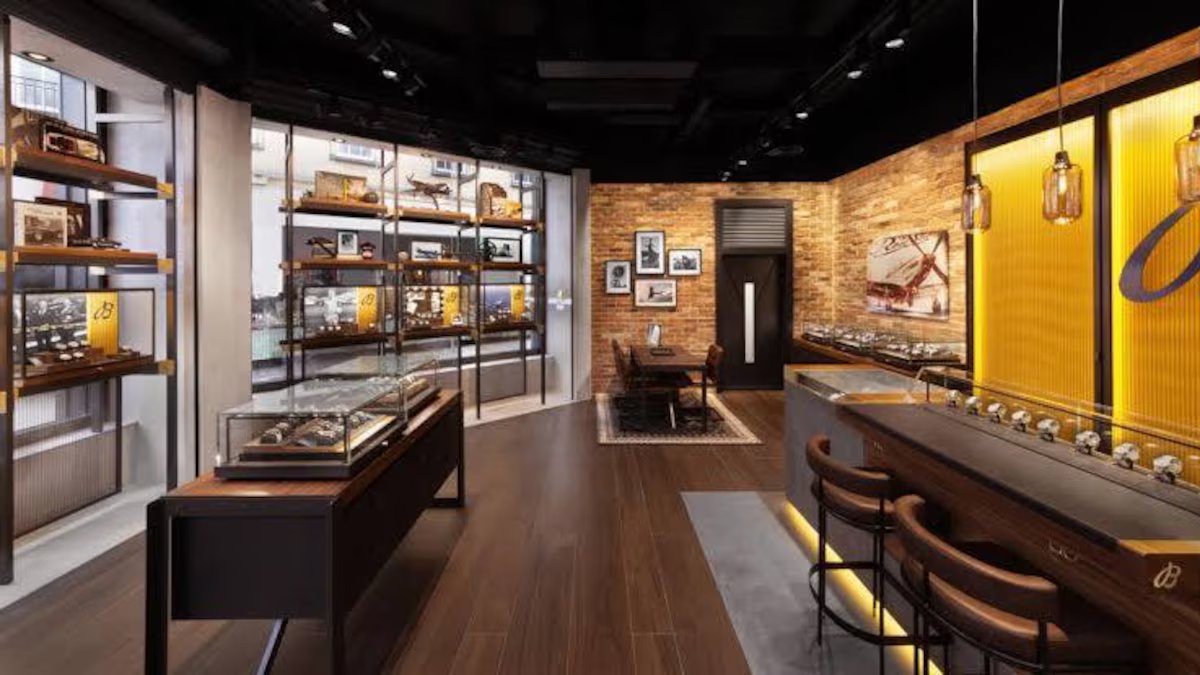
For its part, Georges Kern, global CEO of Breitlingalso visited the country to confirm the opening of a boutique in alliance with Sensation du Temps, the first within an expansion plan. During his stay, Kern expressed to LA NACION his optimism regarding economic reforms and trade opening; and kept a meeting at the Casa Rosada with President Javier Milei.
Breitling, which has more than 280 points of sale around the world, seeks to capitalize on a context that it considers favorable for international brands to return with clear rules. In 2011, the brand had inaugurated its first boutique in Buenos Aires, although seven years later, after a change in share control, it closed it. Today, the brand is owned by the Swiss group Partners Group.
The phenomenon also reaches younger brands, such as Laurent Ferrier, who produces just about 600 pieces a year and focuses on “quiet luxury”. It was created in 2009 by Laurent Ferrier at the age of 63, a third generation watchmaker with the aim of designing classic and timeless watches, assembled by hand and made with high quality materials. And a year later, his first watch won the award for Best Men’s Watch at the Grand Prix d’Horlogerie de Genève, one of the industry’s main awards.
The Swiss fine watchmaking house arrived in Argentina in 2023, led by Simonetta Orsini, and from there it expanded to other countries in the region such as Uruguay, Chile and Brazil. With prices ranging from US$40,000 to more than US$220,000the brand maintains the same strategy throughout the world: it does not have its own boutiques, but rather works with independent multi-brand stores that know their collectors in depth. The design is influenced by its founder’s passion for car racing – he competed and came third in the 24 Hours of Le Mans in 1979.
“When we started, We committed to delivering 10 units the first year; and to increase the volume little by little each year, to 12 and then 14. This allows us to establish a controlled development. Collectors understand that it is not a product that can be obtained immediately due to the details of production. Mexico and Argentina are the two markets with the greatest history and watchmaking knowledge in the region,” explained Charles Marin, representative for the Americas, during his visit to Buenos Aires.
Another of those who put chips in the local market was Victorinox Swiss Armyclassified as an “accessible” luxury brand. Last year, the label opened a brand store in it shopping Unicenter -in which it markets its lines of watches, knives and suitcases-, and for this year it anticipated the launch of a limited edition exclusive to Argentina. The brand operates in the country through the Suevia Group, also a representative of Swiss watches. Edox since 2004. “We believe that the national framework panorama is positive and we project an increase in turnover in the order of 30%,” said Rogelio Abella, director of the group.