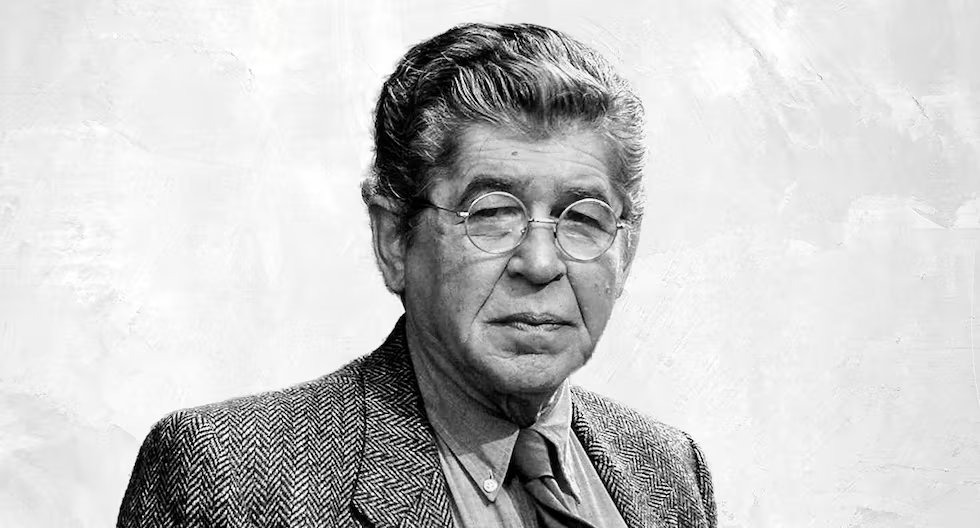
The chronicler of a social class in decline, the one who found humor even in tragedy, the master of tenderness. That and more has been said about Alfredo Bryce Echenique (Lima, 1939 – 2026). With a total of twelve published novels and dozens of short stories, the author who lived between Europe and Peru (where he now lives) published constantly and, from the beginning, left his mark on Peruvian literature.
His name had already become known before devoting himself to letters. In 1952 this newspaper reported that the then teenager Bryce had gone through a fatal “dark alley” at the Santa María Marianistas school; As a result of the punishment he ended up fainting. The news was reported by El Comercio. His father, Francisco Bryce Arróspide, took him out of school and sent him to the San Pablo boarding school.
After studying law to satisfy his father, he went to Europe, where he consolidated his writing career for decades. His first work, the book of stories “Huerto cerca” (1968), was originally published in Cuba. Finding this edition outside the island country was an almost impossible task.
With his first novel, “A World for Julius” (1970), Bryce Echenique took an x-ray of the people he knew best; those who only had money. In his memoir “Permission to Live” (1993) the writer says that in 1972 the writers Mario Vargas Llosa and Julio Ramón Ribeyro submitted their friend’s novel to the Ricardo Palma culture promotion awards, which it won. Bryce Echenique believes that the book suited the military government, which had undertaken a campaign against the oligarchy, like a glove.
“‘A world for Julius’ reproduces, with rare impartiality, the privileged life of the lords and the precarious life of the servants; it summarizes the social injustice in a family home,” the literary critic Abelardo Oquendo wrote in this Diary, once the work arrived in Peru in 1971.
“The anecdote still circulates about that member of my family, as conservative as he was clueless, who attended the awards ceremony, and who, upon hearing the Minister of Education say that General Velasco and Alfredo Bryce Echenique had liquidated the Peruvian oligarchy, suffered a severe faint and had to leave the National Institute of Culture on a stretcher,” the author said in his memoirs.
Over the years Bryce Echenique maintained a constant pace of publications. The novels “So many times Pedro” (1977), “The exaggerated life of Martín Romaña” (1981), “The man who spoke of Octavia de Cádiz” (1985), “Don’t wait for me in April” (1995), among others, followed. He won the Planeta Prize with the novel “El huerto de mi amada” (2002).
In 2012 he published his latest novel, “Giving sadness to sadness.” That same year he received the FIL Prize for Literature in Romance Languages at the Guadalajara International Book Fair.