The World Championship will be held from June 11 to July 19 in the USA, Mexico and Canada and will be the largest in history both in scale and in number of spectators. There are less than 50 days left before the start of the tournament. FIFA has opened ticket sales for all 104 matches on a first-come, first-served basis.
According to FIFA, more than 5 million tickets have already been sold out of an expected 6 million. Ticket categories 1-3 are now available, as well as a limited number of seats on the pitch, depending on the match. Additional games may appear until the final, subject to availability.
At the same time, the sale of tickets is accompanied by criticism of the pricing policy, since the cost of tickets varies depending on demand and availability.
FIFA confirmed that it is using flexible pricing as it helps manage the high interest in the tournament. However, critics warn that this approach could reduce the accessibility of matches for fans.
In the US, a number of lawmakers have already called on FIFA to reconsider its pricing model. In their opinion, floating prices, as at concerts and other large shows, make tickets unaffordable for ordinary spectators.
In response to criticism, FIFA introduced a limited number of cheaper tickets. In December, the organization launched the Supporter Entry Tier category, with ticket prices starting at $60. They constitute about 10% of the quota allocated to national football associations. Experts say the move has increased availability, but the number of such tickets is still insufficient amid high demand.
What is being criticized about the new format of the 2026 World Cup?
The 2026 World Cup will be held in a new format for the first time. 48 teams will play in the tournament instead of the usual 32. Because of this, the number of matches will increase from 64 to 104, and the tournament itself will become much larger and more complex to organize.
FIFA President Gianni Infantino supports this decision. He said the format would make the tournament “the most open in history” and allow more countries, especially those from less represented regions, to qualify for the World Cup.
However, experts believe that increasing the number of participants could reduce the level of play, especially in the group stage, and increase the stress on players in a busy calendar.
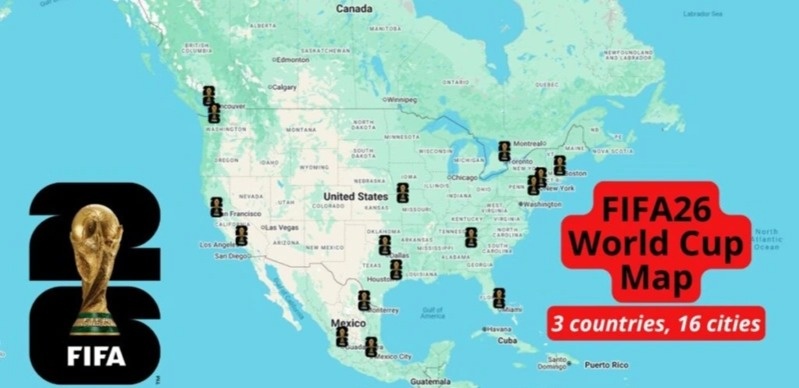
The geography of the tournament also adds complexity: matches will take place in the USA, Mexico and Canada, in different time zones. Teams and fans will have to travel thousands of kilometers between games, adding to costs, logistics burdens and carbon emissions.
FIFA also remains under pressure due to past corruption scandals. The organization says it will reform, but critics say the transparency of revenue distribution still raises questions.
The 2026 World Cup is expected to generate record revenues from television rights, sponsorships and tickets. At the same time, some experts doubt that these funds are distributed evenly between countries and federations.
Who might not play at the 2026 World Cup?
As we prepare for the 2026 World Cup, political influences around the tournament are intensifying. Discussions center on Iran’s possible involvement amid international tensions. A number of politicians accept the scenario of his removal.
At the same time, in some circles the option of replacing Iran with Italy, which previously did not qualify, is being discussed. FIFA did not officially support such proposals. The topic was publicly raised by the special representative to the US President, Paolo Zampolli. In an interview with the Financial Times, he said that he proposed Italy to replace Iran:
— I confirm that I proposed to Trump and Infantino to replace Iran with Italy at the World Cup. I am Italian by origin and it would be a dream to see the Squadra Azzurra (the nickname of the Italian national team – editor’s note) at a tournament held in the USA. With four titles, they have enough credibility to justify their participation.
Note, Italy didn’t pass qualifying, losing to Bosnia and Herzegovina in the play-off, and will miss the World Cup for the third time in a row.
FIFA continues to insist on the principle of separating football from politics. However, experts warn that the possible exclusion or replacement of an already qualified team for political reasons could call into question the sporting principle of the tournament.
The commercialization of the championship raises additional questions. Rising revenues from TV rights, sponsorships and tickets have been accompanied by criticism of high prices and increasing corporate influence over the tournament.
Difficulties remain in the field of security and logistics: the matches will be held in three countries at once, which requires coordination at a new level.
Read the original material in English Here.
Previously published statement the head of FIFA that Iran will play matches of the 2026 World Cup in the USA. It also became known that Iran’s participation in the 2026 FIFA World Cup depends from moving matches from the USA.
The day before it became known that FIFA had set record prices for the 2026 FIFA World Cup final, the most expensive tickets reached $10,990.