Akash Samaroo
Lead Editor-Politics
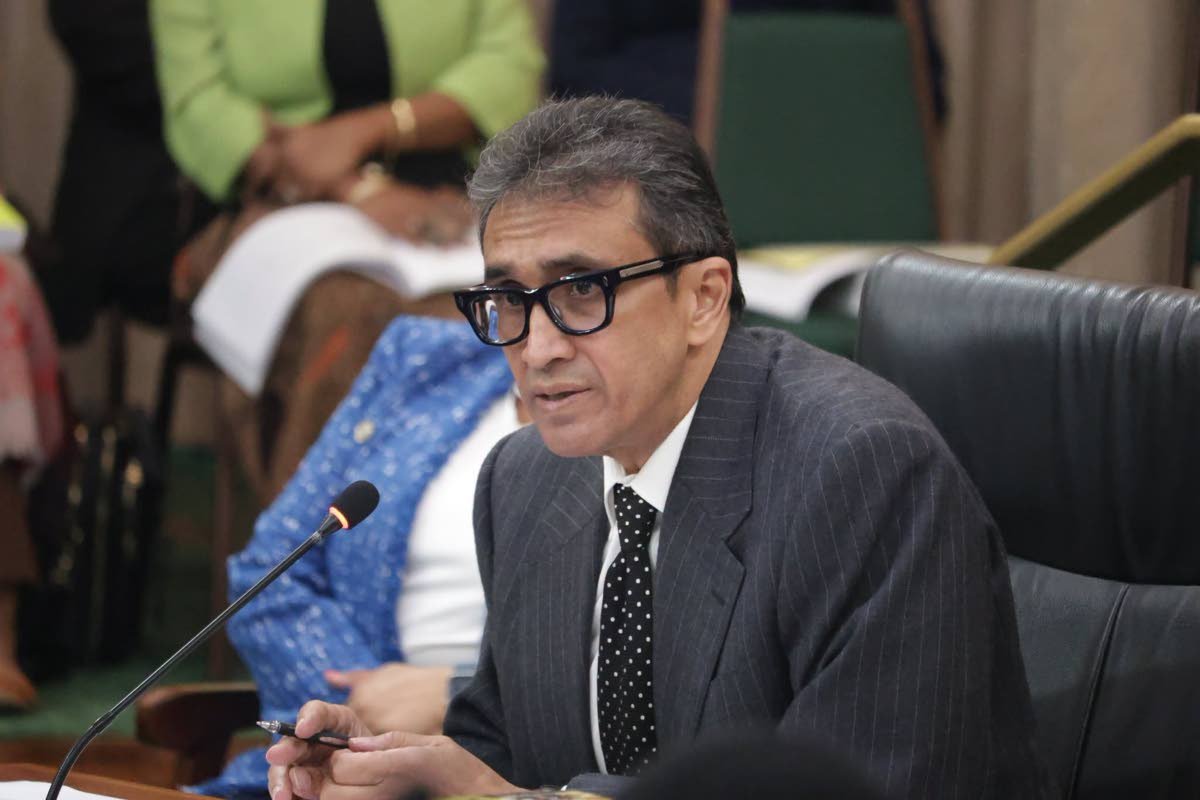
The Opposition is lamenting that it was unable to question the Government about millions of dollars allocated for police infrastructure, equipment and other development projects after blaming Standing Finance Committee (SFC) chairman Jagdeo Singh for moving past a key expenditure item during yesterday’s SFC examination of the 2027 Budget without pausing for their questions.
Singh, however, maintained that he had followed the established procedure, insisting that he paused after announcing the expenditure item and moved on only after no Opposition member indicated an intention to ask questions.
The dispute arose as the committee examined the Trinidad and Tobago Police Service’s (TTPS) $3.049 billion allocation, with Opposition MPs protesting that they were not given sufficient time to raise questions about expenditure under the Development Programme.
At the centre of the disagreement was the Social Infrastructure allocation, which contains much of the Police Service’s development funding, including $20 million earmarked for the purchase of equipment.
That allocation is particularly significant given ongoing concerns about the availability of body-worn cameras for police officers conducting operations under the recently enacted Special Operations Act.
Prime Minister Kamla Persad-Bissessar previously stated that police officers conducting special operations must wear body cameras.
However, the legislation provides for their use where practicable, raising questions about the availability of equipment to support the Government’s commitment.
The Commissioner of Police has previously indicated that approximately 100 to 180 body-worn cameras remain operational, with their batteries lasting between 90 minutes and two hours.
However, Opposition MPs did not get the opportunity to question Homeland Security Minister Roger Alexander about the provision after Singh indicated that the committee had already moved on.
The Speaker had called Item 004, Social Infrastructure, before proceeding to Item 005, Multisectoral and Other Services.
Opposition members protested the move, questioning whether the previous item had already been passed.
“You passed 004, Social Infrastructure?” Trincity/Maloney MP Camille Robinson-Regis asked.
Singh confirmed that he had.
“I didn’t realise that was passed,” Robinson-Regis said.
An exchange followed over whether sufficient time had been allowed for MPs to indicate their intention to ask questions.
Singh maintained that he had paused after calling the item.
“I did pause. I said Item 004, Social Infrastructure, B, Police Service, pages 150 to 151,” he insisted.
As Opposition members objected, Singh said, “Could you please stop your protestation.”
“You moved on in less than a second,” Diego Martin/North East MP Colm Imbert said.
As the objections continued, Singh maintained that no member had signalled an intention to speak before he moved forward.
“I called it. No one raised their hand,” he declared.
Opposition Leader Pennelope Beckles challenged the pace at which the Speaker was moving through the estimates, arguing that members were not always given sufficient opportunity to intervene.
“Sometimes you move much quicker than others, and this was one,” Beckles told Singh.
Singh responded that he normally allowed considerable leeway during the committee’s examination but maintained that proceedings had already advanced.
Contacted by Guardian Media following the sitting, Opposition Chief Whip Marvin Gonzales expressed disappointment over the development, arguing it undermined the Opposition’s ability to scrutinise public expenditure.
“It is very unfortunate that the Opposition was not provided with the opportunity to scrutinise an important line item of expenditure for the TTPS in the Development Programme for 2027 fiscal year,” Gonzales said.
He said the allocation warranted examination.
“The Opposition was not provided with the opportunity to examine and interrogate the allocations on behalf of the citizens of this country.”
He added, “This is an unfortunate development again in our Parliamentary democracy.”