When Nicholas Elliott arrives to a new country, Parliament is high on the list of places he would like to visit.
This has been the case 33 times over the past 20 months.
Most visits have been to Europe, but the trips have also brought him to Canada and Jamaica, among others. The latter has a special meaning for him. Elliott was born and raised in the UK, while his father has Jamaican roots.
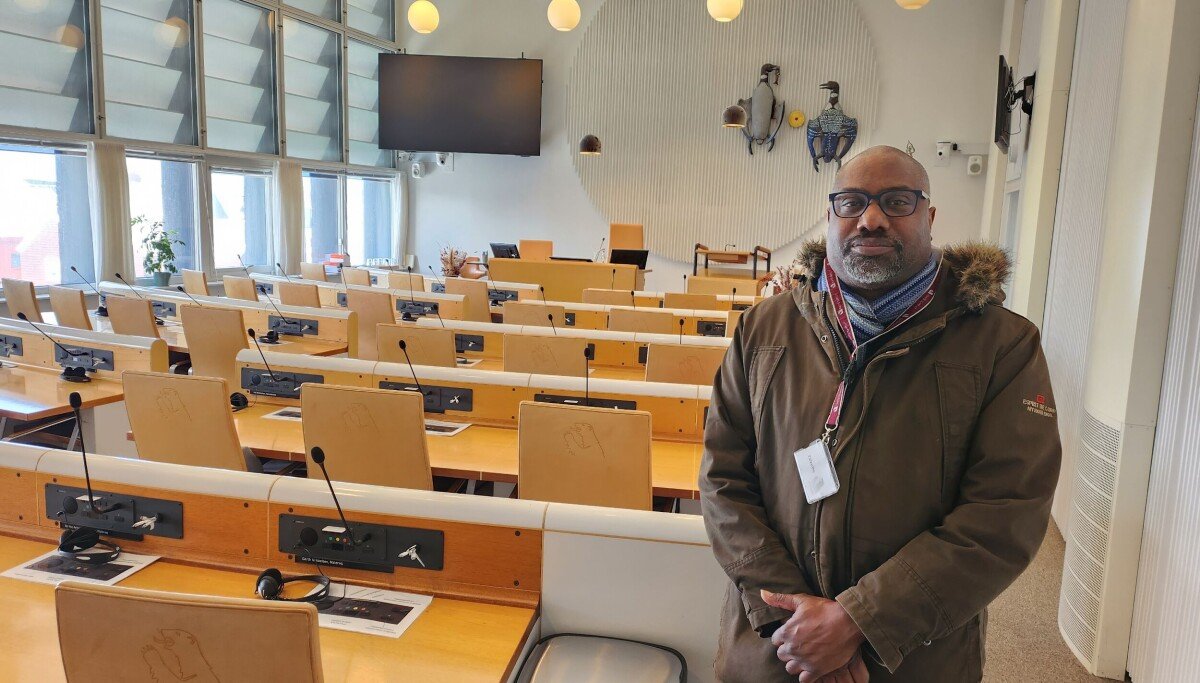
In March, the trip went to Greenland and Inatsisartut. Here he was particularly struck by how easy it was to get inside and how welcoming he was received.
But what makes an ordinary Briton, who is neither a politician nor a political scientist, spend so much time seeking out parliaments?
The answer is curiosity.
– I love finding out how the world is connected. I love getting to know different people and cultures. And I don’t just want to read about it in a book or on the internet. I want to meet real people and talk to them, says Nicholas Elliott.
He has visited 63 countries, lived abroad and studied Russian in Moscow. On a daily basis, he works at a university with technology for teaching and online learning.
The interest in parliaments began in earnest after a visit to the British Parliament in London. Here it occurred to him that a parliament not only tells about politics, but also about a country’s history, culture and people.
Therefore, he made a decision: When he traveled to a country in the future, he would try to get inside its parliament.
More than politics
Since then, he has visited parliaments in Belgium, Iceland, the Faroe Islands and several Eastern European countries.
But for Nicholas Elliott, a visit to Parliament itself is only half the story.
If you really want to understand a society, he believes that you also have to go out on the streets and talk to the people who live in it.
– You can’t just look at the parliament. Politicians will usually tell you about the good things about their country. They tell what works and what the government and parliament are doing. But when you talk to ordinary people, you also hear about the problems.
That’s why Elliott has developed his own down-to-earth method:
Find a taxi driver.
– The best is to meet a taxi driver. A taxi driver tells you how the situation is really experienced and what life is like.
He also did that in Nuuk.
A Pole behind the wheel in Nuuk
Here Elliott struck up a conversation with a Polish taxi driver who had settled in Greenland and was married to a Greenlandic woman.
It became a longer conversation about life in Nuuk, cultural differences and the relationship between Greenland and Denmark.
For Elliott, the meeting was extra interesting because his own wife is Polish. Among other things, the taxi driver talked about his experiences of coming to Greenland from abroad and becoming part of a Greenlandic family life.
The conversation gave Elliott a different perspective than he could get from visiting Inatsisartut alone.
This is precisely the combination he seeks in his travels: He listens to people outside the political institutions and takes their perspectives with him when he tries to understand the political system.
– It is only when you are in a country that you can begin to feel what it is like to be part of it, he says.
Greenland was something different than expected

Nicholas Elliott does not hide the fact that his knowledge of Greenland was limited before the visit. The same was true of many of his friends and acquaintances in Britain.
– People said to me: Why do you want to go to Greenland? After all, there is nothing but ice cream.
The reality quickly turned out to be different. Among other things, Elliott was surprised by the small population compared to London and by the fact that there are no roads between the cities, so planes and ships play a completely different role.
But it wasn’t just the geographical and practical conditions that he learned about. The visit to Inatsisartut also gave him an insight into the relationship with Denmark, the Home Rule, the Self-rule and the discussion about independence. As a Brit, he could recognize some of the complexity.
– It is very similar to the relationship between Great Britain, Scotland and Wales. If you ask an Englishman to explain how the different parts of Britain fit together, it quickly becomes complicated. I experienced the same with Greenland and Denmark.
He also got to feel the weather conditions. When he was due to leave Nuuk, a blizzard brought air traffic to a standstill and Elliott had to stay longer than planned.
For a man from London, it emphasized how different distances and weather characterize life in Greenland.
– All the little things I discovered about Greenland, both inside and outside the parliament, were fascinating.
An open door in Inatsisartut
The visit to Inatsisartut itself made an impression. Not because of its size – with 31 members, it is one of the smallest parliaments Elliott has visited – but because of its openness and reception.
He was so absorbed in the visit that he forgot to take pictures. When he afterwards contacted an employee in Inatsisartut, he was invited back.
– It was incredible. Other parliaments could have said: We have already spent time on you. But I was allowed to come back.
This time pictures were taken, and for Elliott the episode became a picture of the openness he experienced in Inatsisartut.
The contrast with the home country is great. While he was able to travel from London to Nuuk and be invited inside twice, he has had much more difficulty getting in touch with his local member of the House of Commons, whom he has tried several times to meet.
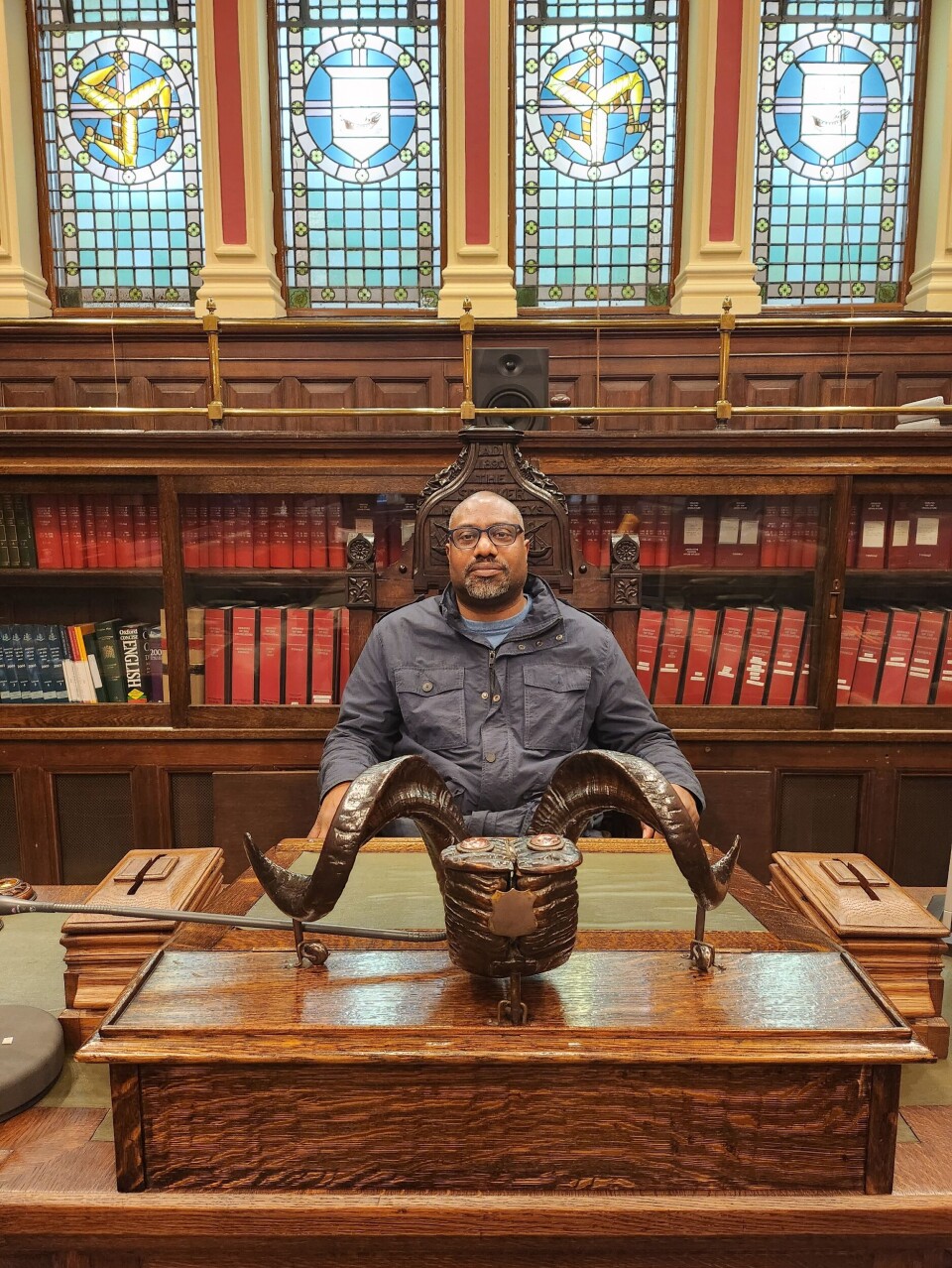
– Where I live, I was largely ignored by my local MP.
For Elliott, parliaments are not only about laws and political debates, but also about the relationship between the elected representatives and the citizens. Here he believes that British politicians can do better.
– You have to have contact with people.
And when, after 33 visits to parliament, he is asked why he travels all the way from London to, for example, Greenland to visit a parliament, the answer is simple:
– Why not?