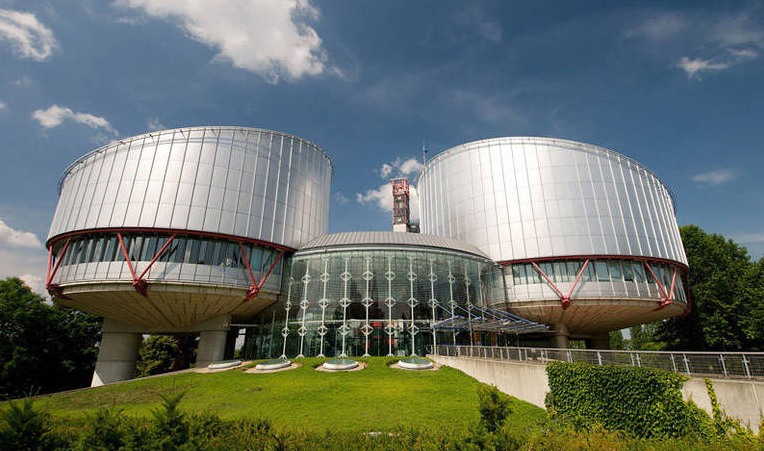
From San Marino information (by Antonio Fabbri) – The historic ruling with which the European Court of Human Rights (ECHR) condemned the Republic of San Marino for the illegitimate demotion of Massimiliano Simoncini from Law Commissioner to Auditor will probably not be enough to restore to the magistrate the role unduly taken from him in 2020.
With Resolution no. 1 of 23 September 2026, the Judicial Council unanimously decided not to proceed with the reinstatement of the judicial function, believing that in the San Marino legal system there are no tools to review sentences or definitive administrative acts on the basis of the Strasbourg rulings.
A clear political and legal fact follows: the violation of fundamental rights ascertained at European level in fact does not cease. While on the one hand the Congress of State has already taken steps to liquidate the financial compensation of 160,000 euros established by Strasbourg with resolution no. 24 of 7 July 2026, on the other hand the removal of the effects of the arbitrary act, for which the ECHR had explicitly spoken of a “violation of the rule of law”, remains completely unimplemented, leaving the institutional vulnerability open.
The formal barrier and the contradiction with the Guarantors
To justify the closure to the restoration of the status quo ante, the Judicial Council argues that the San Marino legal system does not allow the revision or revocation of civil or administrative sentences that have become final on the basis of a decision of the ECHR. According to the reconstruction of the professional body, not even the possible annulment of the contested act would lead to automatic reinstatement as Law Commissioner.
Precisely on this point, however, a clear contradiction emerges which can be seen from the text of the resolution.
To support the unsuitability of the magistrate, the Judicial Council recalls disciplinary proceedings no. 1/2023, recalling that the ECtHR had ruled against the warning sanction on 9 April 2026 (appeal no. 3106/2024).
The same Council acknowledges that the Constitutional Guarantor Board, with collegial order no. 2 of 23 September 2026 – the same body as the decision of the Judicial Council resolution – intervened “remediating the violation found by the ECtHR ruling” in the disciplinary and administrative sphere.
The issue for which San Marino had been condemned to the ECHR concerned the appeal in a disciplinary proceeding against Simoncini declared inadmissible by the Guarantors in a monocratic capacity, when it should have been dealt with collegially.
A logical-legal short circuit is thus revealed: while on the one hand the Judicial Council categorically states that the sentences of the ECHR cannot be applied or reopened in civil and administrative matters, on the other hand it cites in support a decision with which the supreme constitutional guarantee body of San Marino, the Guarantor College, has transposed and directly applied a ruling from Strasbourg in administrative-disciplinary matters. Who will be right?
Barring of subsequent disciplinary proceedings
In addition to the strictly legal reasons, the Judicial Council supports its decision by listing a long series of facts and disciplinary proceedings attributed to Simoncini and which occurred subsequently with respect to the events of 2020 and the demotion which occurred in violation of human rights, as ruled by the ECHR.
Among the elements referred to are the negative professionalism assessments contained in the reports of the Court Director Giovanni Canzio, who, it must be said, was a party to disciplinary proceedings against Simoncini as well as in the “subcommittee” of the Judicial Council that evaluated this case. Manager’s reports of December 2020 and December 2023, relating to the recruitment procedures for Law Commissioner and Tax Prosecutor.
Various disciplinary proceedings are also cited: the sanction of censure for failure to abstain in a situation of conflict of interest (proc. no. 2/2022), the warning for violation of the duties of collaboration (proc. no. 1/2023) and the suspension of pay imposed on appeal for irregularities in the admission of evidence in a civil trial (proc. no. 2/2023).
The document also contests an alleged “abuse of the process”, referring to repeated behavior in the numerous trials in which he was a party.
These elements lead the Judicial Council to note the absence of the fundamental prerequisites of “independence, impartiality and balance” required by constitutional law no. 1/2021.
Now, the assessment of subsequent disciplinary violations used to deny the restoration of the status quo ante would seem rather questionable, as well as opening the way to other appeals.
In fact, if the right is violated, it would first be necessary to stop the violation of the right and then contest the disciplinary violations. The career reconstruction, which was denied due to the abuse perpetrated by the State with the famous retroactive rule, must still be done.
In short, to simplify as much as possible: the sanctions for subsequent actions must be applied to the Simoncini Law Commissioner, assuming they are well founded, and not to Simoncini who is left as an auditor because, after we have illegitimately demoted him, he acted bad.
Even more so since the Court of Strasbourg, which has already sanctioned the Titan for violation of the law and for disciplinary proceedings, has recently taken charge of a third appeal, “Simoncini ter”.
The ball is in the Government’s court
With the vote on resolution no. 1/2026, the Judicial Council ordered the transmission of the entire file and the Investigation Report to the Government Agent “for the relevant decisions”.
The question therefore returns to the State Congress. In fact, it is up to the Executive to prepare and present to the Committee of Ministers of the Council of Europe the Action Plan relating to the execution of the Strasbourg sentence.
The Government now finds itself faced with a delicate transition: by implementing the closing line of the Judicial Council, it risks appearing in Strasbourg admitting that the violation of fundamental rights has not been remedied in terms of careers, exposing the Republic to new findings from European bodies; vice versa, to mend the rift, it should identify alternative regulatory or political paths capable of guaranteeing full respect for the rule of law.
af