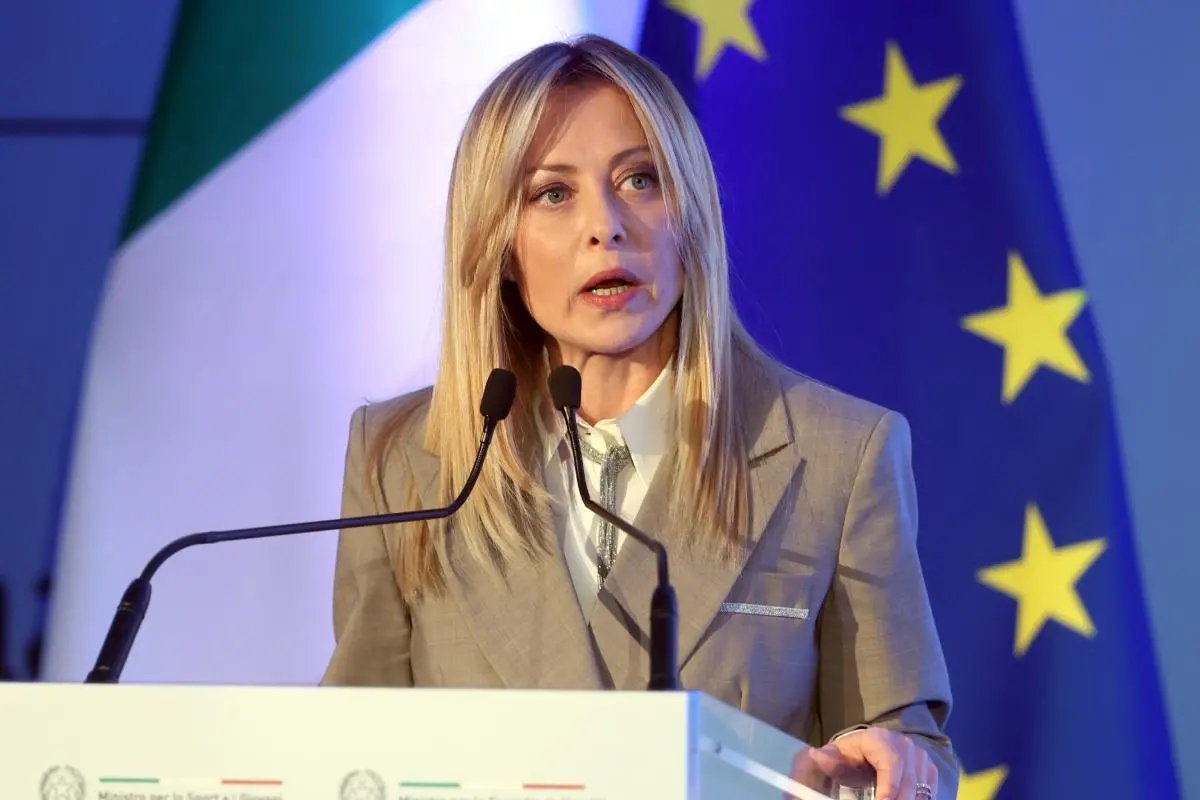
The president of the Council of Ministers of Italy, Giorgia Meloni, has announced the preparation of a new legislative proposal aimed at prohibiting the use of the burqa and the niqab in the country’s educational centers.
The measure, which seeks to be submitted to the Council of Ministers soon, outlaws clothing that covers the entire face and body in the academic environment, reviving the debate on secularism, security and cultural limits in European classrooms, reported El País.
The position of the Executive leadership is based on a clear premise: to guarantee that the learning process and school coexistence are developed openly.
As Meloni has argued, the uncovered face is a fundamental requirement within pedagogical interaction and life in society.
The leader has argued that no tradition or custom can justify that a young woman must hide behind a full veil, defending the measure as a decisive step in the protection of women’s rights and equality.
The scope of the legislative project focuses specifically on those garments that prevent complete visual identification, such as the niqab – which leaves only the eye area exposed – and the burqa – which covers the entire body and face with a mesh.
On the contrary, the ban does not cover the use of the hijab, the traditional Islamic veil that covers the hair and neck but keeps the face visible.
This initiative does not arise in isolation, but is integrated into a broader package of educational and integrative reforms.
The government plan plans to set a maximum limit on the percentage of foreign students allowed per classroom in order to avoid the formation of school ghettos and encourage an ideal environment for learning the national language.
Likewise, the proposal contemplates requiring the teaching of the Italian language to parents of foreign students who present serious integration difficulties within the school system.
The measure has generated mixed opinions on the political and institutional spectrum.
Government sectors and related groups support the restriction, considering that it strengthens security, encourages transparent communication in classrooms and prevents marginalization.
However, human rights organizations, religious groups and opposition parties point out with concern that this law could stigmatize the Muslim community or threaten the freedom of religion of the students.