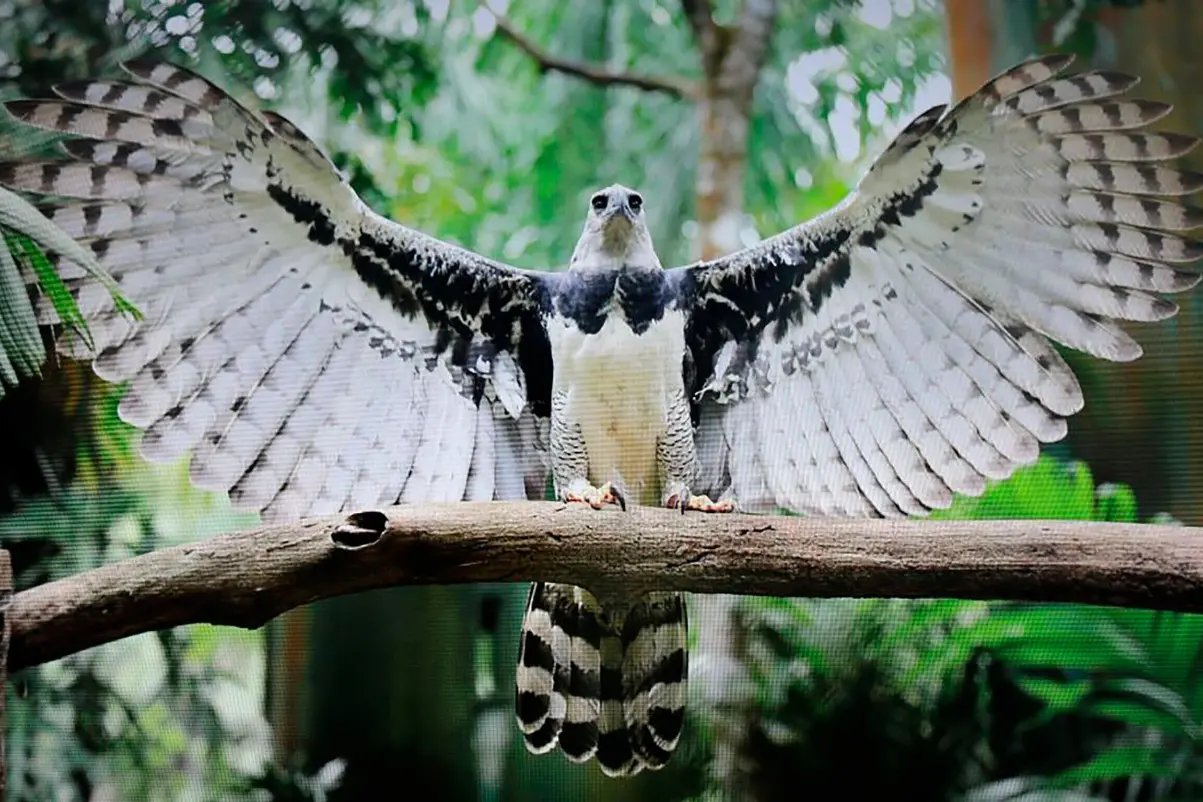
This Sunday, hundreds of families gathered at the Summit Botanical Garden to celebrate the 17 years of life of “Panama”, the harpy eagle that has become one of the main attractions of the park and a symbol of the conservation of this species in the country.
“Panama” was born on September 22, 2009 at Zoo Miami, USAand arrived at the Summit Botanical Garden on June 15, 2016, as a result of the efforts carried out by the Board of Friends of the Harpy Eagle and the mayor’s administration.
As part of the celebration, families participated in an Eco Exchange, visited environmental stands and enjoyed children’s activities, recreational tours and a cultural and gastronomic area.
The day also included the Summit Xtremo, with a zip line, rope park and climbing wall, as well as a Water Zone with inflatables and water slides for children.
One of the central moments of the activity was the traditional “Happy Birthday” that the visitors sang to Panama, a celebration that each year brings together people interested in knowing and protecting this imposing bird.
A species under protection
Beyond the celebration, Panama’s presence at Summit has an educational purpose: to bring the population closer to the importance of conserving the harpy eagle, considered a vulnerable species threatened by the loss of its habitat.
He Ministry of Environment (MiAmbiente) is the governing entity for wildlife conservation in Panama and develops actions, plans and programs aimed at protecting endangered species, including the harpy eagle.
These actions include environmental education, updating the legal framework, as well as support for non-governmental organizations dedicated to the study and monitoring of the conservation status of the species.
According to the latest censuses, prepared from maps of forest cover and demographic nuclei, the population of harpy eagles in Panama is estimated at 227 pairs..
The main centers are located in Darién, the Chagres National Park and the Palo Seco Protective Forest, in Bocas del Toro.
This figure is considered acceptable taking into account the territorial size of Panama compared to other South American countries with much larger forested areas.
Panama, in addition, maintains the largest and best preserved population of harpy eagles in Central America.
Human beings, the main threat
Although the harpy eagle has extensive protection measures, its main threats are related to human activities. The destruction and deterioration of forests represent the main risk for the species.
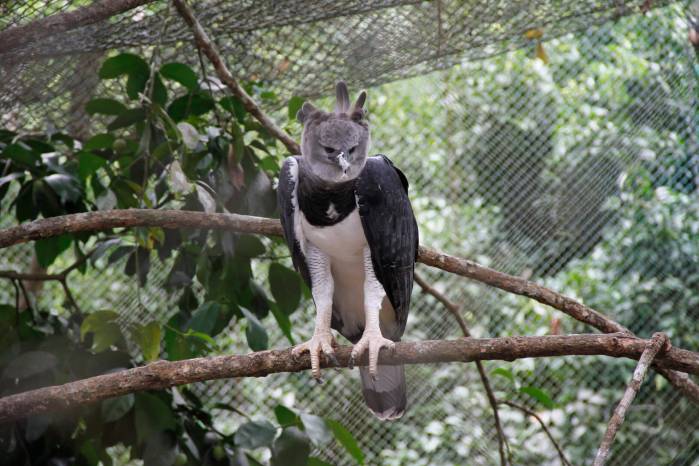
“Panama’s” birthday served to remember that the conservation of the harpy eagle depends on protecting the forests where it nests and feeds.
Among the activities that affect their habitat are deforestation linked to agricultural production, timber extraction and illegal hunting.
The first months of life also represent a critical stage for young specimens. The first four months are especially difficult, because the babies begin to exercise, open their wings and make their first jumps.
The risk is greater because the nests are usually found at heights of at least 50 meters, so a fall can be fatal.
Cases of illegal possession of harpy eagles are rare. However, MiAmbiente has in the past treated juveniles that fell from their nests and some individuals that had injuries caused by projectiles. In these latter cases, it was not possible to determine who was responsible.
The national bird of Panama
He harpy eagle Fofficially declared National Bird of Panama through Law 18 of April 10, 2002. The legislation contemplates sanctions for those who capture, traffic, damage or cause the death of specimens, as well as for those who affect their offspring, eggs or nests.
Wildlife regulations also establish protection mechanisms for protected species, while criminal legislation contemplates sanctions for crimes against fauna and the environment.
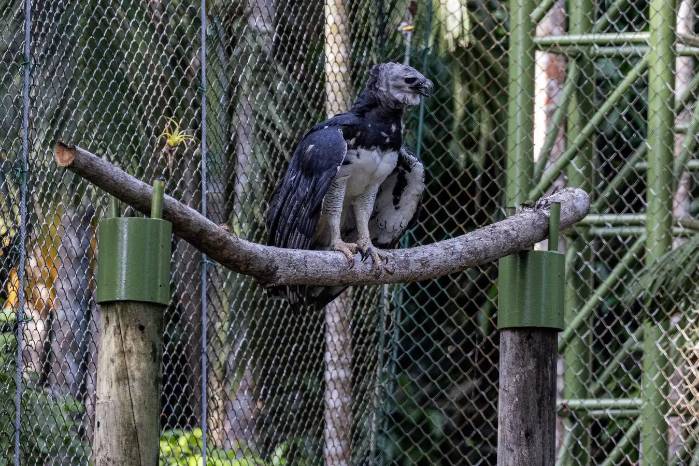
The celebration of “Panama” contrasts with the challenge of conserving a species whose main threat continues to be the destruction of its habitat.
At the international level, the harpy eagle is protected by the Convention on the International Trade in Endangered Species of Wild Fauna and Flora (CITES)which regulates and restricts its international trade.
Every year, public entities, organizations and the private sector develop activities around Harpy Eagle Day to promote knowledge of the species and reduce the threats it faces.
Thus, while Panama celebrated its 17 years surrounded by families and recreational activities in Summit, its story also served to remember that the survival of this species depends on the conservation of the forests that serve as its home.