—What actions is Minedu taking regarding the case of the Almirante Guisse Naval High School?
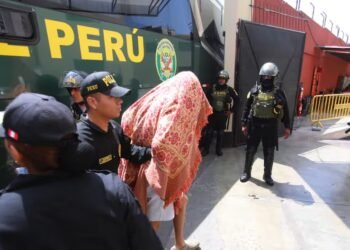
We are following the guidelines that the president (Keiko Fujimori) has given us. We have declared the school under reorganization and have taken administrative and governance control. Academically, the school is not bad, on the contrary, it is well above average performance. Unfortunately, this group of boys has caused the prestige of this school to decline. There is a discipline problem that is not exclusive to the Naval High School. This is spreading to all educational institutions due to the relaxation of discipline norms.
—When does discipline relax?
In the last ten years, certain regulations have been issued – I have heard it from the directors themselves – that do not allow action to establish order or enforce the authority of directors and teachers. And the other issue is the non-direct participation of parents in the educational process, because many of these violent or disrespectful attitudes are generated in the family.
— A teacher said that good teachers wanted to establish order and discipline, but retaliation was taken. Do you know about that?
I have some statistics that might illustrate the situation. At the Naval High School we have 50 complaints in the last two years for different cases of violence: physical, 4; psychological, 17; for discrimination, 12; verbal aggression, 5.
—And sexual harassment?
Yes, sexual harassment, 7. Touching and acts of sexual connotation, 4. And there is a sexual violation, which is what has occurred. But this is only among schoolchildren. There are also cases between staff of educational institutions and schoolchildren. And there we have the same number, 30. Which means that there are 80 complaints of violence, let’s say, of some kind.
— In this educational center.
In this educational center, in the last two years. Now, there are many others – and I have learned this from parents – who do not report, who are afraid. And, unfortunately, this system also does not collect complaints from teachers who are harassed or mistreated.
— Have you spoken with the teachers at the Lyceum?
I have spoken with the authorities. Some point out that there are parents who also go too far, who report them for any issue, and feel uncomfortable, harassed, harassed. They take them to the prosecutor’s office. So, there is an absolute imbalance due to lack of authority, order, and discipline.

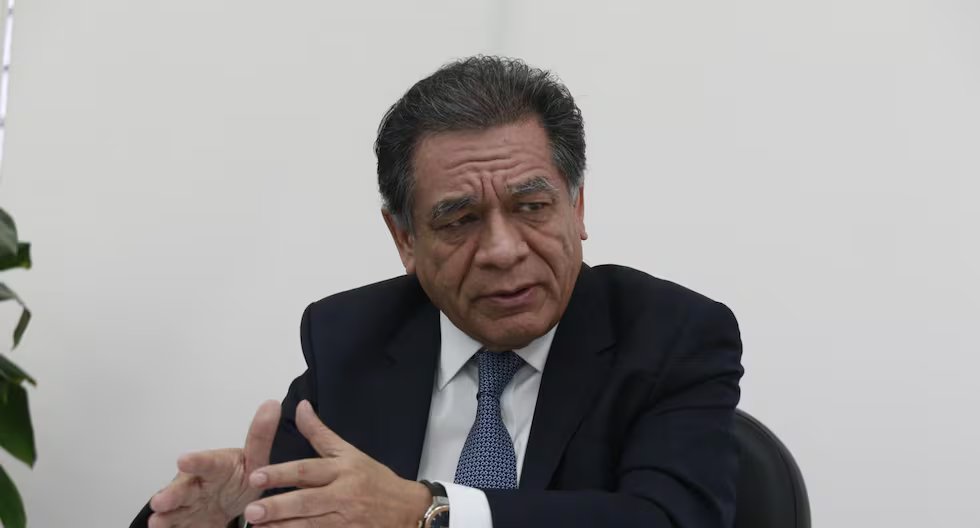
Interview with the Minister of Education, José Antonio Chang, who indicated that he will train directors and teachers of public schools. PHOTOS: ALONSO CHERO
—How can the authority of teachers be recovered?
The director has been deprived of authority to sanction within the framework of the law.
—To directors in general?
Correct. It’s not this director, it’s in general. That is why when we have talked about third generation reforms in the five-year plan that we have, we want the autonomy of schools to appear, for this we need an adequate leader, a teacher who is prestigious, knowledgeable about his subject, but who also knows how to be a model citizen. Because at school you are not only going to take classes, knowledge, get a good grade and pass the year, but also to learn the coexistence that must exist socially, to accept the diversity of people and attitudes that we have, to tolerate. That has been lost, our directors do not have the capacity at this moment to sustain their authority with these accompanying regulations.
— Is there any history in Minedu about the Liceo? Was something done?
There is a system that receives complaints, but it is only a statistical record that tells what state it is in, where the process went. This lacks follow-up. If I find five or six cases of violence in an educational institution in a year, I send a group of tutors or inspectors to see what is happening and take action. But that has not happened. The only thing they say is “care completed” because the document reached the last part of the protocol, but it is not verified if the problem was solved, if there is attention to those affected. So, I am proposing to create the Office of Educational Community Protection.
—What powers would I have?
They have to be based on the statistical document and be able to go and intervene in the schools. Tell them what is happening. I have received six complaints, five complaints of harassment.
“I have listened closely to many principals who say that they do not have the power to expel students who have had serious misconduct. I am reviewing the regulations and we are going to modify them.”
—What norms have contributed to putting us in this place?
Rules that have begun to relax all discipline and meritocracy.
— Regarding discipline, what was the breaking point that relaxed you?
Principals tell me that they cannot expel a student who has committed serious misconduct, and we must return that power to the school. That the parents or the affected child have a request at the Ministry of Education to review their case is fine. But until that decision is made, the student has to leave school and the ministry will have 48 hours to review that decision and determine whether to permanently separate him or her or return him to school.
— You talk about 48 hours, but then there is the bureaucracy.
That is why we are creating this office, which is going to be very expeditious. When I retired from Minedu in 2011 after five years of service, I left more or less 1,600 to 1,800 workers. Today we have 9,000.
— In 15 years it has gone from less than two thousand to nine thousand.
In the different contracting modalities, which are service orders, specific or indefinite-term CAS contracts, and others. And in this direction that sees quality issues, where the SíseVe platform is located, 164 people work. We’ve cut it to 60.
—The SiseSee…
It is inside this office that 164 workers managed. I said: “There are 164 people and they have not been able to attend to or prevent these situations?” It seems irrational to me. But as I say, we are going to create an Office for the Protection of the Educational Community to which everyone can turn when there are the highest sanctions or when statistically an alert comes out about complaints in a certain school. We must act immediately. Send a team of tutors. And this is not to punish the school, but to help it and anticipate dramatic events like the one that has occurred. To reach that extreme, many circumstances must have been overlooked.
—This is a consequence, these guys were already acting.
Definitely. No one can reach that extreme of violence if they have not previously gone through other transition processes.
—And what to do with the parents?
In the five-year plan we have talked about returning to the topic of the guide for parents, to tell them grade by grade what they can do to support the performance, behavior and growth of their children.
—Resume, he says. What year was it left?
2011 was the last time I saw the parent guide.
— In the last 15 years there has been no parent guide?
To my knowledge, there has been no effort to incorporate parents into the educational process. Parents are great allies because they are sending their most precious asset, their children, to school, so they have to be involved and know that they are going to a safe school.
— The Naval High School becomes administered by the Minedu…
A supreme decree has been issued that provides for the reorganization of the educational management and institutional governance of the Lyceum, and with that we will have control until December 2027. We are going to appoint the director, but we are also going to maintain the academic level.
— A mother said “the gallons are very heavy here.” How to handle that aspect?
Authority must be returned to the principal and teachers. They have felt unprotected because they are subject to permanent complaints. In these conditions, they feel limited to drawing attention, to correcting.
— In the National Education Plan, there is talk of a weakened public teaching career. Since there are no evaluations, who can assure us of exemplary directors?
We have proposed creating a national training school for public school principals. There is already a history of training in public sector schools, such as the Academy of Judiciary, Indecopi, the Comptroller’s Office, which train officials of these entities.
“It is necessary to develop the skills of a teacher, but also to be an inspiring leader for the student and show them what the advantages of a good education are.”

Interview with the Minister of Education, José Antonio Chang, who indicated that he will train directors and teachers of public schools. PHOTOS: ALONSO CHERO
—Will everyone who wants to be public school directors have to go through this school?
Although they already have an academic training, what they do not have is leadership and management training, and I need leaders who inspire the boys, who give purpose to the school. A clear example is the course offered by the Central Reserve Bank, a highly qualified and technical institute. So I want a training school of that level so that each director who leaves there is a leader of his community, who understands the responsibility it means to be a director of a school, managing teachers, managing students, interacting with parents.
— Is there a schedule?
The project will be ready at the end of the year. These schools are not an innovation in the world. Singapore, one of the countries with the best learning outcomes, has a school of leaders in education. Great Britain and Finland have them. I have requested a meeting with representatives of these governments, the IDB and the CAF so that they can support us in building this model. It should work in 2027.
—How much time would those who aspire to be directors spend at that school?
It will depend on the characteristics of the school. If it is initial, initial with primary, the three levels, if it is high performance… One year of studies could very well cover the skills for an entire school.
—And how is this going to be consistent with the evaluations?
If you want to be a school director, you have to have gone through the national school. To be a teacher and enter the public teaching career, it is another type of evaluation, but the levels of demand were lowered. Today you can enter the public teaching career without a cut-off line, but rather by filling vacancies. You opened 20,000 places and went through 11, 10 or 9, until you filled them. There are laws, a little complicated, that say that there were 20,000 places, 30,000 applied, 11 were taken. Everyone enters, and if there are no places, they enter when they appear, and they are appointed without further evaluation. That must be rectified. We have asked that the cut-off line be (grade) 14. In addition, we are going to enter into a new census evaluation process through the universities, and that they evaluate teachers in the classroom. I want to know if what they are learning is applied in the classroom, and how much. That is a progressive issue.