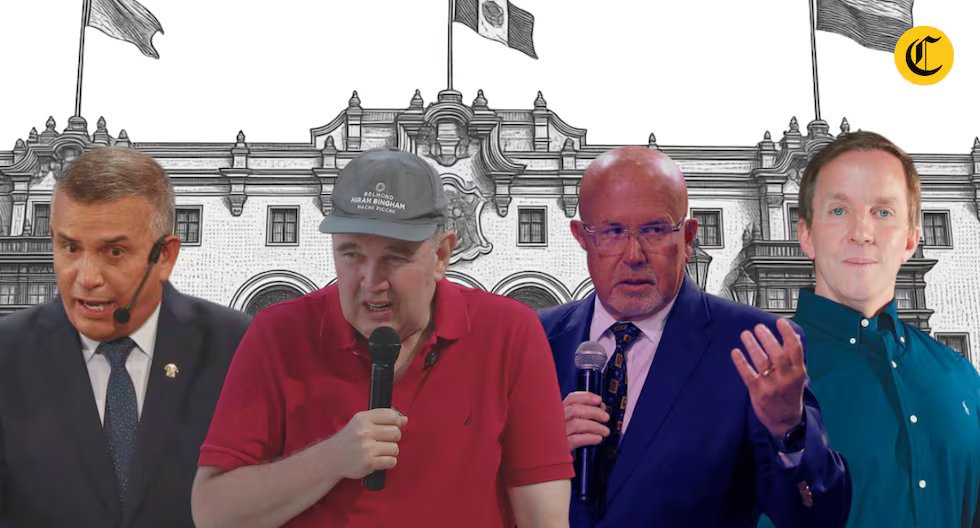

From Renovación Popular – whose list of councilors is headed by the former mayor of Lima Rafael Lopez Aliaga– Its legal representative, Fernando Sandoval, said that the goal of the celestial group is to cover 80% of all voting stations in the capital. According to the National Office of Electoral Processes (ONPE), 26,351 tables are planned to be installed on Sunday, October 4.
That is, López Aliaga’s party will seek to have at least 21,080 members.
“For all parties, having representatives is the main measure to take care of the vote. The defense of the vote is the most important thing, you can run an excellent campaign, but if you do not take care of the vote, what happened in the first round of the last general election could happen,” said Sandoval in communication with El Comercio.
He also explained that training for representatives began 15 days ago, “both virtually and in person.”
When asked by this newspaper about how Renovación Popular was going to solve the deployment of more than 21 thousand militants and sympathizers, the senior leader of the celestial party avoided responding.
“I can’t tell you, I don’t handle the figures. In addition, there are all kinds of people, some are t-shirts, they don’t ask for anything and cover all their expenses. There are others who do, and you have to give them a snack. But I can’t tell you the details,” he remarked.
The Somos Perú candidate for mayor of Lima, Carlos Brucecalled, through his social networks, for citizens who support his nomination to join his team of representatives, with the aim of ensuring that the will of the voters “is respected.”
“Peru, unfortunately, has a somewhat vulnerable vote counting system. Those of us who have participated in these elections have often seen situations that are not what we would like to see. That is why there is this figure of the representatives, the parties use them to ensure that our vote is respected,” he expressed.
In statements to The Commercethe current mayor of Surco announced that the ideal for his group is to cover all the voting tables.
“We are going to try to reach that figure, at the moment we are at 50% (about 13 thousand people),” he stressed.
Bruce highlighted that Somos Perú has candidates for 41 of the 42 district mayors. “They are going to help us (cover the deployment of the representatives), because they are also interested in ensuring that the vote in their favor is respected. They are going to help us in each of the districts to recruit and finance this,” he added.
The candidate said that he will respect the electoral results of October 4, even if he does not win.
“When you don’t win, it is difficult for you to accept the results and it is natural. But if you see that the election has had a normal development, as a Democrat you have to accept the result,” he concluded.
Aldo Borrero, president of Avanza País – the party for which Francis Allison is running for Mayor of Lima – indicated that each district candidate “will be responsible for the representatives in their jurisdiction at all costs.” “They are the ones who have the details of the voting center number and the polling stations,” he said.
Borrero, in communication with this newspaper, indicated that the train group “as democrats” will respect the results. “The country cannot tolerate any more instability or unsubstantiated accusations of fraud,”
The general secretary of the Podemos Peru Organization, Luis Gallardo, only indicated, when asked by El Comercio, that his party will seek to “cover as many tables as possible.”
The National Election Jury (JNE) informed this newspaper that, so far, only one polling station representative has been accredited for the elections in Metropolitan Lima and that this corresponds to Podemos Peru, which has the former Minister of the Interior Daniel Urresti as its candidate for the capital’s municipal seat.
The JNE spokesperson, Román Campos, recalled that political parties have up to 7 days before the election to register their polling station representatives before the Special Electoral Juries (JEE). However, he called on them not to wait until the last moment to do so.
Campos, in dialogue with El Comercio, explained that the groups will be able to make this registration through the Declara Más platform.
“We recommend that political organizations proceed with the registration of their representatives, that they do so in a timely manner, so that they do not have problems with the system. It is important that it be done with due anticipation,” he stressed.
In resolution 0243-2020-JNE, which regulates the participation of representatives in electoral processes, the electoral entity established that the request for recognition of representatives of voting centers is presented to the special electoral juries (JEE) “up to seven calendar days before the election.”
However, the same rule leaves a window open so that this registration can be carried out until the day of the elections.
“Once this period has expired, the legal representatives can accredit the representatives of the voting centers directly before the coordinators that the ODPE has assigned to such centers. Likewise, they can accredit the representatives before the voting tables, directly before the president of the table during the day of the corresponding election,” reads the aforementioned regulation.
Former Minister of Justice and Human Rights José Tello, an expert in electoral law, explained that the representatives are important, “because they are the ones who legally defend the vote on election day.” “They guarantee, on behalf of their party or regional movement, that the popular will is translated at the polls and that the count is done appropriately,” he added.
Tello said that the representatives are “guarantors” of the electoral process and that the ideal would be for the political parties that participate in the election for the mayor of Lima to be able to cover 100% of the voting tables.
“The ideal would be for them to cover 100%, but the reality is that they reach 50% or 60% of the tables,” he said.
The lawyer said that he sees it as difficult for the fraud discourse of the general elections to be repeated, because the metropolitan elections have other characteristics. In addition, the results arrive faster and are processed quickly.
For his part, lawyer José Manuel Villalobos maintained that the presence of the representatives “is essential”, because it guarantees the right of political parties to compete and report incidents and observations on the same day of the elections. He added that these can be present at the time of counting the votes, challenge and have a copy of the minutes.
He explained that political parties have until election day to accredit their poll workers.
“This is done by the legal representative of the party with a sheet where his signature is and they leave a space to put the name and table number of the representative. And this occurs because the parties do not manage to have representatives with much advance notice. They are recruiting them,” he said.
In dialogue with El Comercio, Villalobos said he hopes that the ONPE takes preventive measures so that what happened on April 12 during the first round of the general elections is not repeated, when the electoral material arrived late and there were voting tables that opened after noon.
“I think that the ONPE has already learned its lesson and the JNE must supervise in time, verifying on Saturday that the electoral material is in all the premises,” he stressed.