Brian London has carved his name in Trinidad and Tobago’s cultural landscape, but he has also worked behind the scenes with young people who aspire to become athletes.
Having acquired national recognition as a local artist, he is also an avid sportsman. London’s humility is flattering; he simply wants people to see him as a man who is a “builder of young people.”
A milestone accomplishment for most calypsonians, he made it to Dimanche Gras 12 times, including being a reserved cast member; he is the five-time and reigning Extempo Champ, and he won South Monarch eight times.
London emerged on the calypso stage in the early 2000s. He developed a niche for his strong, powerful social commentary renditions, known to educate and inform about current and political affairs affecting society.
But behind it all is London’s love for sporting activities; honing his craft in track and field, basketball, lawn tennis and football disciplines, he strives to produce strong sportsmen and sportswomen.
He started as a junior athlete; when he attended the Fyzabad Anglican Secondary School, his passion was sports.
London remembered his mother, Eulin London, a backup singer who went by the sobriquet Madam Butterfly, having to care for her nine children independently of a father. His father died when he was three years old, and he recalled how much of a struggle it was for his mother to care for them after she suffered paralysis while doing domestic duties to keep her family going.
He said his mother’s gifted hands penned songs for each of her children to take part in the primary school’s calypso competition; each child took part as they entered school, not because they could sing, but because it could earn them a pay cheque and some relief for their survival.
London said his induction to the school’s calypso stage came when he was seven years old. Unable to hit a single note of the song, London said he looked into the hall looking back at him, and burst into tears. “Long story short, I get my tail washed. I get some good licks, and after that I hated singing,” he said.
A dilemma that didn’t exist when it came to sporting activities, which he explained came naturally. London said he always had a keen interest in sports; he took part in zonal sports—track and field and football. He then became the captain of the football team for Fyzabad Anglican Secondary School, played with Petrotrin under-17, was a member of the South Zone under-17, and was listed as a member of the national under-17 team. He said his gift for coaching was noticed and encouraged by Andre Bernard, which he attributed to effective communication with his peers, so good that he was entrusted with the responsibility to coach the under-nine team. He also coached the Fyzabad Composite School (now Fyzabad Secondary).
London has not given up on the calypso industry, but he is sharing himself of the passion he now has for both disciplines.
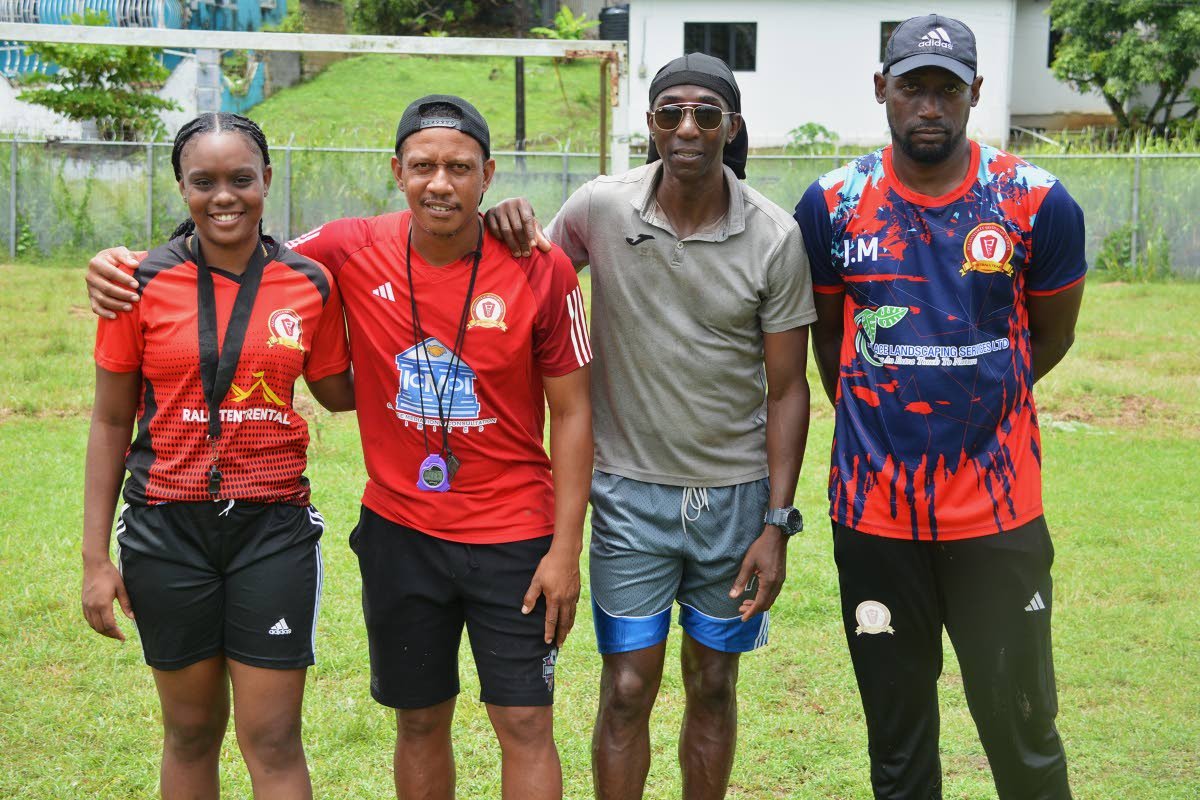
He mentors and trains students of Pleasantville Secondary School, earning the team consecutive wins three times at the football finals, working with the under-14 and under-16 teams.
“And the boys’ team won South senior grade and national senior grade. The girls made it to run the South Zone and to the Intercol finals for the first time, an achievement,” he said.
London said, “I have my B license TTFA and Concacaf B license to coach anywhere around the Caribbean. Having the A is the highest level to coach national teams, and that is the icing on the cake; it is just time to get it done. I love to see people develop. Right now we have 23 players on scholarships, playing with some of the highest division schools outside. That is my aim: to develop players to contribute in the long run for the national product. This is sport; it is a thing that teaches you discipline, builds you as a citizen, and as a person, but if we don’t holistically develop young men and women to be better people in life and be able to contribute to society, then we fail as a coach. As a football coach, the sport is just the vehicle; what is important is to develop young men and women who can contribute to society. I am proud of the job we have been doing for the past ten years.”
He said the boys’ team won the national championship in the South and was promoted to the Premiership Division. The girls’ team made it to the national Intercol and national Big Five.
Understanding his personal struggles as a child, he now steps in as a father figure to many of his pupils.
He said children would come into the programme (sports) with no bags, shoes, uniforms or stationery; sometimes nothing to eat, and he would ensure their comfort. “I know how that felt. They have the passion, and I take care of those things as much as I can,” he said.
He said that despite the school having to cope with a regular flow of student migration because of the students’ sporting talents, they also sought sponsorship to have safer football grounds.
With no children of his own, he said he has 25 godchildren. London is also a prolific songwriter. He recently wrote the winning song renditions for Roxanne Webster, Be a Man and Move So, and Aalyiah Webster, The Corner Stone in Anguilla.