Helen Drayton
Abusive political rhetoric can poison an entire society when leaders, especially a Prime Minister, weaponise language against citizens instead of building mutual understanding and national unity. Words can elevate or destroy. Political civility is not weakness, and humiliating citizens is not strength. This article focuses on verbal attacks on citizens, institutions and communities, rather than the familiar exchanges between political opponents. Such rhetoric does nothing to resolve our economic and social difficulties. Instead, it breeds resentment, undermines confidence and makes national cooperation increasingly difficult.
In his essay Politics and the English Language (1946), George Orwell warned about the relationship between corrupted language and corrupted political thought. Language can conceal reality, manipulate emotions and diminish moral responsibility. Persistent verbal aggression also raises questions about the standards of those who practise it. Leaders can confront wrongdoing and incompetence without sacrificing human dignity. There comes a time when a nation must examine whether the values sustaining social cohesion, mutual respect, and cultural tolerance are being progressively eroded. Trinidad and Tobago has a tradition of playful picong and witty political exchanges. But humour differs profoundly from humiliation, criticism from contempt, and political rivalry from racial division.
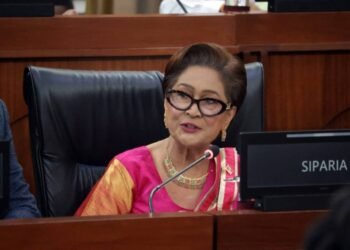
Consider the Prime Minister, Kamla Persad-Bissessar’s assertion: “These unions wake up to protest whenever there is an East Indian prime minister. It doesn’t matter what the UNC Government does or does not do for these unions; their motives are driven by racial hatred towards the UNC leadership.”
Where is the evidence?
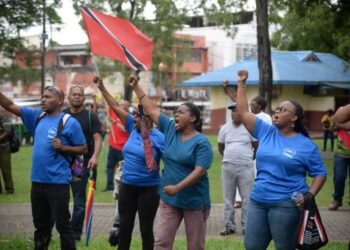
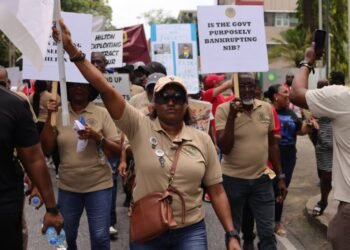
Some of the country’s most influential trade union leaders now serve in her Government. More importantly, the historical record contradicts any suggestion that organised labour protests only when an Indian Prime Minister holds office. Between 2017 and early 2025, trade unions repeatedly marched, picketed and demonstrated against the People’s National Movement (PNM) administration of former prime minister Dr Keith Rowley. Significant protests occurred in 2017, 2018, 2020, 2022 and 2024. In 2022, the National Trade Union Centre, the Joint Trade Union Movement, and the Federation of Independent Trade Unions participated in the “Unite to Fight” mobilisation, highlighting collective bargaining, retrenchment, outsourcing, contract labour, occupational safety, and workers’ rights. That August, the then-Public Services Association president Leroy Baptiste publicly called for the removal of the PNM Government, taking industrial mobilisation into explicitly political territory.
In August 2020, the Oilfield Workers Trade Union rejected racial divisions within the labour movement and advocated working-class solidarity across ethnic lines. These events do not establish that every protest was politically neutral. Union leaders have political affiliations, and their motivations may vary. But political affiliation and racial hatred are not interchangeable. Workers’ grievances do not lose legitimacy when governments change. Nor should a Prime Minister’s ethnicity determine how citizens’ constitutional right to protest is characterised.
Equally troubling was the Prime Minister’s parliamentary remark: “You all can do what you want west of the Lighthouse. You can mash up the place for all I care.” Does government serve only part of Trinidad and Tobago? Regarding crime, her references to targeting only UNC constituencies and UNC local government districts, and Tobago through Special Operations, warrant clarification. Law enforcement must be guided by objective security considerations, due process and equality before the law, never by political affiliation.
Consider how Independent Senators were treated after opposing the Special Operations Bills. They were branded “self-promoting bootlickers and brown-nosers,” “vile satanic scumbags” and “Satan’s helpers.” Their constitutional responsibility is to exercise independent judgement, not thoughtlessly endorse government legislation. Disagreement with their decisions is legitimate. Demonising them for exercising that responsibility threatens the respect upon which parliamentary independence depends.
The Prime Minister denounced a “swine culture” allegedly fostered under the PNM, associating it with dishonesty, lawlessness and dependence on State assistance. Whatever legitimate concerns exist about productivity, public expenditure or workplace discipline, degrading language is no substitute for constructive leadership. Public servants and other citizens deserve encouragement, fair treatment and accountability, not sweeping expressions of contempt. Recall Housing Development Corporation chairman Feeroz Khan’s description of the corporation as a “sick cow riddled with ticks” amid controversy over employees whose contracts were not renewed. Khan subsequently denied that the analogy referred to those workers. Nevertheless, the episode illustrates how inflammatory imagery can overshadow legitimate discussions about restructuring and employment.
Political leadership is measured by conduct
The Prime Minister also called former Caricom leaders hypocrites over their advocacy for lifting sanctions against Cuba, arguing that they supported a political system they would not accept at home. Yet Trinidad and Tobago maintains commercial relations with Cuba and countries whose political systems differ substantially from our own. Diplomatic disagreement is legitimate, but regional relations deserve consistency, respect and reasoned engagement.
Minister Phillip Alexander reportedly described Carenage as a “s******e.” The Prime Minister dismissed some calypsonians as “political stooges masquerading as calypsonians.” Such expressions invite an obvious question: why disparage communities and cultural contributors when their concerns can be addressed on their merits?
Particularly disturbing was the attribution of the “one per cent” label to the Syrian-Lebanese community during parliamentary discussions on organised crime. Criticism of concentrated economic power may be legitimate. Allegations of criminal wrongdoing must be investigated. Associating criminality or questionable conduct with an identifiable ethnic community risks engendering prejudice against people who bear no individual responsibility for alleged offences. In a multicultural nation, ethnic generalisations are especially dangerous. They can fracture relationships painstakingly built across generations.
Political leaders must recognise the consequences of their words, especially amid economic uncertainty, unemployment, persistent crime, and growing social anxiety. Citizens facing retrenchment, financial insecurity and uncertain futures need responsible leadership, not further division.
This responsibility belongs to Government and Opposition alike. No politician, institution or citizen should be immune from legitimate criticism. Equally, no individual or community should endure humiliation simply for disagreeing with those exercising power. Political leadership is measured not merely by policies or electoral victories, but also by the standards of conduct it establishes.
How can we convincingly teach our children respect, tolerance and peaceful conflict resolution while accepting contempt, humiliation, racism, and verbal aggression as normal behaviour among our national leaders?