 7 minutes reading‘
Until recently, if we had been asked to profile a typical mass shooter we would have described him as a middle-aged man, socially isolated and in despair. He was not trapped by a political ideology nor did he suffer from a mental health condition such as schizophrenia. Rather, he was deeply despondent over a life crisis, perhaps a divorce or loss of a job. By attacking a workplace or a group of people whom he blamed for his problems, he was both exacting revenge and, in fact or literally, committing suicide.
In recent years, something changed. We are witnessing the emergence of a different paradigm: a mass shooter just as desperate in the face of life’s difficulties, but younger, highly connected to online social networks, and apparently convinced that, by acting violently, he or she is carrying out the only meaningful act possible in an otherwise meaningless world.. This shift is highly significant for understanding the internet-fueled pathologies that afflict our society and for policies that could help prevent tragedies like these.
Let’s consider a recent example. Last month, in Tumbler Ridge, British Columbia, an 18-year-old girl killed her mother and half-brother in their home and then opened fire at a high school she had attended, killing five students and an educator.
After the shooting, among the expected evidence of the attacker’s desperation, an alarming trail of online activity appeared: in Robloxa gaming platform, the shooter had created a game that simulated a mass shooting; on his TikTok account, he had reportedly reposted videos of a mass shooter; belonged to a forum gore where users can post uncensored videos of violence, a space frequented by other mass murderers; and had visited the online profile of a 15-year-old girl who killed two people at Abundant Life Christian School in Madison, Wisconsin, in 2024.
The subculture this shooter belonged to is known as the true crime community: True Crime Community. It exists on platforms such as Tumblr, Telegram, Discord, TikTok and Roblox and celebrate mass murderers.
Over there, the perpetrators of the Columbine massacre are the subject of fan artmass shooters are given “saint” status, and footage of the attacks is archived and analyzed frame by frame. Offending content is often taken down by platforms for violating their terms of service, but often reappears in new forms within hours, often with codes. (“Going ER,” for example, refers to incel violence.) We are seeing that Men usually come to this community through forums gore; girls, through communities linked to eating disorders.
At least seven school shootings in the United States from 2024 to last fall have been linked to the True Crime Communityaccording to researchers from the Institute for Strategic Dialogue. Despite the attention mass shootings attract, they remain rare, so even a handful of such examples is significant.
Death as personal reaffirmation
What the true crime community did, in fact, was take the desperation that has always characterized mass shootings and give it a performative script. The True Crime Community Turn private pain into a public narrative: others felt like you too, and look what they did. Look how everyone remembers them.
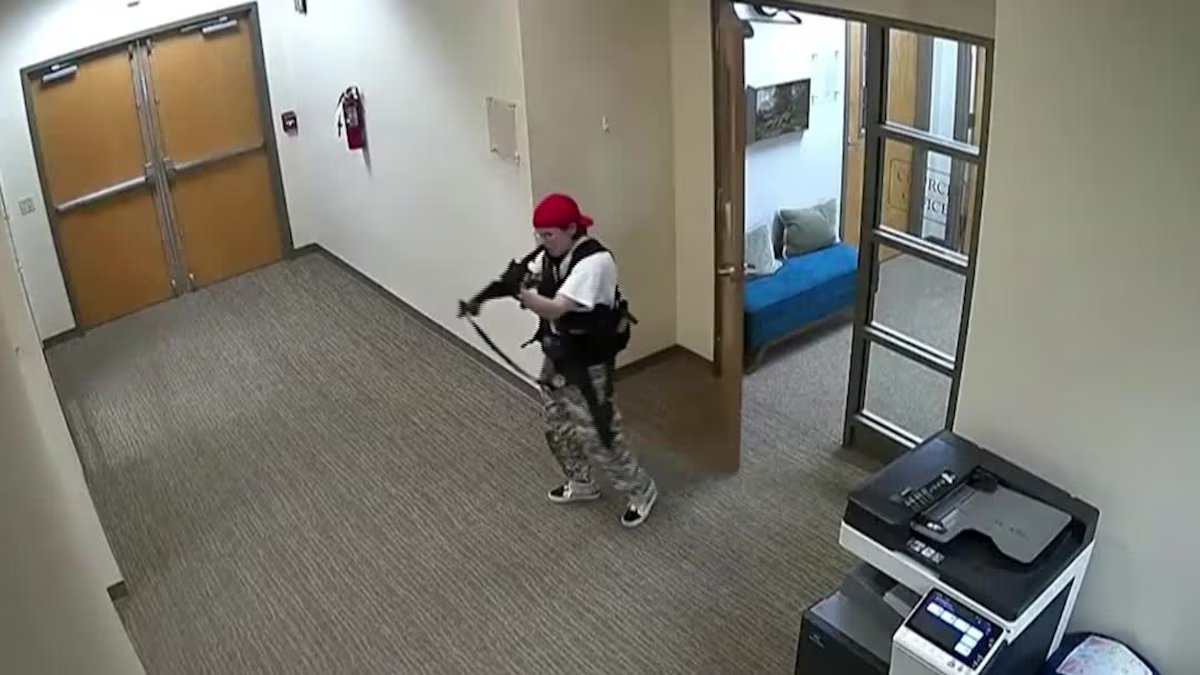
In August of last year, a 23-year-old girl shot through the windows of the Catholic Church of the Annunciation (Annunciation Catholic Church) in Minneapolis during mass: he killed two boys and injured more than 20 people. The inscriptions on their weapons told the history of the community on-line of which he had been a part: There was a quote attributed to the Columbine shooters and Cyrillic text apparently copied from the T-shirt of a school shooter in Crimea. There was also an online diary, shown on a YouTube channel with a video calling the attack his “masterpiece.”
This is characteristic of the performative turn of mass violence. The shooter becomes the main character of a story that True Crime Community they have been writing collectively for years, and the attack is the climax: both the culmination of nihilism (nothing matters) and, in some way, its imagined overcoming through violence (this matters).
The effect copycat
Violence is not a means to an end. It’s the end. Shooters aren’t trying to change the world. They are trying to be seen in it, one last time, on terms they control.
There have always been copycat killers, but this is on another level: Copycat murders fueled by the viral power of “meme” culture. The 15-year-old shooter in Madison in 2024, for example, quickly became an icon of True Crime Community: A 17-year-old boy who committed a school shooting in Nashville in 2025 and who appears to have been an associate on-line of the Madison shooter referred to her online before her attack. Likewise, the Minneapolis shooter in 2025 wrote the Madison shooter’s name on her rifle.
Before, the internet was simply a place that one visited to learn things. Now, he learns you. If you are a teenager in crisis, you don’t need to go out and look for dark material: The algorithms study what you are looking at and serve you more similar content. A “found footage” mockumentary about Columbine might lead you to a related thread on Reddit, which might lead you to a fan edit on Tumblr, which might lead you to a Telegram channel where someone posts blueprints of a local school (“just interesting architecture”). Everyone laughs. It’s ironic. Until it isn’t.
Preventive algorithms
There is no single public policy solution to mass shootings. It is a complex problem that requires better resources for school counselors and threat assessment teams, and better firearm seizure practices during mental health crises.
But online platforms also have to be more vigilant. Before the Tumbler Ridge shooting, the shooter had had conversations with ChatGPT that were flagged by OpenAI’s automated systems for describing scenarios involving gun violence. About a dozen employees reportedly debated whether to alert security forces. They decided not to do it. The account was blocked, but no one called the police.
If companies like TikTok can identify a trending sound or image in seconds, they can presumably build systems to better detect the glorification of violence, slow the redistribution of attack material, and prevent known violent content from resurfacing. They are already very effective at monitoring content in this way for potential copyright infringement.
In an attention economy, what we look at and what we encourage others to look at are inevitably consequential acts. Every time we put the focus on the shooters, we help complete their performance. Somewhere, right now, a teenager is sitting alone, swiping on a feed that you learned exactly what he or she is looking for. The algorithm knows it. The question is whether the rest of us will act on what we also know.