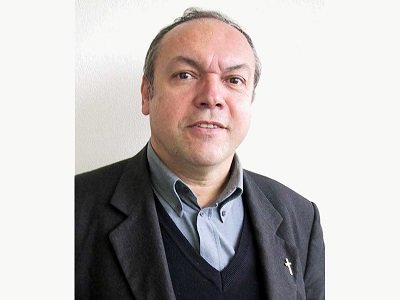
SAN MARINO – The opinion of Don Gabriele Magiarotti: “I happened to read this interesting quote from the Beijing Academy of Social Sciences in an insightful article by my friend Antonio Socci: «The Beijing Academy of Social Sciences… in 2002 came to this conclusion: “One of the things we were asked to to investigate was what explained the success, or rather, the superiority of the West over the whole world. We have studied everything that was possible from a historical, political, economic and cultural point of view. At first we thought the cause was that you had more powerful guns than ours. Then we thought you had the best political system. Then we focused on your economic system. But in the last twenty years we have understood that the heart of your culture is your religion: Christianity. This is why the West has been so powerful. The Christian moral foundation of social and cultural life is what made possible the emergence of capitalism and then the successful transition to democratic politics. We have no doubts.”
And I compared it to this thought of one of our fellow San Marino citizens: «Socialism and communism were and are thoughts that emancipated men. Unfortunately, men like power and power creates delirium. And certainly communism applied in Eastern Europe was a loser and limited freedoms.
Unfortunately, man sometimes allows himself to be inhabited by demons and becomes a demon by killing and oppressing his fellow man.
But if you live in San Marino you live in a fundamentally socialist and statist economic model and you seem to be fine.” (I allowed myself some corrections)
Credit where credit is due to Chinese analysts, who were able to recognize the reasons for a human and cultural superiority found in Christian identity. And, for us who have the honor (and burden) of a founder and patron recognized as a saint, that is, as someone who realized the Christian ideal in life, these Chinese thoughts make us reflect.
The problems in life assail us: let’s think about the situation of many young people, about their hardship, let’s think about the family crisis (with the consequences on the birth rate, which seem to be more of a cultural than economic nature), let’s think about the influence of a mentality that surreptitiously insinuates itself into the consciences of the youngest (we always have in mind certain school questionnaires on affectivity which, rather than being surveys to understand, seemed to suggest possible perversions), let’s think about the law on abortion which as a result seems to suggest that the killing of a human being in womb is a right, rather than a crime (among other things perpetrated not by “naive girls”…): we have said other times that “decline is not destiny”. Perhaps the observation of the Chinese “wise men” can be useful advice. We have a Christian, non-clerical, history to be proud of, a history that has been able to build a heart capable of welcome and hospitality, a history that, even in these times, has been able to suggest respect for life in its fragility and in its end as the figure with which to set the legal perspectives to support a path in terms of welcome and consideration (overcoming ideological schematisms and sectarian positions in this comparison). It will only be from here that we can take common steps for good, steps of hope and civility.
And it will be necessary to distance ourselves from that suffocating statism that paralyzes creativity and replaces freedom with superficial well-being.
San Marino, the oldest Republic in the world founded by a saint, can find in its Christian roots the nourishment for progress towards good, showing the world (which always looks at us with interest and sometimes even with envy) that what we bring fulfills a promise of good. Of course, we have reasons, and we have admirers too. From Lincoln to Carducci, to Pope Benedict whose visit to the Republic took place 15 years ago, I think we just have to recognize and decide to learn. Furthermore, there are many positive examples.
It’s just a matter of knowing how to choose, according to the noble suggestion of Saint Paul: “Examine everything, keep what is worth”. And we will be proud of it.”
Don Gabriele Mangiarotti