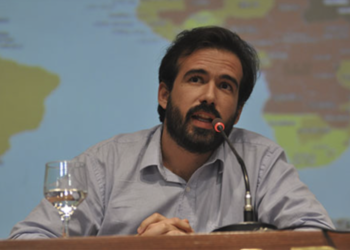
76.1% of Nicaraguans consider that crime has increased in the country, according to the results of the Perception of the Political, Social and Economic Reality of Nicaragua survey, presented by Hagamos Democracia on April 21, 2026, in San José, Costa Rica.
23.9% believe that crime remains the same. In December 2025, it was 63.7% who believed it had increased. Just three months later (March 2026), the perception of increased crime grew by 12.4 percentage points.
In parallel, an increase in repression against state workers and surveillance against citizens in general is also reported.
“This increase is important because it dismantles the official narrative of absolute control and security. Citizens perceive a deterioration in the security environment, which adds to the climate of surveillance and political repression, deepening the feeling of vulnerability,” the study indicates.
In detail, an increase in the reporting of murders stands out (from 7.5% to 9.7%); street harassment (from 4.5% to 9.5%); and theft (from 7.0% to 8.2%). In contrast, a decrease is reported in robberies (from 75.6% to 69.9%) and in femicides (from 2.7% to 1.5%).
At least, this is what the 400 respondents in 40 municipalities of both autonomous regions of the Caribbean and 12 of the 15 departments of the rest of the country thought in the month of March 2026.
Surveillance at work, on their cell phones, and even at home
The perception of insecurity also has other origins: from the digital to the workplace, including neighborhood issues. In all three cases, increases in knowing – or feeling – being watched are reported.
In December 2025, just over a third (35.6% of those consulted) claimed to have detected digital surveillance on social networks, email or on their cell phone. Just three months later, the responses showed an increase of 6.9 points in the perception of digital surveillance, closing at 42.5%.
“This increase confirms that the digital space has become a new front of control and intimidation. Repression is no longer perceived only in the physical territory, but also in people’s communication and private lives,” the report states.
When defining the types of digital surveillance, it is noted that the modus The one that shows the highest prevalence is threatening and harassing on social networks, with 38.1%. Very close (36.9%), fake profiles appear requesting private information. Finally, security alerts for hacking attempts are mentioned, with 25.0%.
On this topic, the report points out that “overt harassment is increasing sharply and the relative weight of fake profiles and hacking alerts is falling. The growth of threats and harassment on social networks reveals a transition from more covert mechanisms to more visible and direct forms of digital intimidation.”
Surveillance of state workers
The people consulted also made reference to the repression suffered by State employees. Almost eight out of ten (79.6%) of those who have family members working in public institutions said they knew of cases of labor repression. That percentage was 76.5% in December 2025.
“This increase confirms that the state apparatus under the dictatorship continues to function not only as an administrative structure, but as a mechanism of political coercion. Internal repression in public employment continues to be a tool of control, discipline and forced loyalty,” the authors of the survey point out.
In detail, the type of internal repression most mentioned was mandatory attendance at party activities, with 79.8%. Next mentioned is the surveillance of profiles on social networks (50.8%); mandatory attendance at military training camps (38.3%); and checking cell phones (30.1%). “Intimidation and threats” (30.1%) closes this list.
When comparing with the values found in December 2025, a greater review of cell phones, network surveillance and military training is observed. Mandatory attendance at party activities decreases slightly. “These variations are especially relevant. These are not simple nuances: they indicate an expansion and sophistication of the forms of control. Digital surveillance and cell phone review show a regime that is moving towards more intrusive and personalized mechanisms of repression,” the document states.
When your neighbor spies on you
Regarding citizen espionage, the survey shows that many cannot feel safe, even when they are inside their own home. If in December 2025, 85.6% of those surveyed said they perceived “some type of surveillance of citizens in their environment,” in March 2026, 86.1% responded in the same way.
“The stability of this indicator at such high levels confirms that surveillance has been normalized as part of everyday experience. It is not perceived as an exceptional circumstance, but as a permanent characteristic of the social environment under the dictatorship,” the authors comment.
The observation of those who responded to the questionnaire indicates that those who exercise surveillance were mainly the Citizen Power Councils (CPC; 44.4%). They are followed by the Police (29.5%) and the paramilitaries (23.9%). When comparing with the data obtained in December 2025, it is concluded that the identification of the Police as a surveillance actor increases and that of paramilitaries decreases slightly.
“This finding is important because it reinforces the perception of institutionalization of control. That is, surveillance does not fall solely on parastatal or party structures, but is increasingly perceived to be associated with formal State actors,” the report insists.