Madrid/The economist Humberto Pérez González, one of the most important figures in the design of Cuban economic policy during the 1970s and 1980s, died this Saturday at the age of 88, in Havana. At the head of the Central Planning Board (Juceplan), he was one of the architects of the centralized economy system that was consolidated in that period, until his dismissal by Fidel Castro in 1986. The news was made known by the academic and economist Julio Carranza.
A native of Sancti Spíritus, Pérez González trained as an economist at the Higher School of the Communist Party of the Soviet Union in Moscow, where he graduated in 1964. In 1984 he obtained a doctorate in Economic Sciences from the University of Havana.
Pérez González held the vice presidency of the Council of Ministers and was a member of the Political Bureau of the Communist Party of Cuba between 1980 and 1985. He was also a deputy to the National Assembly of People’s Power from its creation in 1976 until 1986.
Between 1976 and 1986, Pérez González presided over Juceplan, the body in charge of the country’s central economic planning within the framework of the Economic Management and Planning System (SDPE). During that period, he was also executive secretary for the application of the new economic management system, which placed him as one of the figures responsible for its institutional implementation.
Inspired by the management mechanisms of the Soviet Union, the SDPE model sought greater accounting discipline and economic control mechanisms in state companies.
His administration took place during a period of reorganization of the Cuban State and greater integration into the Soviet bloc. This process included the new political-administrative division of 1976, the creation of the People’s Power bodies and the implementation of the SDPE, in whose design and execution he participated from high-level technical and administrative positions.
Inspired by the management mechanisms in force in the Soviet Union, the SDPE model sought to introduce greater accounting discipline and economic control mechanisms in state companies, maintaining central planning as the axis of the system.
This stage ended in 1986 with the so-called Error and Negative Trend Rectification Process. Pérez González was then dismissed and made a scapegoat by Fidel Castro, who accused him of being a “Sovietizer” and a “copyer of foreign dogmas,” according to the journalist. Wilfredo Cancio. The political turn involved economic reforms in the model copied from the Soviet Union and the displacement of several of its main promoters.
Pérez González was then dismissed and made a scapegoat by Fidel Castro, who accused him of being a “Sovietizer” and a “copyer of foreign dogmas.”
Although he disappeared from the political front, Pérez González continued to be linked to the study of the national economy. In his last years published several texts in which he advocated combining state planning with a greater role for the market and for expanding the space for the private sector, without ever moving away from the socialist character of the system.
Economists like Carmelo Mesa-Lago have pointed out that the SDPE improved the organization of the Cuban economy, but maintained the structural problems of a system based on central planning and the predominance of political decisions.
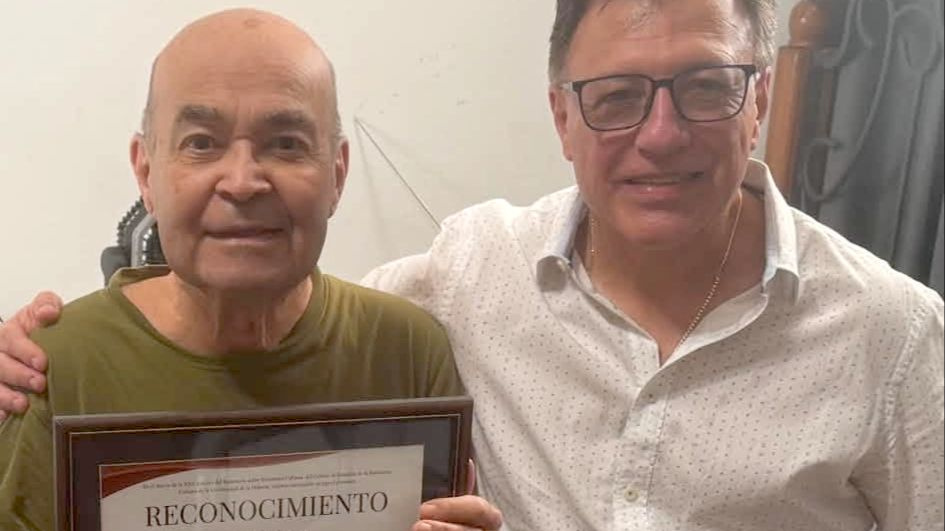
In December 2025, the Center for Studies of the Cuban Economy of the University of Havana paid tribute to him for his career, when his health condition already prevented him from attending the event in person.
His death closes the career of one of the main people responsible for Cuban economic planning during the 1970s and 1980s, when the State consolidated a centralized economy model that showed profound inefficiencies and a strong dependence on the Soviet Union.