Long before South Korean culture went global, the 2002 World Cup, co-hosted by the Asian nation, introduced its crispy fried chicken to the world. Travelers to South Africa for the 2010 tournament sampled its jerky-like biltong. And when Brazil played host four years later, the icy caipirinha cocktail was in the spotlight.
The World Cup has long been a showcase for the culinary culture of the host nation. And this year is no different.
Ranch dressing, a sauce made from mainly buttermilk, vegetable oil and spices, is getting love from tourists experiencing American food and culture for the first time. “Ranch dressing should be a human right,” wrote one Redditor, who identified as a European tourist, in a thread about World Cup visitors’ feedback on the country.
Fans are going so gaga for the sauce that the Transportation Security Administration (TSA), which manages passenger screening at airports, commented on the trend.
“Yeah sooo your carry-on wasn’t actually made for *checks notes* 4 bottles of ranch …” the TSA said in a post on Instagram last week.
A standard bottle of ranch is 16 ounces (473 milliliters), while the TSA mandates that liquids in carry-on bags need to be 3.4 ounces (100 milliliters) or less.
“If you’re visiting for a very large sporting event & you happen to discover RANCH while you’re here … pls pack it in your CHECKED BAG on the way home,” the post continued.
Today, ranch is the most popular salad dressing in the country – a spot it’s held for decades – according to the Association for Dressings and Sauces.
The sauce is also popular as a dip for everything from chicken wings to pizza.
It was invented in the 1950s by a plumber working in Alaska who needed a creative way to keep the meals he cooked for coworkers interesting. When he retired to a California dude ranch, a vacation resort where tourists can experience ranch life, he started selling DIY spice kits via mail.
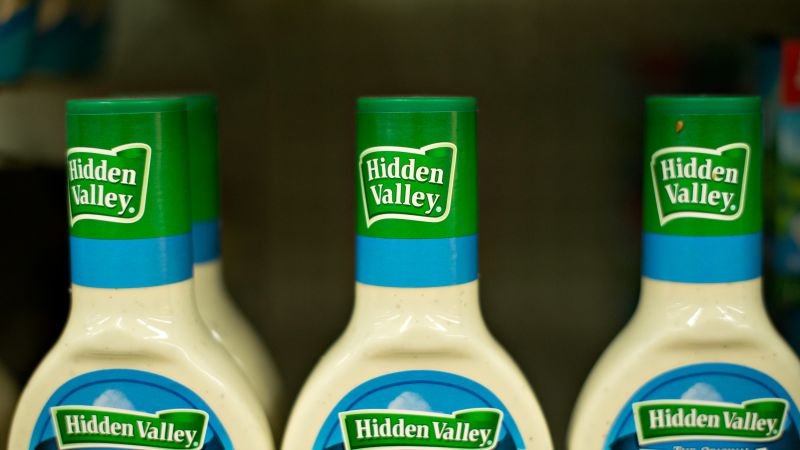
That caught the attention of Clorox, which bought Hidden Valley Ranch in 1972. The company created a shelf-stable bottled version, and modern ranch dressing was born.

Ranch dressing is now produced by countless brands across the country. Sales totaled about $1.5 billion over the last year, according to data provided by Hidden Valley Ranch.
Even this CNN reporter, an American who moved to Hong Kong more than 15 years ago, has a 40 fluid ounce (1.2 liter) bottle of Hidden Valley Ranch in her fridge, sourced from a specialty store that imports American goods.
The US government says that as many as 10 million international tourists will visit the US for the World Cup, attending matches across 11 host cities from Los Angeles to Boston.
A 36-country survey by the Pew Research Center released this week found that 57% of respondents held an unfavorable view of the US, amid concerns about its foreign policy and the health of its democracy.
Still, those that have made the journey are enjoying America’s unique culinary offerings, from Cap’n Crunch cereal to Texas barbeque to Twinkies.
The TSA told CNN via email that it has “specifically noticed that many European travelers are falling in love with ranch dressing and trying to figure out how to bring it home.”
World Cup fan interest in the dressing “happened organically,” Stacy Stokes, Hidden Valley’s vice president of marketing, told CNN.
That doesn’t mean that the company isn’t trying to capitalize on it. Stokes says that the company will be handing out seasoning mix packets in host cities in July. The powder can be mixed with buttermilk and mayonnaise to create the dressing.
The food and beverage giant the Kraft-Heinz Company, which also sells ranch dressing, said that it would be introducing a TSA-compliant version of its product.

“We’re leaning into that moment,” Todd Kaplan, its chief marketing officer, told CNN’s Richard Quest in an interview. “Brand building is about … being relevant in these cultural moments where your brand matters,” he said.
Although it’s too early to determine the impact that tourist interest will have on sales, “early indications are it is driving a nice little bump for us,” says Stokes.
Today, Hidden Valley only officially sells in the US and Canada but it is testing interest overseas.
In March, it posted a job listing for influencers who would travel across Europe promoting the dressing by testing it on the continent’s staple foods, like fish and chips in the UK (which is normally served with creamy tartar sauce). It received around 6,000 applicants.
For now, Hidden Valley doesn’t have concrete plans to expand overseas. “We’re always looking for new growth opportunities … we always want to be careful and thoughtful about how we launch into different marketplaces,” says Stokes.
In the meantime, she has a recommendation for international travelers who have fallen in love with ranch and want to take it home. “Stuff your suitcase full of dry packets,” she says. “As far as I’m aware, nobody will stop you.”