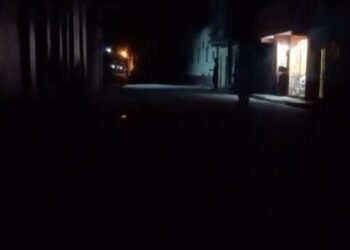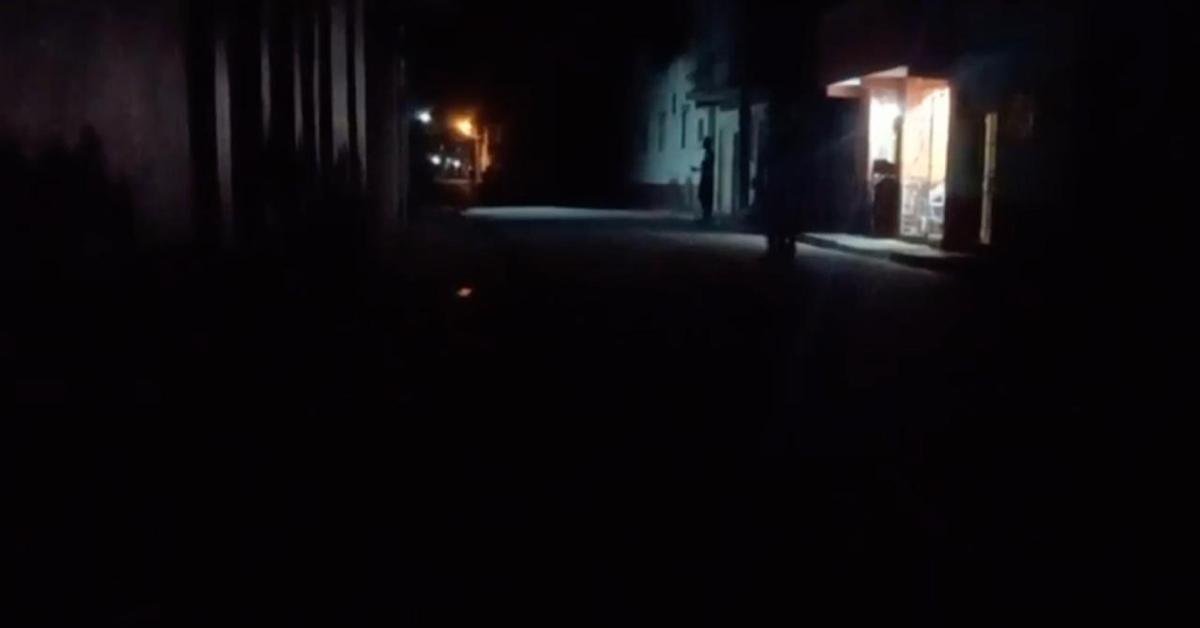
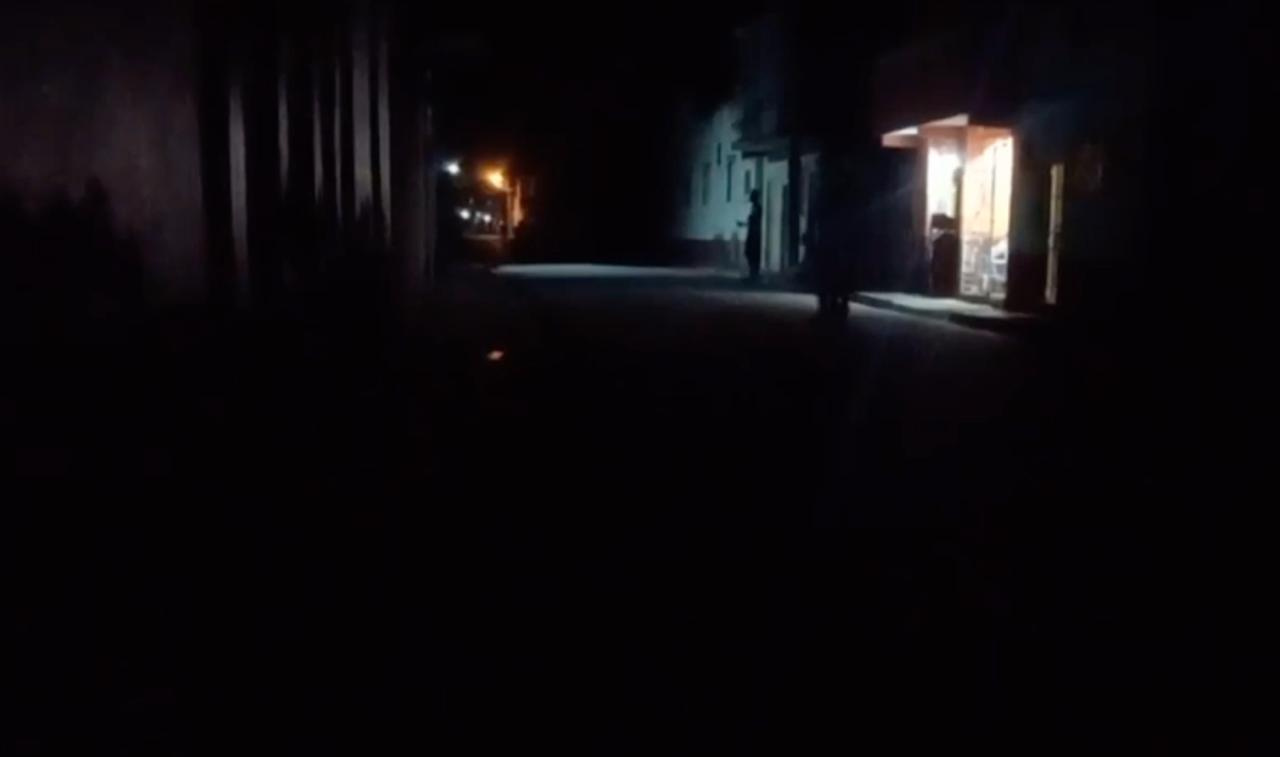
Guantanamo/In Guantánamo, the clock of daily life is no longer marked by hours but by blackouts. In one of the provinces most affected by the energy crisis in all of Cuba, prolonged outages are a burden that conditions every aspect of the daily life of families, forced to organize meals, children’s study, domestic work and even night rest based on the brief moments in which electricity arrives.
“The current situation is not easy,” summarizes María Elena Rodríguez, a resident of the Caribe neighborhood. “If they put it on, it’s only for an hour and a half, and there are times when they don’t arrive on time. If they put it on at 3:00 in the afternoon, they’re taking it away at 3:40. It’s not easy like that, there’s no one alive.”
In many Guantanamo homes, the arrival of electricity triggers a race against time. You have to cook, pump water, charge phones, turn on fans and complete any pending tasks before the blackout returns. Time never seems enough.
“In the morning, if they put it on, it is at 6:30, and at 8:00 there is no power,” adds Rodríguez. “How are you going to make lunch for when the kids come home from school?” Your question summarizes a concern shared by thousands of parents trying to maintain a family routine amid uncertainty.
“You can’t keep anything in the cold. At least my daughter, who has a refrigerator, couldn’t even drink cold water because she didn’t get cold.”
Food preservation has also become a challenge. Refrigerators remain idle for many hours and perishable products are at risk of spoiling. In a city where getting food already represents a considerable economic effort, losing the little you can buy is a blow that is difficult to take.
“They turn on the power for one hour a day, if that,” remembers Roberto Pérez, a resident of the urban center. “So you can’t keep anything in the cold. At least my daughter, who has a refrigerator, couldn’t even drink cold water because it didn’t get cold.” Other neighbors describe what they are experiencing as the worst moments of the energy crisis. “Very badly. Or, if anything, it doesn’t even make it to an hour,” comments a retiree consulted by 14ymedio. “One spends more time in the dark than in the light.”
The effects also reach those who study or work. Power outages make it difficult to use computers, limit internet connections, and complicate any activity that depends on electronic equipment. During the nights, when the heat does not let up, many neighbors take out their mattresses for the roofs and porches.
“The situation is serious,” says Juan Carlos González, a self-employed worker. “The country has already run out of oil. Not an oil ship arrives from any country. So the blackouts are massive throughout the country. And here who can resist that? Who is going to resist 24 hours every day of blackouts?”
“To cook there is no power, there is no balita, there is nothing”
The official explanations do not convince a part of the population either. “Now they are talking about refining more Cuban oil to use in thermoelectric plants, but I wonder if that is really enough to solve the problem. It seems not,” González comments.
The energy crisis also adds to other accumulated problems. The lack of cash in banks, the difficulties in carrying out financial operations and the constant increase in prices are part of the daily concerns.
“It’s not easy,” laments Teresa Matos, a resident of the San Justo neighborhood. “People talk and talk because they need answers. What is needed is to find solutions, because no one can live like this. No food, no electricity. Even charging for Transfermóvil is a problem. They give you the money for the card, but then there is no cash to withdraw it.”
Due to the lack of electricity and the difficulties in acquiring liquefied gas, many families have had to resort to traditional methods to prepare food. In some neighborhoods it is already common to see smoke coming from improvised stoves in patios and lots.
“To cook there is no electricity, there is no balita, there is nothing,” says Matos. “People have to cook with firewood or charcoal.” The image is repeated in different parts of the city: bags of charcoal stored in the doorways, dry branches accumulated in the patios and pots placed on improvised stoves.