Sport was, and will always be, a way to galvanize political regimes, expand national horizons and balance the scales between the disadvantaged and the privileged. The football World Cup, like the Olympic Games, has the power to collect life stories, examples to take into account in the unbridled volume of news and daily goals that we set ourselves without, so often, thinking about the real objective to achieve them. Without thinking about who, with a freshly caught fish, on a paradisiacal beach, can live happily, as happy as they think they can be.
If in 2010, South Africa, with its relaxed, welcoming culture, enchanted Europe and South American powers, in 2026 African heritage has a new king: Cape Verde. The Portuguese will, of course, have a historical proximity to a country that is their brother and that has, in many other moments, had Cape Verdeans integrated into our society, known, unequivocally, for their predisposition to live a good life.
We owe one of the greatest football players in our history to Cape Verde. Nani, born in Amadora, but always unapologetically faithful to the heritage of his Cape Verdean parents, He was an essential part in Portugal’s affirmation as a footballing power and one of the decisive dynamos to win the 2016 European Championship, playing as a second striker, a position that, to this day, has not found anyone understanding it like the boy who thrived at Manchester United. The Portuguese became a little more fond of Cape Verde when the tourist route became more dense in recent years, with the incursion not only through the City of Praia, in São Vicente, but along routes that surround Fogo, Boavista, Santiago or Sal. The passion for Cape Verde is not born by finding a developed country, which has fulfilled its goals as a nation. It is precisely because Cape Verde is the opposite and lives well with it: knowing that it is more at peace than the civil wars that cyclically affect Africa, that it has more tourists and appreciation than it has ever achieved, and that it knows how to appreciate the exact notion of humility. It is a paradox for Portugal, which still lives without fulfilling what our entry into Europe promised to be.
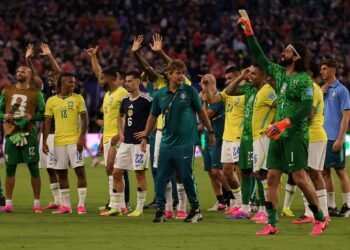
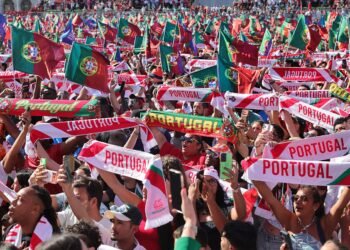
Early Saturday morning (01:00), we will expect to hear noise in the metropolitan areas of Lisbon and Porto, shouts of celebration for qualification, the first opportunity in Cape Verde’s history for a knockout phase. On the wings of Vozinha, with accumulated defenses against European champion Spain, the island gained infinite followers. The way in which, after a draw, the players prostrated themselves, with salt of happiness running down their eyes, marked the World Cup and hope grew when Bubista, a talented motivator of men, once again dried Uruguay dry. Few would have imagined that Cape Verde would reach the game against Saudi Arabia with two points and only dependent on themselves to move forward. On Saturday, the country’s just over 500,000 inhabitants have the entire world on their side. And right in front of the Saudis who have a huge investment empire in football for their championship in oil money. The world, individualistic most of the time, adopted Cape Verde as its new son. May humility be valued for a few hours. Cape Verde is so good for us.