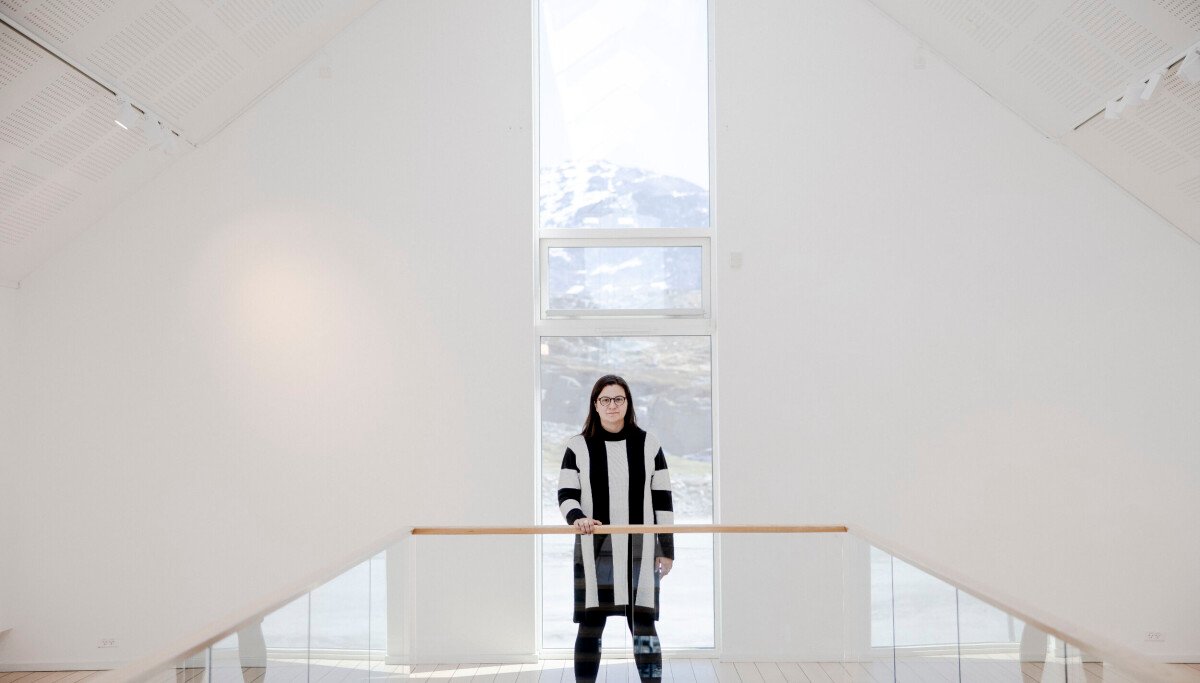
– A national gallery should is built around the art and the content – not around a building.
This is how the main message from Nivi Christensen can be briefly summarized.
When I meet the head of the Nuuk Art Museum over a Teams connection, it is clear that the National Gallery is still very much on her mind. The face lights up and the commitment is unmistakable when the conversation turns to the project.
The interest is not new for the experienced art museum manager either. Already in 2013, she wrote a thesis in art history at the University of Copenhagen about Greenland’s National Gallery of Art. The thesis had the subtitle “A critical review of relevant issues”, and many of the questions she asked then, she believes still lack answers.
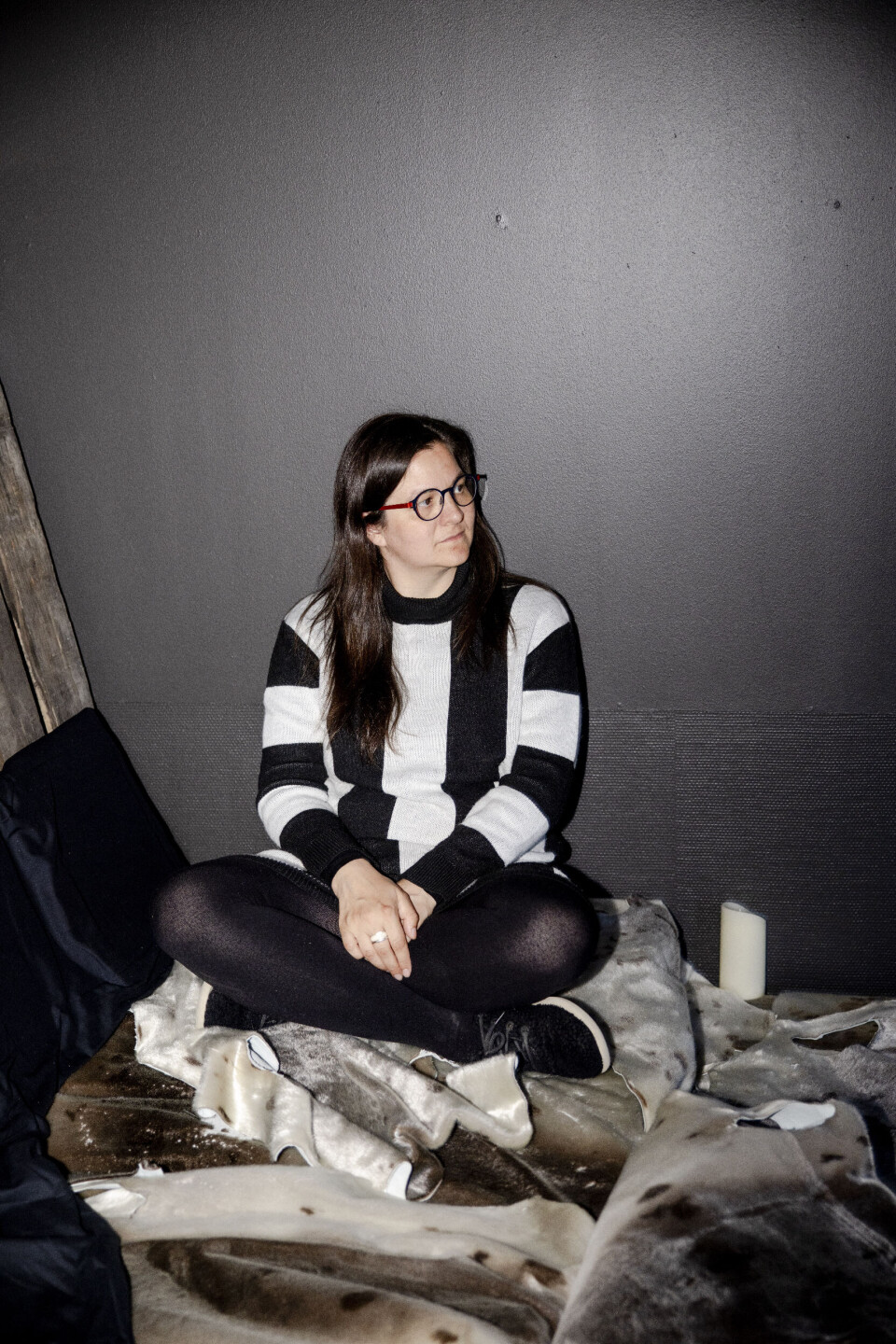
From November 2025 to May 2026, she herself was in the middle of the project as project director for Greenland’s National Gallery of Art with responsibility for driving the project forward. Today she is back as manager of the Nuuk Art Museum.
She does not wish to comment on her own resignation, which took place after a mutual agreement. On the other hand, she likes to talk about the question which, in her view, should be central to the debate: What should a Greenlandic national gallery actually be?
Too much building – too little content
If Nivi Christensen has to point to one fundamental problem with the National Gallery project, the answer is clear.
– I think you have started at the wrong end. We have spent many years talking about the building, while we still lack answers to some very basic questions about the contents, she says.
Among other things, she points out that there is still no overall overview of the art collections that already exist in Greenland. Therefore, she believes that the discussion about what a national gallery should contain should come before the discussion about what the building should look like.
– First you have to find out which works you have, which works you want to collect and which story you want to tell. After that, you can start talking about the building, she says.
As an example, she mentions the small lithographs by Aron from Kangeq, which are today in the Greenland National Museum.
– These are small and very fragile works. If you hang them on a large wall in a large room with lots of light, they almost disappear. They require completely different frameworks than if you have to exhibit large installations or modern works of art.
This is precisely why she believes that the collection should be the starting point for the architecture.
She points out that over the years the public has mainly been presented with visualizations of Bjarke Ingels’ building with large open spaces, glass sections and a view of Nuuk Fjord.
– It could be a beautiful building. But sometimes I get the feeling that the building has become the project.
She compares the mindset to Katuaq.
– Katuaq is a beautiful building and an important cultural center. But a national gallery must be judged on something else. It must be assessed on the basis of the art, the research, the collections and the communication. This is what makes a museum a museum, she says.
For Nivi Christensen, the question is therefore not about architecture, but about priorities.
– We still need to have the basic discussion about which Greenlandic art history we want to tell, which works should be collected and who the institution should be for. That’s the conversation I miss. It is basically about which values we are building a national gallery on the basis of. If it is not done correctly, it will become an empty shell, without anchoring in Greenlandic art and Greenlandic values.
Want joint management
However, the criticism of the National Gallery is not only about the building. The organization of a future national gallery is at least as important, she believes.
Today, Greenland’s National Gallery is an independent foundation, with no formal relationship to either Nuuk Art Museum or Greenland’s National Museum.
Nivi Christensen envisions a model where the institutions work more closely together, and perhaps even merge under joint management.
– We are a small country with few people and limited resources. Therefore, it makes sense to think in collaboration rather than parallel structures, she says.
According to her, a national gallery requires far more than a building and a director. A value base must be built, which must be researched, registered, conserved, collections built up, funds sought and communication developed for both citizens, schools and international guests.
– No single person can hold all those skills. Therefore, you have to bring together different expertise around the project.
She points out that Nuuk Art Museum already has several of the skills that a national gallery needs. The museum works with research, collection, registration, development of the art field, international collaborations and major foundation projects, and here is also the only museum-employed conservator in Greenland.
It therefore surprises her that the debate often starts with creating something new, rather than building on the institutions that already exist.
– We don’t have to start over. There is already knowledge, experience and skills in the country which can form the foundation for a national gallery.
At the same time, she emphasizes that joint management does not mean that the institutions lose their identity.
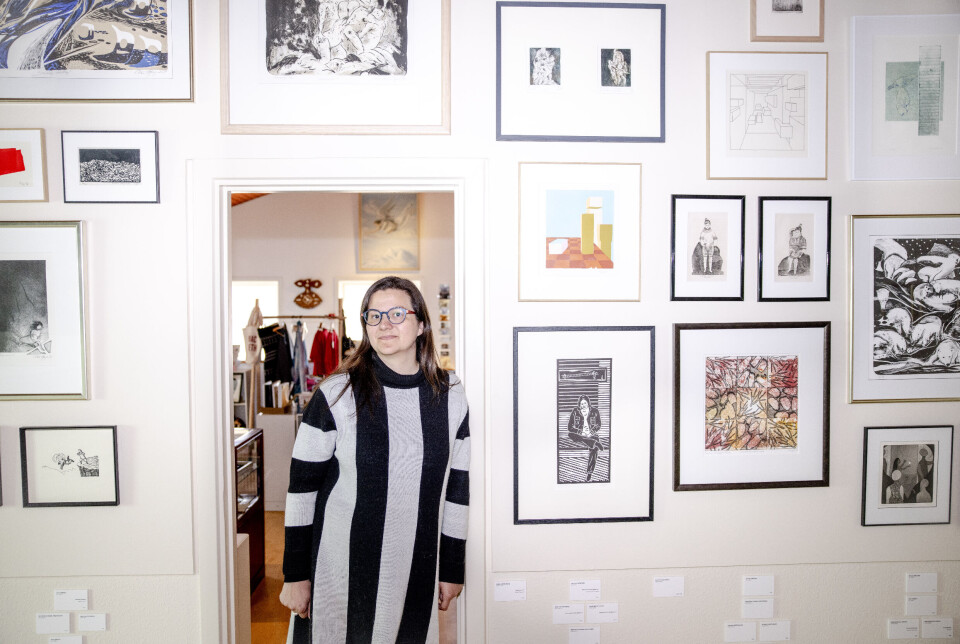
– There are several examples internationally of museums that share management and strategy, but each still has its own profile. It’s about joining forces, not about doing everything the same.
The National Gallery is still a child at heart
Despite the criticism, Nivi Christensen categorically rejects the notion that she is opposed to a national gallery.
On the contrary.
– I have never been against a national gallery. I actually believe that Greenland needs a national gallery. For me, it is first and foremost about ourselves. It is about collecting, preserving and understanding the art that has been created in Greenland, and about creating a place where we can tell our own art story. On our terms based on our values. If we don’t know what we want to preserve and convey to future generations, it will be difficult to build an institution with a clear purpose, says Nivi Christensen and continues committedly:
– This is precisely why I believe that it is important to discuss the direction of the project, while there is still an opportunity to influence the development. If we do it right, it can become an institution that will matter for generations. But then we have to start with the values, the art, the collections and the cultural ambitions. Only then does it make sense to discuss the building.
According to her, it is a pity that there have been no Greenlandic architects involved in the building. After all, it is a national institution which must reflect Greenland and Greenlandic perspectives.