The Minister of Justice’s plan Anna SporrerThe idea of releasing 500 prisoners early at once is becoming increasingly clear. Around the Council of Ministers on Wednesday, representatives of the coalition partners ÖVP and Neos confirmed that they did not agree with the SPÖ politician’s idea. Sporrer is now looking for other strategies to relieve pressure on prisons. She suggested that criminals sentenced to short unconditional imprisonment should be spared the Swedish curtains. This accommodation should particularly apply to juvenile criminal law.
There is an East-West divide in the judiciary, said Sporrer after the Council of Ministers on Wednesday. In the east of Austria, people are more likely to be sentenced to a short prison sentence in cases where in the west they can still get away with no prison or a fine. She now wants to commission a group of experts to develop alternatives to detention in these cases. Sporrer, for example, thinks that young offenders should do community work instead of going to prison.
The Justice Minister said she “notes” that the coalition partners do not share her plans for the release of 500 prisoners. Nevertheless, she campaigned for it again and used the weather, which made conditions in the prisons even more difficult. “You can imagine what that means in this heat, not only for the inmates, but also for the staff.”
Sporrer said her release plan was moderate: Anyone who was sentenced to 18 months in prison could currently be released after nine months. According to their plan, these people would have been released after just six months, provided they had previously proven themselves in exits.
Next week, Sporrer wants to discuss her plan and further possible solutions again with the justice spokespersons from all parties. However, it seems unrealistic that she will still be able to get the amnesty for around 500 prisoners, for which a legislative resolution would be required in the National Council. “We want criminals to be deported and not released,” emphasized the Interior Minister Gerhard Karner (ÖVP) after the Council of Ministers.
And that brought us to an issue on which there is consensus within the coalition, namely the more direct deportation of foreign criminals. On Wednesday, the Council of Ministers set the course so that people who are banned from living in Austria after serving a minimum sentence will be more easily deported from prison to their home country and will be released there immediately. In the past, this offer was not particularly popular with convicts: “So far, this has often failed due to the veto of the person concerned,” explained Karner.
In the future, this veto option should be eliminated and the perpetrator can be deported directly from prison to his home country even if he does not want this. In the past, convicts who were opposed to the plan had to be taken into custody after their release from prison before the perpetrators could be deported. This required more resources from the authorities. With the new release and deportation rule, the government wants to reduce the burden on prisons by 300 people per year.
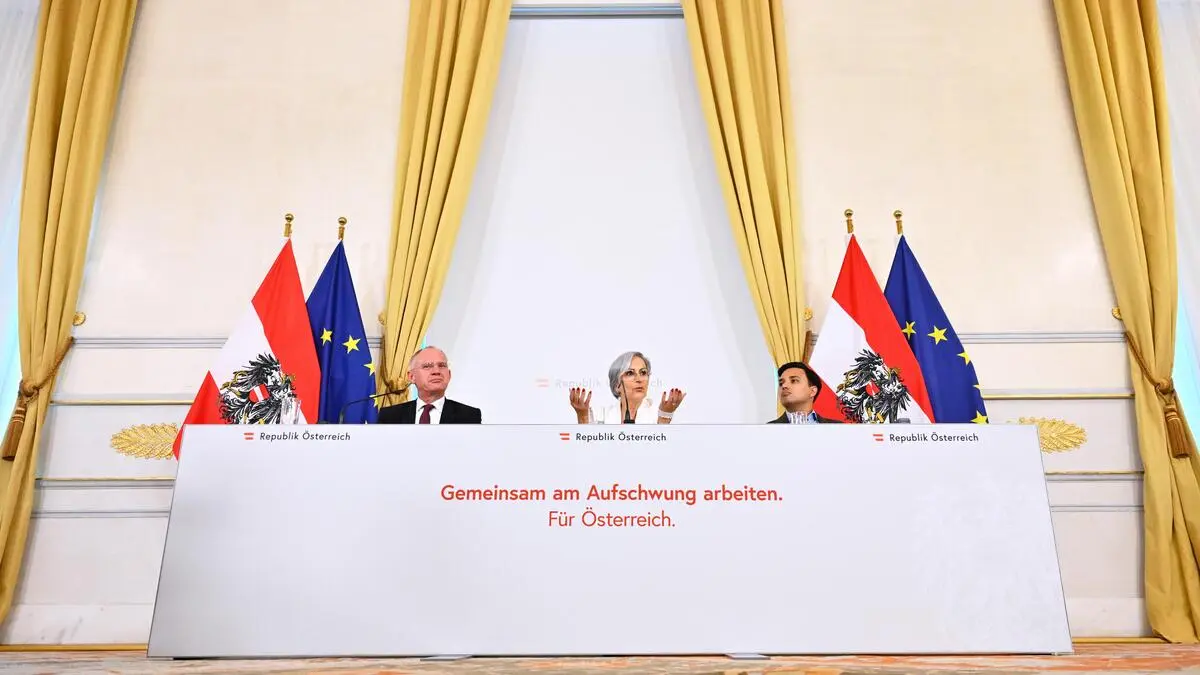
There was a gap in the legal system here that is now being closed, emphasized the Neos club boss Yannick Shetty in the press foyer after the Council of Ministers. Although club chairmen are not part of the government, in practice they still often take part in councils of ministers (albeit without voting rights). The draft law, which was approved by the Council of Ministers on Wednesday, will now be sent for review and, following Parliament’s approval, will apply from November 1st.
In addition to the idea of releasing people and sending them abroad at large, the government also wants to intensify the project of detention at home. This should be particularly encouraged for convicts from the Western Balkan states.
Despite the dispute over Sporrer’s release plans, the coalition tried to emphasize the commonalities of the three-party coalition. “What unites us,” said Shetty, is the desire to decongest the prisons. We would like to discuss with Sporrer how this would make sense. One possibility would also be to build a new prison and a new forensic therapeutic center, said Sporrer. But that takes time.