The Central Bank demonstrates its desire to support the transformation of the Moroccan economy in a rapidly changing national and international context.
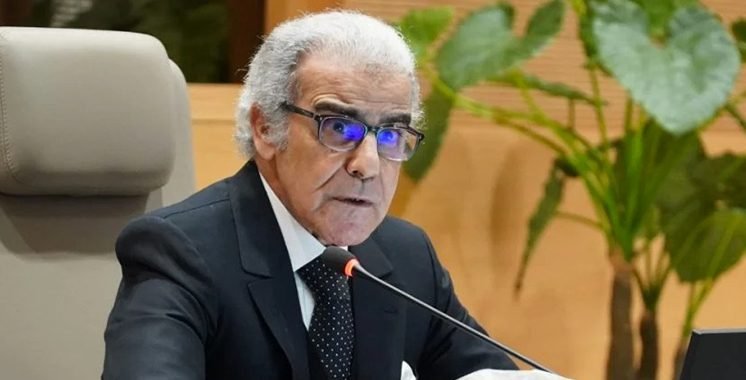
Monetary policy: Prepare the transition to a new monetary policy framework, further mobilize private investment and preserve the interests of Moroccan banks in Europe. These are the main issues highlighted by the governor of Bank Al-Maghrib, Abdellatif Jouahri, during the press briefing held at the end of the second quarterly meeting of the Central Bank council.
At the end of the second quarterly meeting of 2026 of the board of Bank Al-Maghrib, Abdellatif Jouahri revealed, Tuesday during a press briefing, the main economic and monetary orientations which will shape the next course. Between the preparation of inflation targeting planned for 2027, the mobilization of private investment as an engine of growth and the discussions initiated to preserve the activity of Moroccan banks in Europe, the Central Bank is displaying its desire to support the transformation of the Moroccan economy in a rapidly changing national and international context.
Inflation targeting: Launch planned for early 2027
As for inflation targeting, the Governor of the Central Bank announced that a mock simulation is planned for December before the launch in 2027. It is in fact a monetary policy regime in which the Central Bank sets an explicit inflation objective and adjusts its instruments in order to maintain the evolution of prices around this target in the medium term. “The inflation targeting project is currently being deployed, with awareness-raising and training work carried out among the different categories of stakeholders concerned,” he assured. And to specify that “in this context, a first meeting has already been organized with actors from the financial sector and the academic world, while exchanges with the private sector are planned, in particular within the framework of a meeting with the General Confederation of Moroccan Enterprises (CGEM)”. Mr. Jouahri indicated that the complete file will be presented to the Bank’s board next September, before a dry simulation phase scheduled for December.
He further noted that Bank Al-Maghrib benefits from technical assistance from the International Monetary Fund (IMF) and continues its discussions with several Central Banks which have already adopted inflation targeting, with a view to finalizing the necessary preparations. It should be noted that the Central Bank is focusing on the communication aspect of this process, thus mobilizing its executives at the regional level to support and inform the various stakeholders on the implications of this evolution of the monetary policy framework.
A meeting to accelerate the mobilization of private investment
Asked about private investment, Mr. Jouahri assured that a meeting is being prepared with the Professional Group of Banks of Morocco (GPBM), the Ministry of Economy and Finance, the Ministry of Investment, Convergence and Evaluation of Public Policies and the General Confederation of Moroccan Enterprises (CGEM). The opportunity is to examine ways to further strengthen private investment and identify actions likely to promote a greater contribution of the productive sector to economic growth. For the governor of Bank Al-Maghrib, the ground is currently marked out to allow private investment to gradually take over from public investment and sustainably support economic growth beyond 2030. “The public investment effort will continue to support growth in the coming years, but the objective remains to see private investment play an increased role in national economic dynamics”, we can remember from Mr. Jouahri. And to emphasize that “several levers are already in place, citing in particular the law on public-private partnerships (PPP), the new Investment Charter, the action of the Regional Investment Centers (CRI) as well as the territorial planning programs intended to reduce territorial disparities”.
The manager also noted that investment by public companies should remain sustained over the coming years, citing as an example the OCP Group which is pursuing a major investment program and still has room for development, particularly in emerging sectors such as green hydrogen. During his speech, Mr. Jouahri emphasized the importance of very small enterprises (VSEs), which represent more than 90% of the national entrepreneurial fabric, recalling the initiatives recently launched in their favor as well as the actions expected from the Mohammed VI Investment Fund to support private investment, particularly that of SMEs and VSEs.
European directive: A positive outcome anticipated by BAM
The European directive on the intermediation activity of Moroccan banks for the benefit of Moroccans living abroad was also invited to the debate. Mr. Jouahri was indeed confident about a positive outcome of the discussions. “This directive, adopted by the European Parliament in the context of Brexit, called into question the intermediation activity carried out by Moroccan banks established in Europe,” he explained. And to continue: “Faced with this situation, a task force bringing together in particular the Ministry of Foreign Affairs, African Cooperation and Moroccans Living Abroad, the Moroccan banks concerned, the Treasury and External Finance Department and Bank Al-Maghrib was set up in order to lead discussions with the European authorities and the countries concerned.” After discussions with the European Commission, in particular the Directorate General for Financial Stability (DG FISMA), it was established that the transposition of this directive falls under national legislation, which led the Moroccan authorities to initiate a direct dialogue with several Member States of the European Union. “In this context, discussions have already been held with France, while contacts have been initiated with the Netherlands and Belgium and other meetings are scheduled with Spain and Italy,” explains Mr. Jouahri. And added: “Each country adopts its own interpretation of the European directive.” Mr. Jouahri confided that the work continues in a constructive spirit, while asserting the principle of reciprocity with regard to the interests held by these countries in Morocco. “I am convinced that we will achieve a positive outcome,” he reiterated, estimating, however, that this process will take time and should continue throughout 2026. The head of the Central Bank also noted that the evolution of MRE transfers remains favorable, testifying according to him to the good dynamic observed despite this regulatory context.